
East Khasi Hills Immersion Center
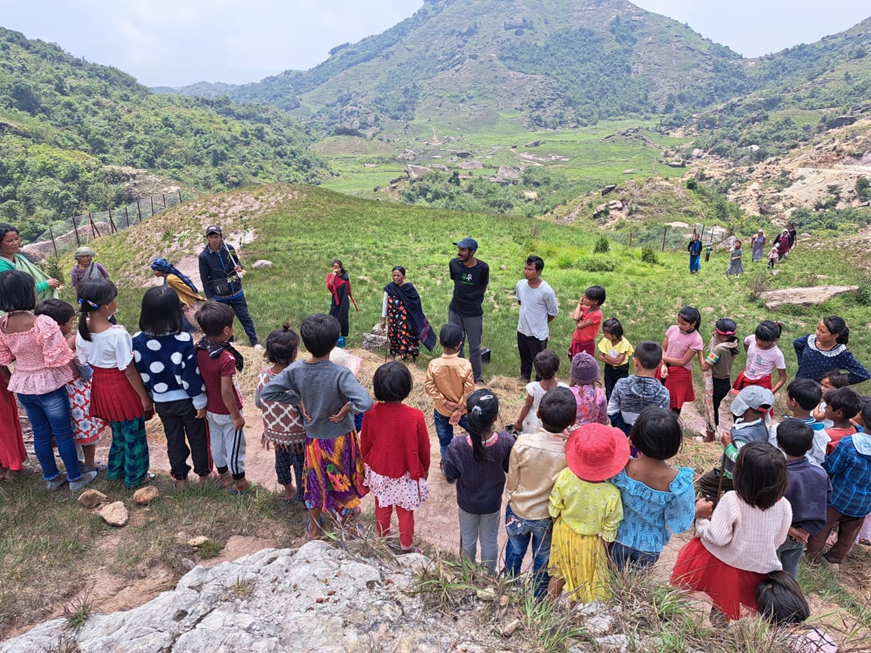
The Khasi Hills Immersion Center is rooted in the homeland of the Khasi people, who maintain a long tradition of living closely with forested landscapes and sacred groves. The terrain here is shaped by deep valleys, high plateaus, and fast-flowing streams fed by seasonal monsoon rains. In this unique landscape, Sadhana Forest supports local communities through practical training and implementation in ecological restoration methods adapted to the conditions of East Khasi Hills.
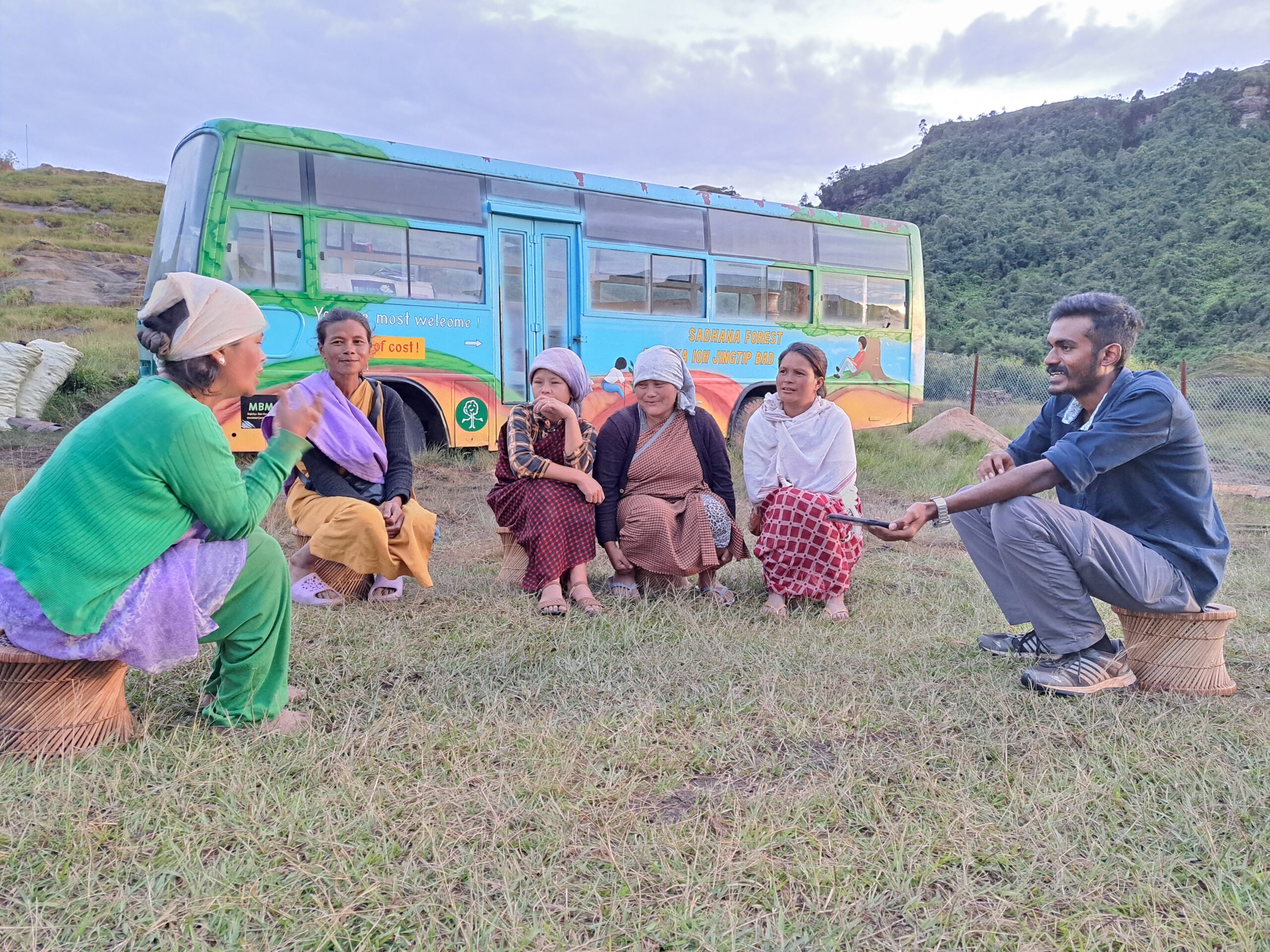
The center is part of Sadhana Forest’s wider effort to increase awareness of climate change impacts in Meghalaya and to share techniques that improve water security, soil health, and long-term land productivity. Like the other Immersion Centers, Khasi Hills is designed to operate as a local resource center, helping communities build the skills and confidence needed to restore land, protect natural ecosystems, and strengthen long-term resilience.
The Wettest Place on Earth
The Khasi Hills are home to Cherrapunji and Mawsynram, the wettest places on Earth. Despite receiving over 11 meters of rain annually, the region faces severe deforestation and water scarcity during the dry season.
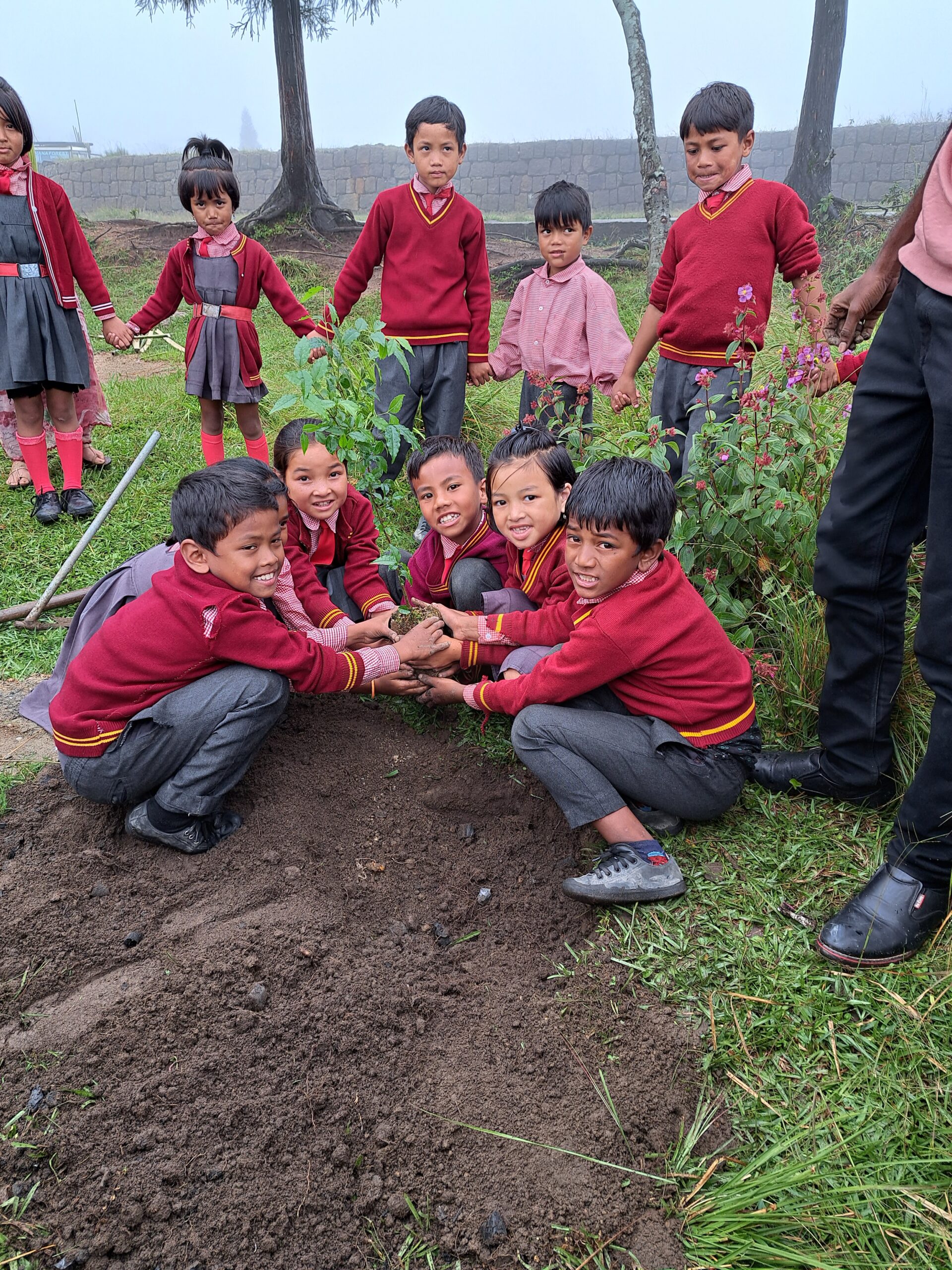
Working with Khasi communities, we demonstrate how forest restoration can improve year-round water availability, prevent erosion, and provide sustainable livelihoods through forest products.
On-contour Swales
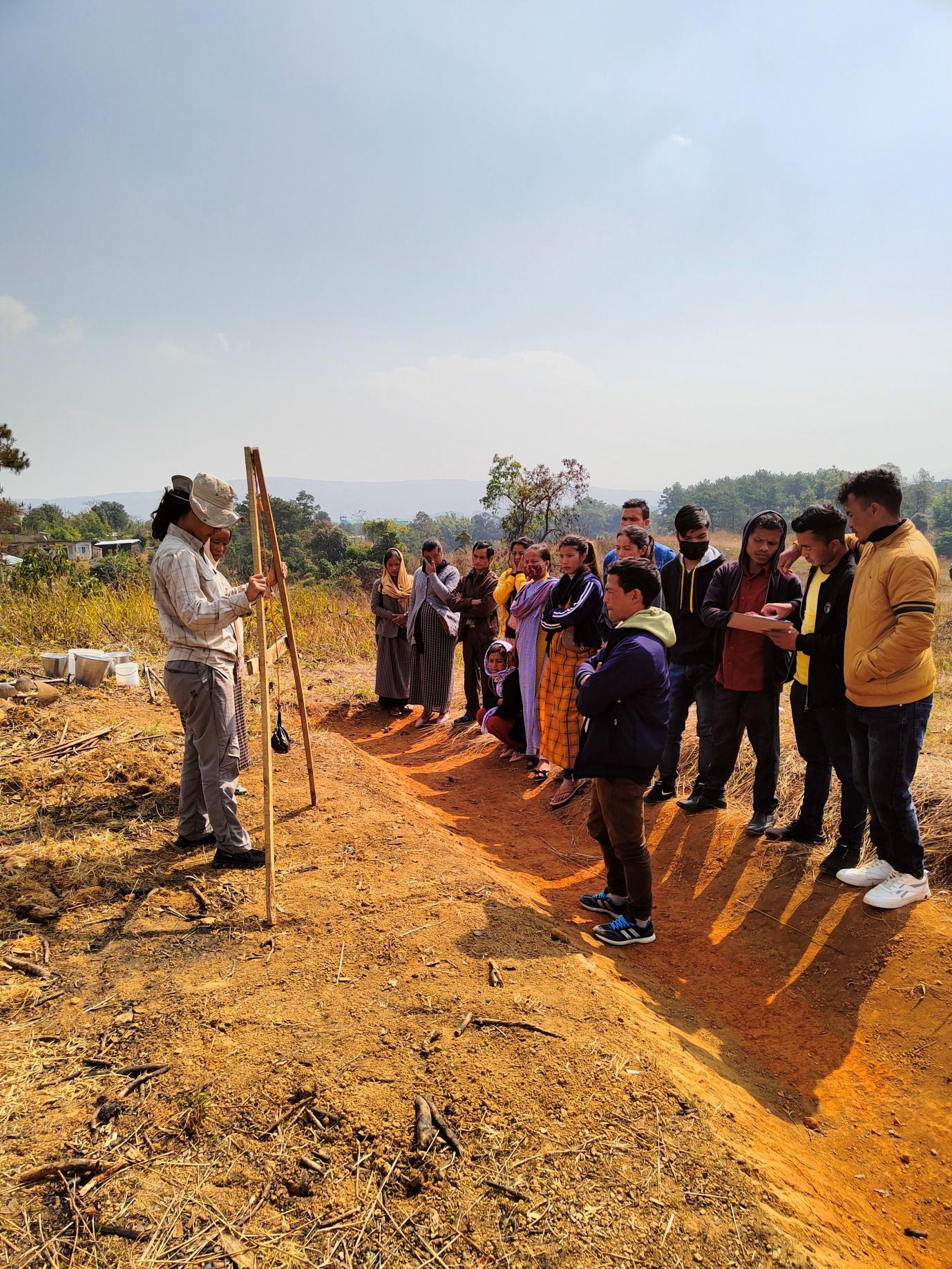
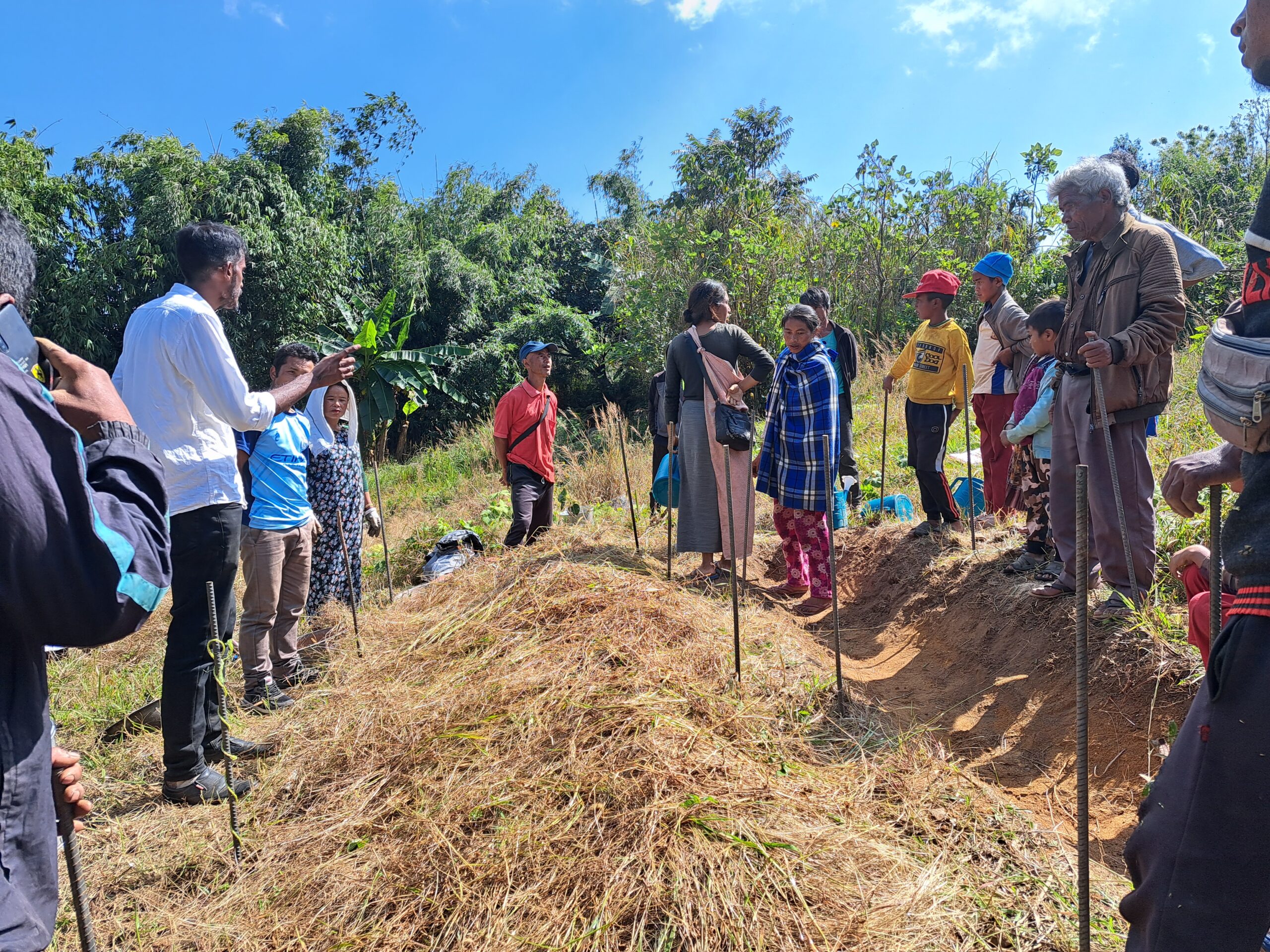
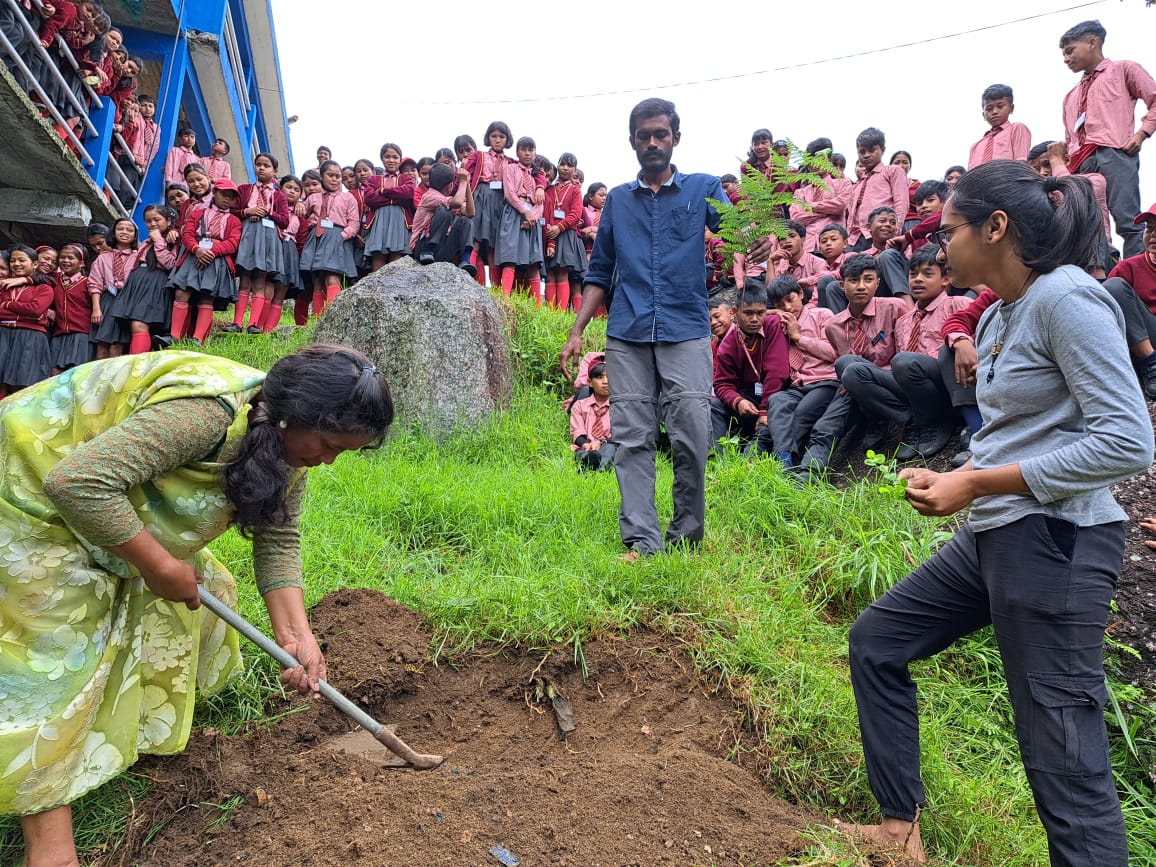
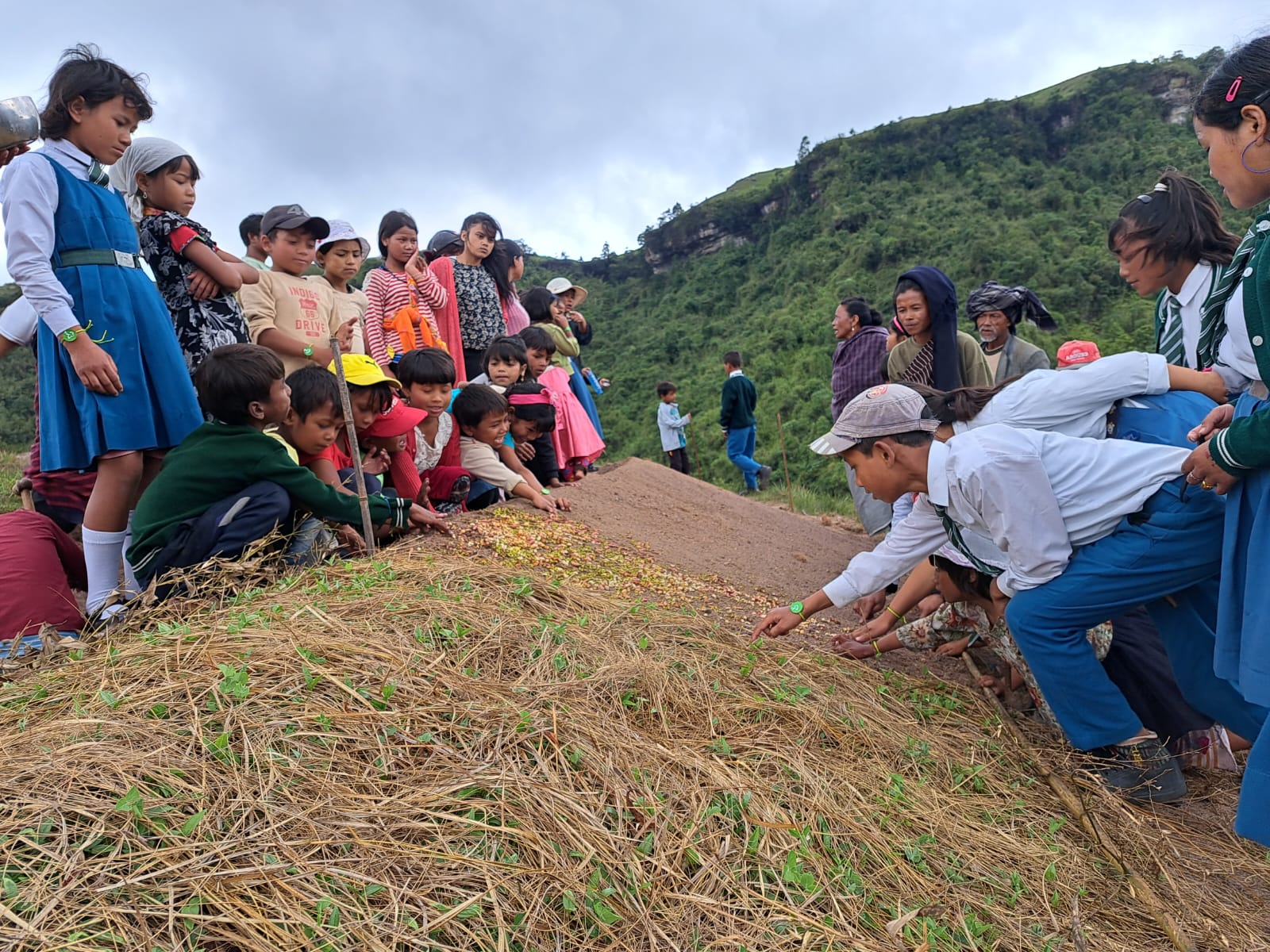
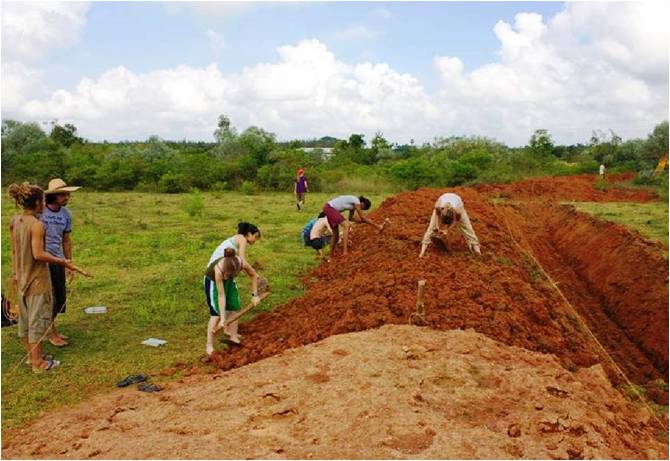
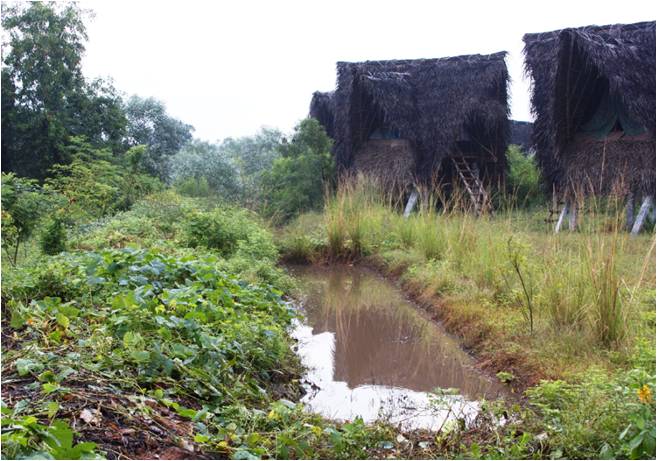
The primary water conservation technique is the creation of on-contour swales. On-contour swales are shallow trenches dug along the natural contour lines of the land. Instead of allowing rainwater to run downhill and carry away soil, the trench slows the water, collects it, and gives it time to soak into the ground. The loose soil removed from the trench is placed just below it, forming a long, gently shaped mound called a berm. This berm helps hold moisture, reduce erosion, and create a fertile planting area. Over time, the swale becomes a living system where water, soil, plants, and microorganisms support each other. After the swales are created, nitrogen-fixing plants are often planted first to improve soil fertility. Grasses such as Vetiver can also be planted to stabilize the trench and berm with their deep roots. As organic matter builds up and the soil becomes richer, food-producing trees, native species, or other crops can be planted. In this way, on-contour swales help restore degraded land by increasing water absorption, improving soil health, reducing erosion, and creating productive conditions for agroforestry, natural regeneration, and long-term ecosystem restoration.
Sacred Groves
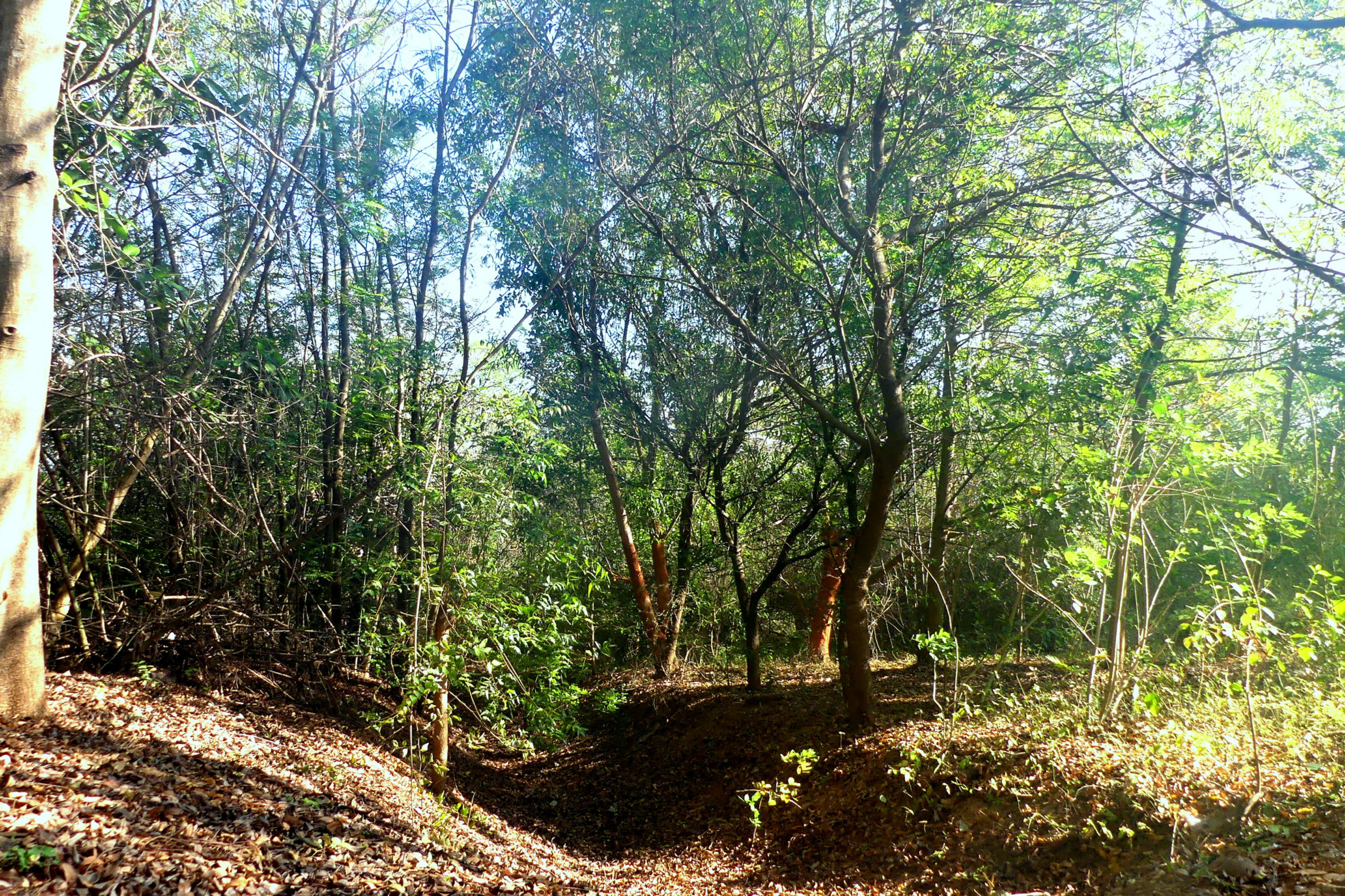
The Khasi people traditionally protected sacred groves of forest. Our work honors this tradition by helping communities expand and protect forest areas while addressing modern challenges.
Location
Get Involved
Learn more about how you can contribute to our mission and be part of this transformative journey.