
East Garo Hills Immersion Center
The East Garo Hills center works alongside Garo communities, known for their matrilineal lineage and their deep cultural relationship with the hills, bamboo forests, and river systems. The landscape is a mosaic of rolling hills, jhum fields, and rich biodiversity. A major tourist destination: Simsang River’s Rongbang Falls (Rongbang Dare), lies nearby and attracts many visitors, creating meaningful opportunities for environmental education and community outreach.
Northeast India’s Biodiversity Hotspot
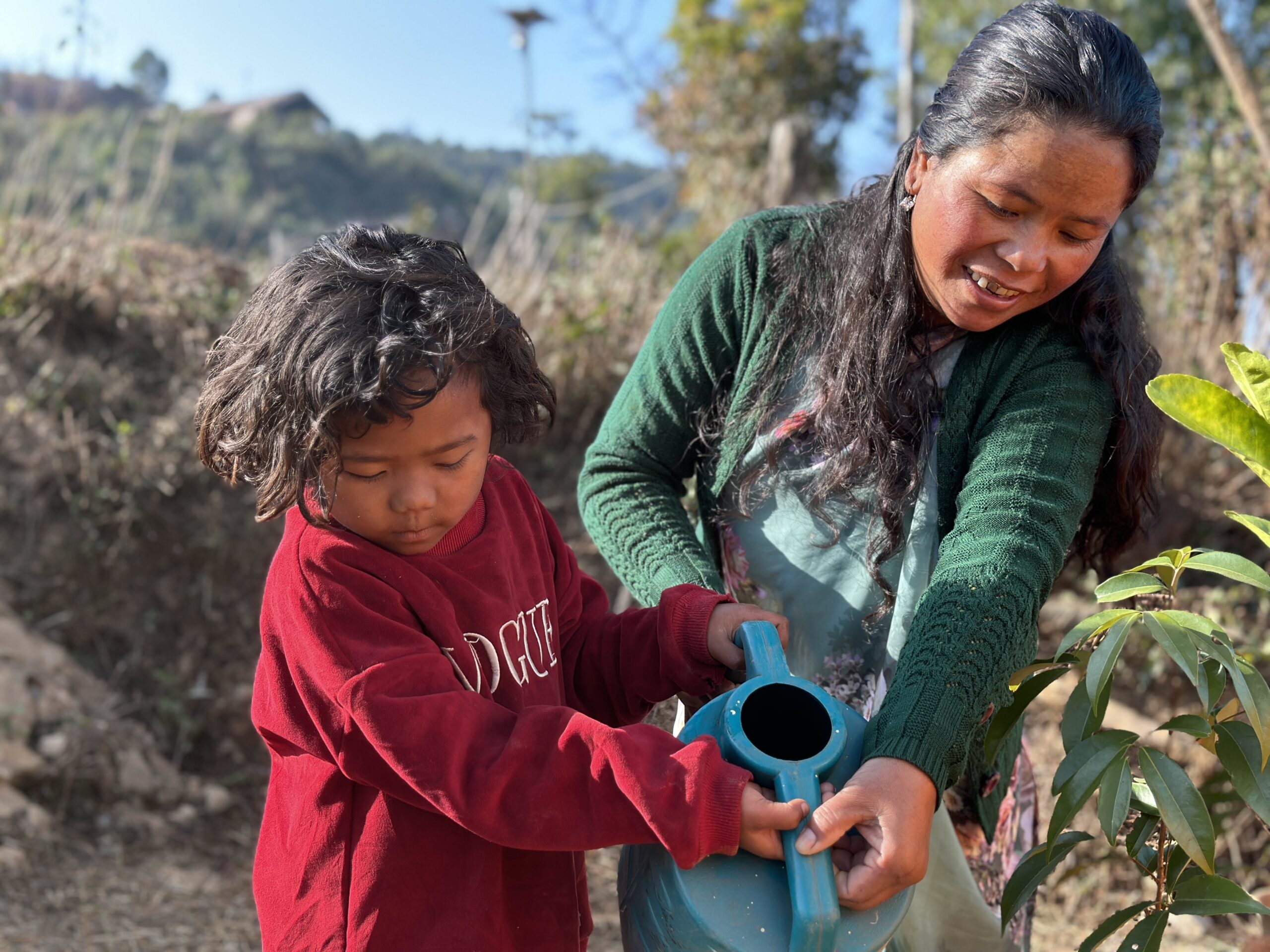
The Garo Hills of Meghalaya are part of one of the world’s biodiversity hotspots, with rich forest ecosystems that support many unique and endemic species. Sadhana Forest’s center in the Garo Hills works to protect and restore these landscapes by supporting local communities in regenerating degraded land.
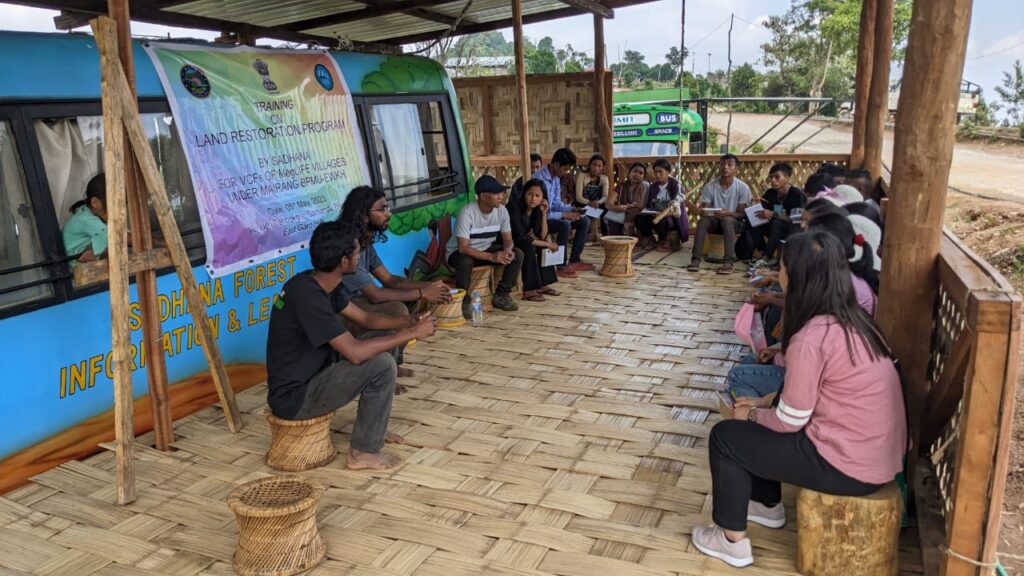
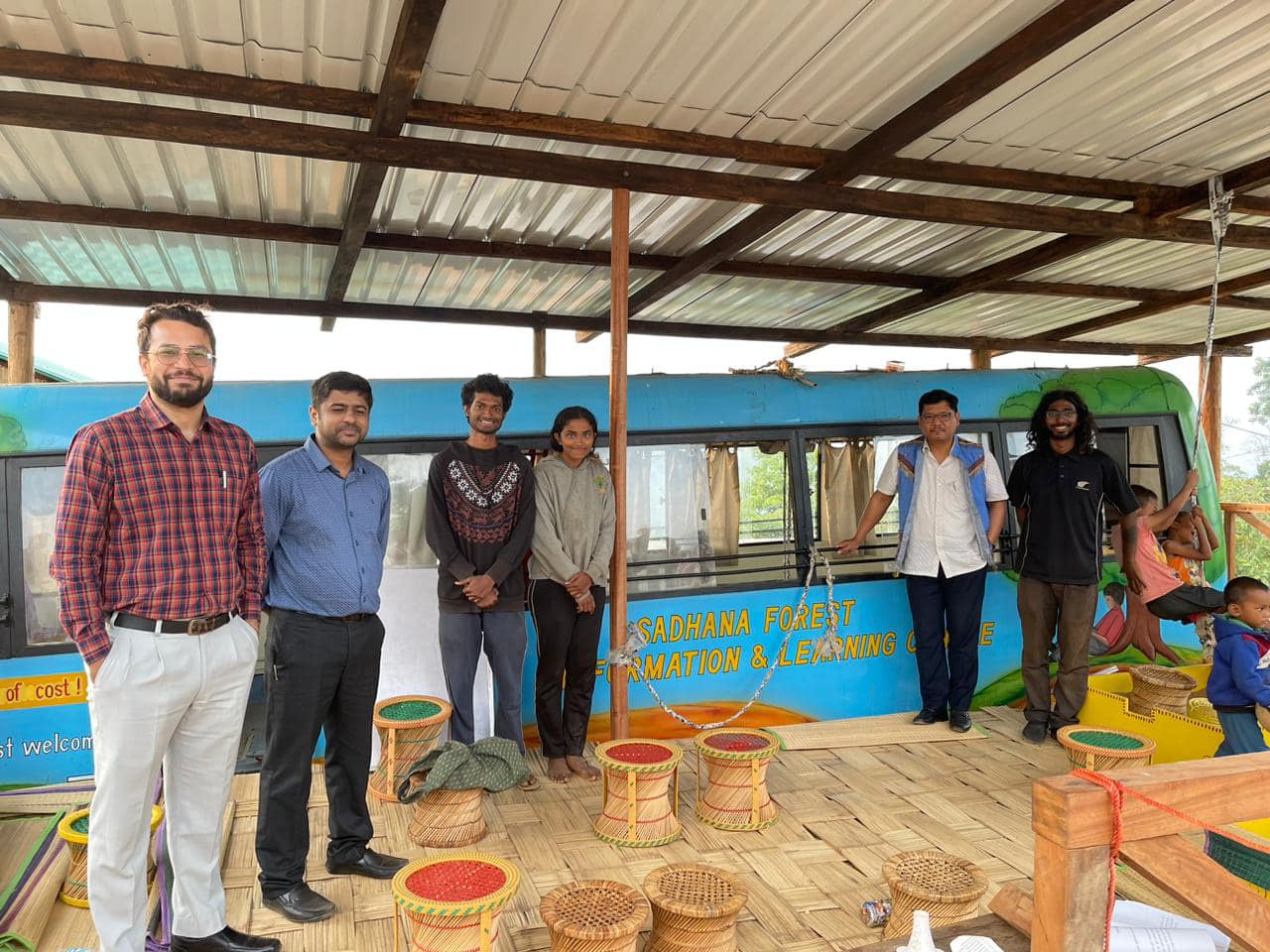
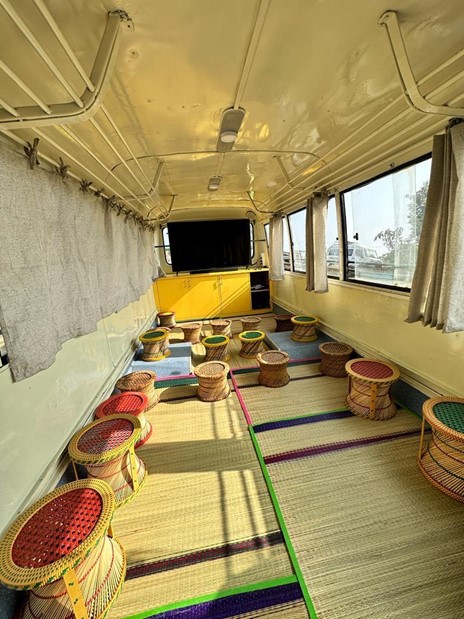
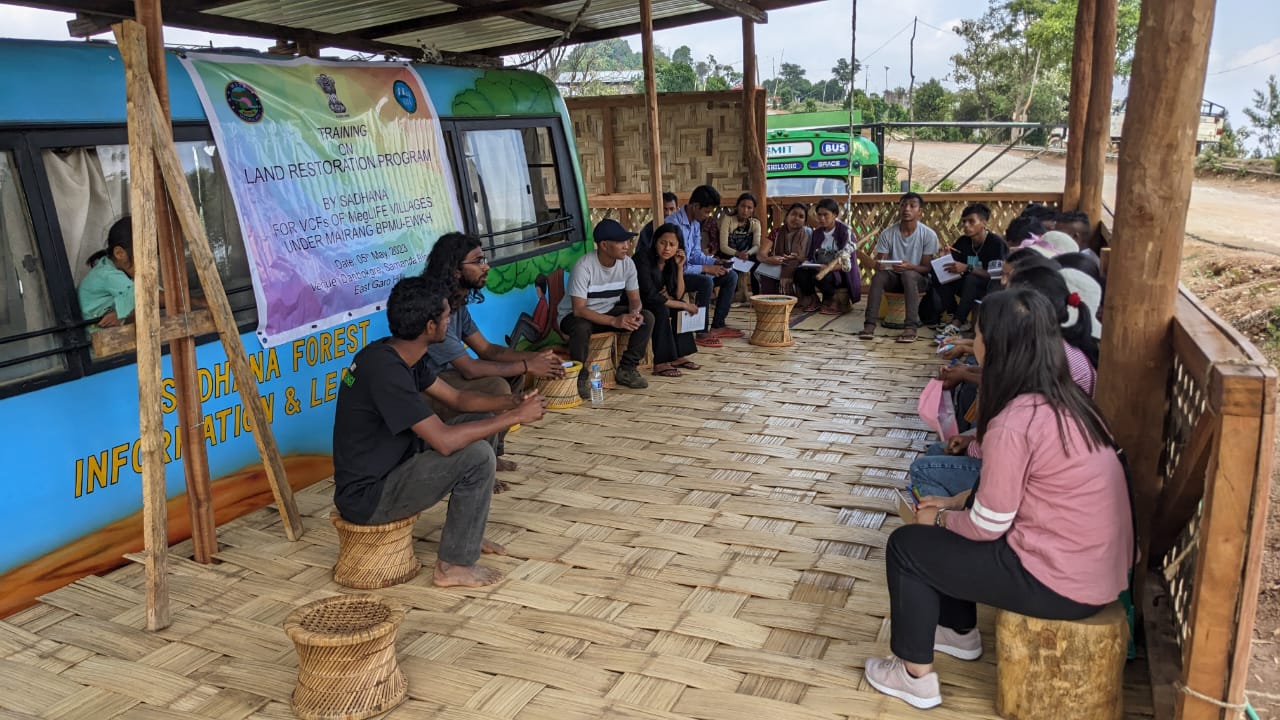
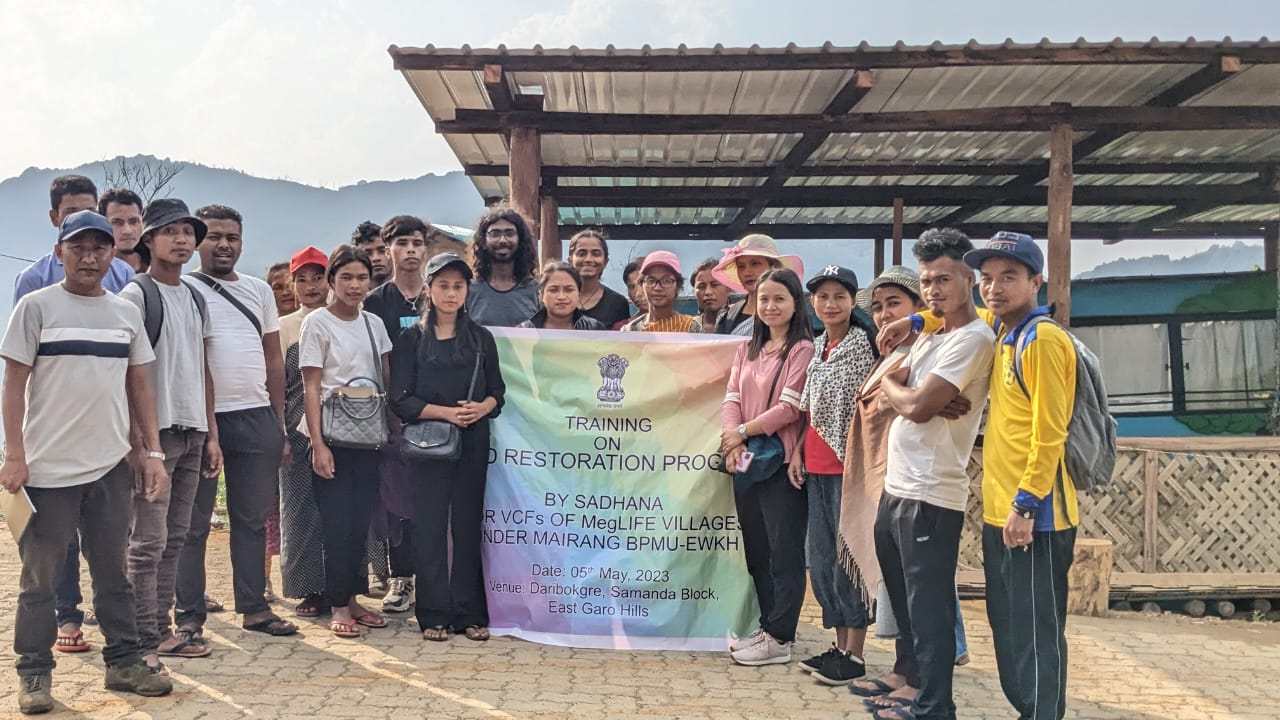
Located on the way to Nokrek National Park, the center offers a valuable opportunity to reach people passing through the area and introduce them to practical ideas in sustainability, water conservation, and land restoration. Through trainings at the center, in schools, community centers, and directly on people’s land, we share simple and effective techniques for restoring soil, increasing water retention, planting native species, and supporting long-term food and water security.
By combining hands-on training with local participation, Sadhana Forest helps create healthier buffer zones that support both wildlife and human communities, while strengthening long-term care for the land.
High Rainfall Environment
The Garo Hills receive abundant rainfall, creating unique opportunities and challenges for reforestation. We’ve developed specialized techniques for erosion control and soil conservation in this high-rainfall environment.
On-contour Swales
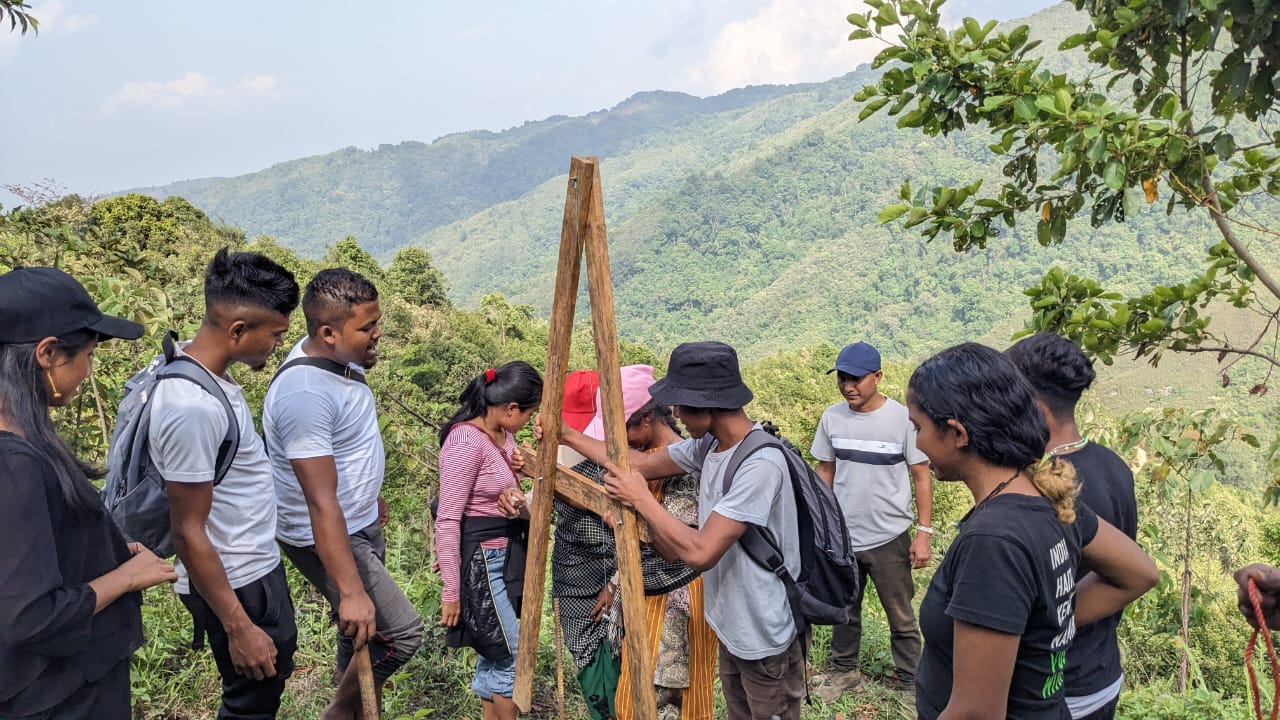
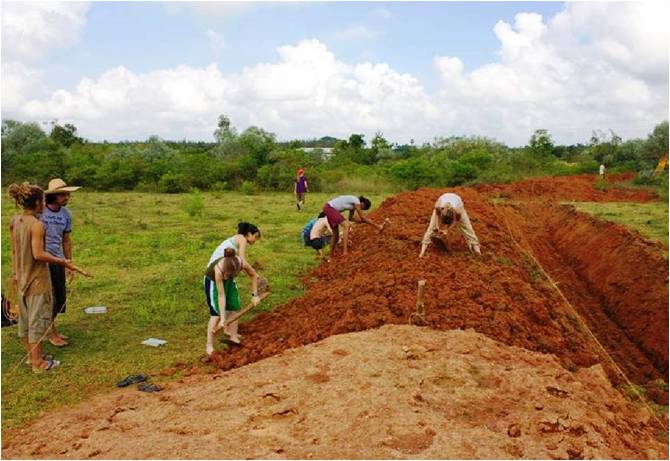
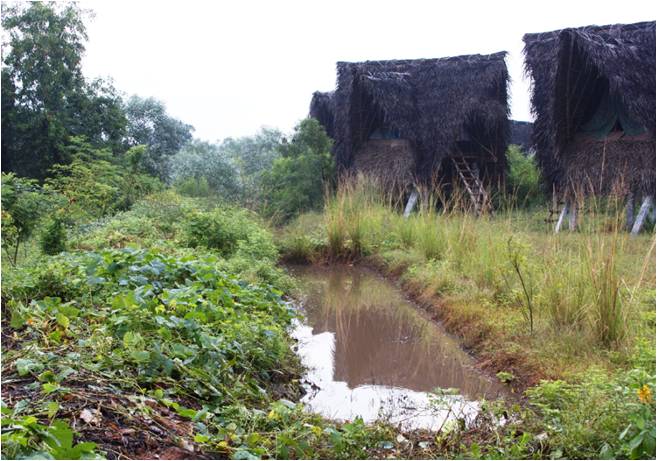
The primary water conservation technique is the creation of on-contour swales. On-contour swales are shallow trenches dug along the natural contour lines of the land. Instead of allowing rainwater to run downhill and carry away soil, the trench slows the water, collects it, and gives it time to soak into the ground. The loose soil removed from the trench is placed just below it, forming a long, gently shaped mound called a berm. This berm helps hold moisture, reduce erosion, and create a fertile planting area. Over time, the swale becomes a living system where water, soil, plants, and microorganisms support each other. After the swales are created, nitrogen-fixing plants are often planted first to improve soil fertility. Grasses such as Vetiver can also be planted to stabilize the trench and berm with their deep roots. As organic matter builds up and the soil becomes richer, food-producing trees, native species, or other crops can be planted. In this way, on-contour swales help restore degraded land by increasing water absorption, improving soil health, reducing erosion, and creating productive conditions for agroforestry, natural regeneration, and long-term ecosystem restoration.
Location
Get Involved
Learn more about how you can contribute to our mission and be part of this transformative journey.