Sadhana Forest Auroville
Founded in December 2003, Sadhana Forest Auroville began on 70 acres of severely eroded land on the outskirts of Auroville, in Tamil Nadu, India, 4 km north of Puducherry. Its aim is to restore the indigenous Tropical Dry Evergreen Forest (TDEF), while creating a living example of sustainable, compassionate living.
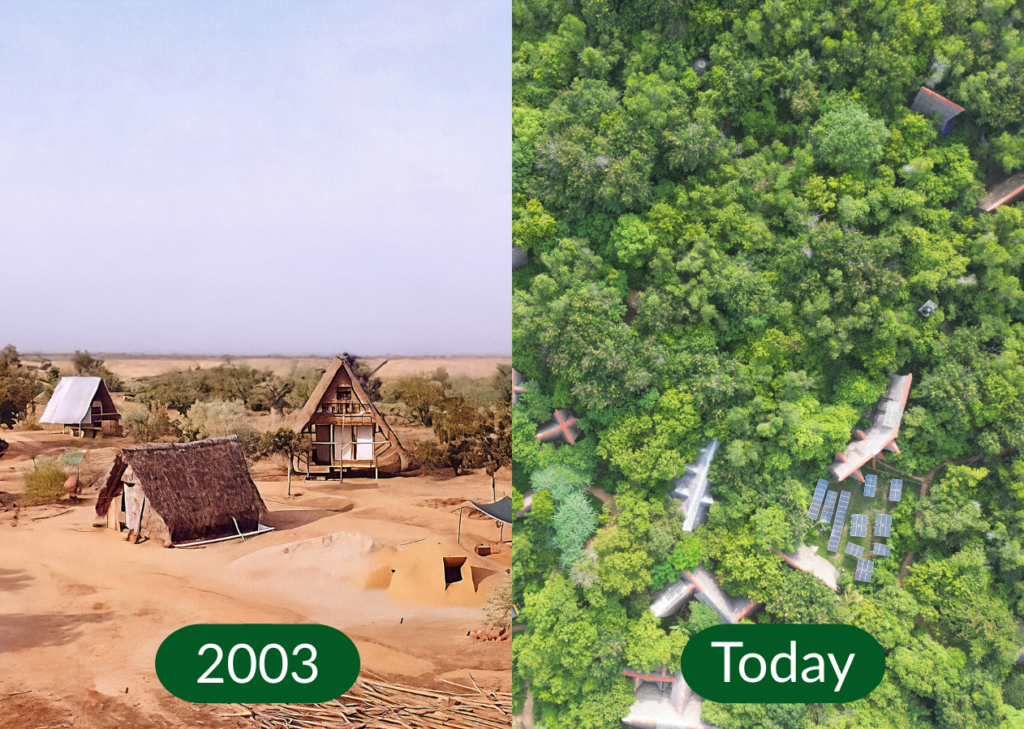
Over more than two decades, the land has transformed into a vibrant young forest. What was once barren soil now holds thousands of thriving indigenous trees, a rising water table, dozens of wild animal species, and a growing community of people living in harmony with nature. The center is entirely operated by volunteers who come from all over India and the world to contribute their seva (selfless service) and to grow with the forest.
Context
The Tropical Dry Evergreen Forest (TDEF) is the native forest of India’s southeastern coast and northern Sri Lanka. It is a unique ecosystem home to 166 tree species and nearly 1,000 plant species (more info). It was once home to elephants, tigers and the Dravidian kings of old. The forest was almost entirely destroyed during colonial times, with less than 0.01% surviving in small, fragmented patches, mostly in sacred temple groves. The climate is harsh, with high temperatures and little rain throughout the year, and a short and intense monsoon period around November.
In 1968, Auroville was founded, an international township dedicated to human unity and service, just north of the city of Pondicherry. The entire area was a severely degraded wasteland, turning into a desert full of canyons and ravines with barely any vegetation. In tropical areas, deforestation causes rapid environmental deterioration and a vicious cycle of erosion and land degradation. From the beginning, the Aurovilians have dedicated themselves to restoring this land.
History
Sadhana Forest was started as an attempt to regenerate 70 acres of barren land on the outskirts of Auroville, and to restore the cycle of water and life. It was founded by Aviram and Yorit Rozin and their family, as a space to live in alignment with their values and dedicate themselves to selfless service. Read more about the history here.
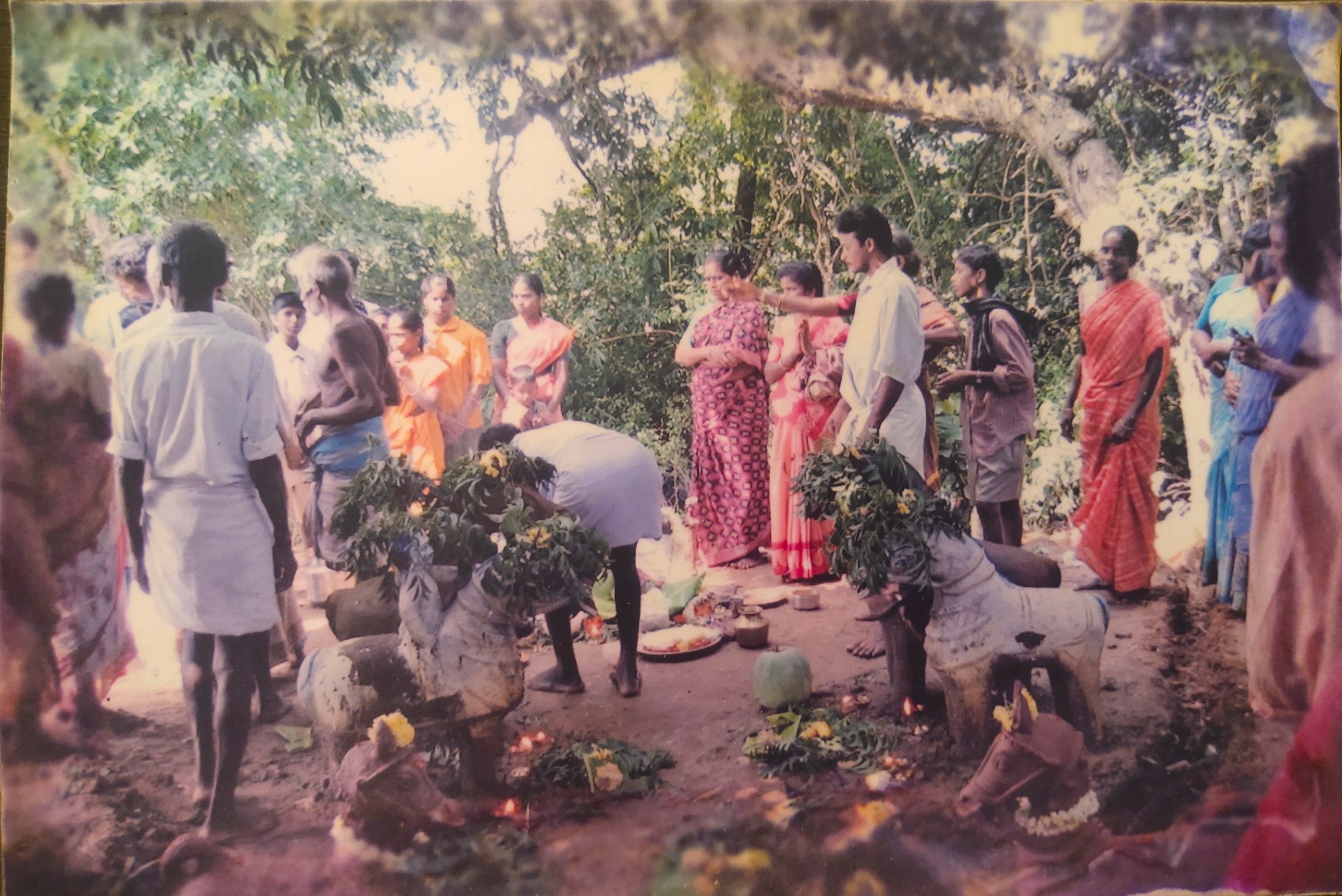 Inauguration ceremony with the neighbors at the sacred grove
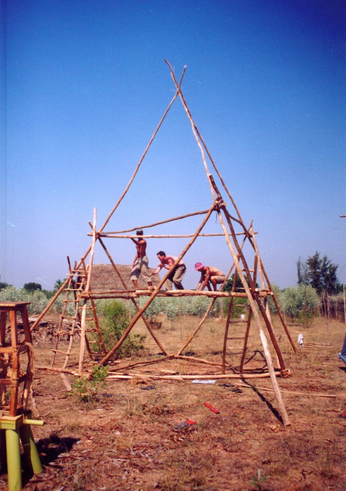 Building the first huts
 The first kitchen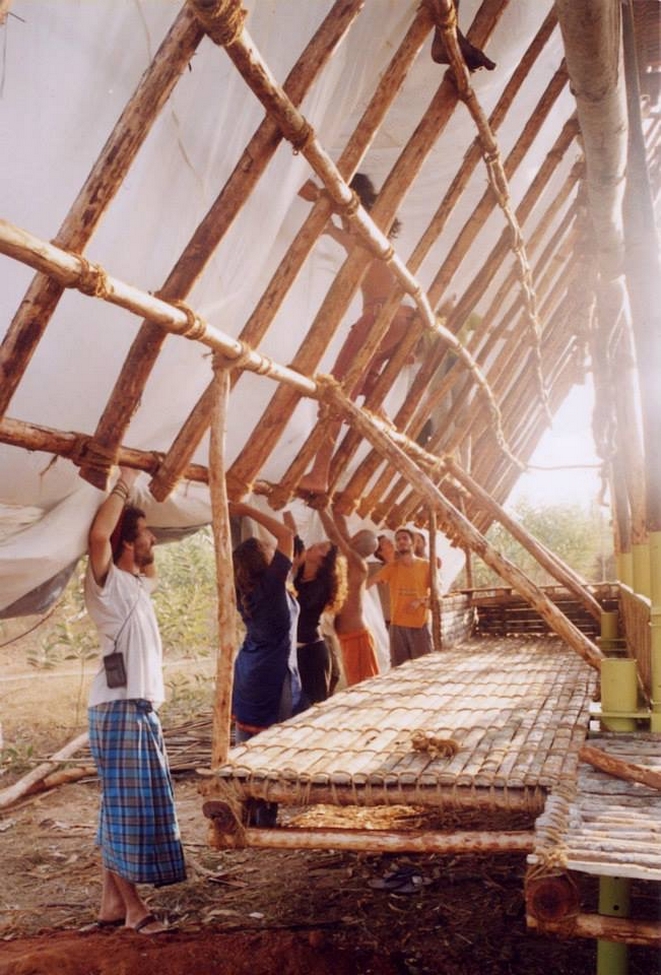
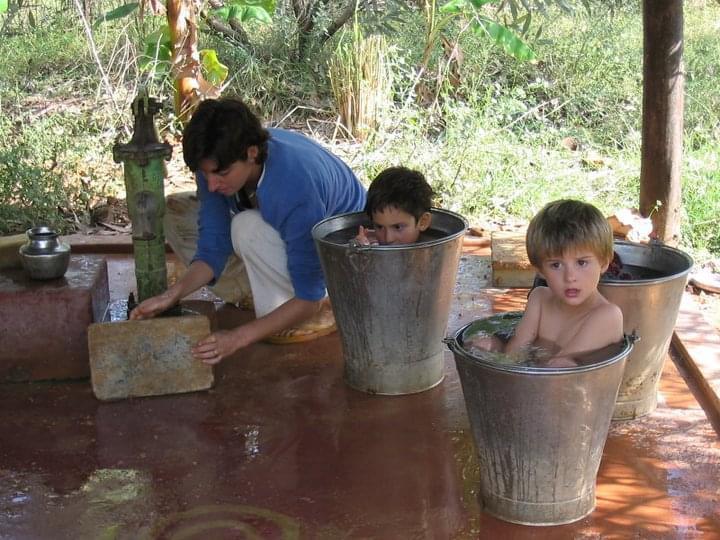
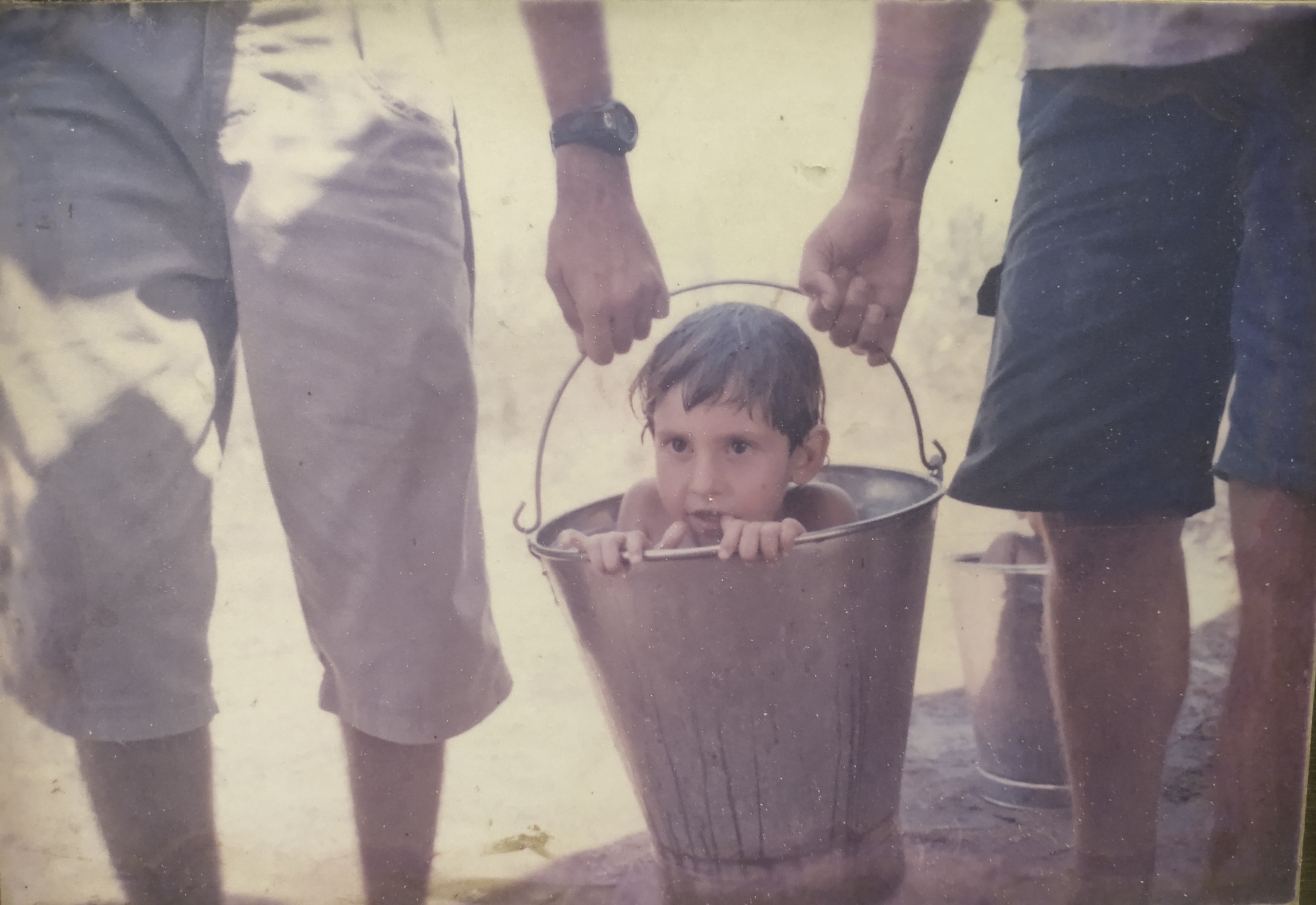 Bucket shower!
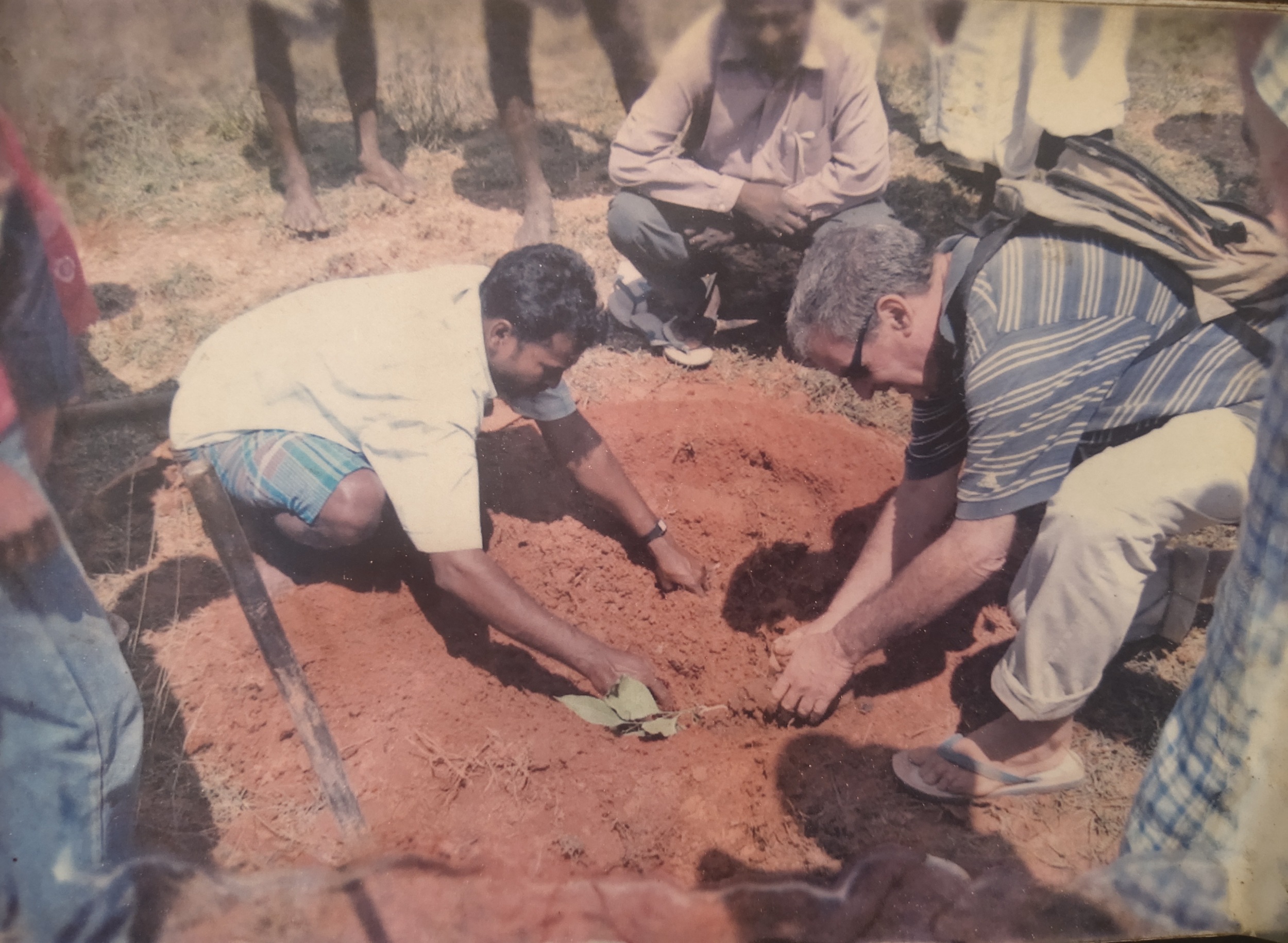 Planting the first tree
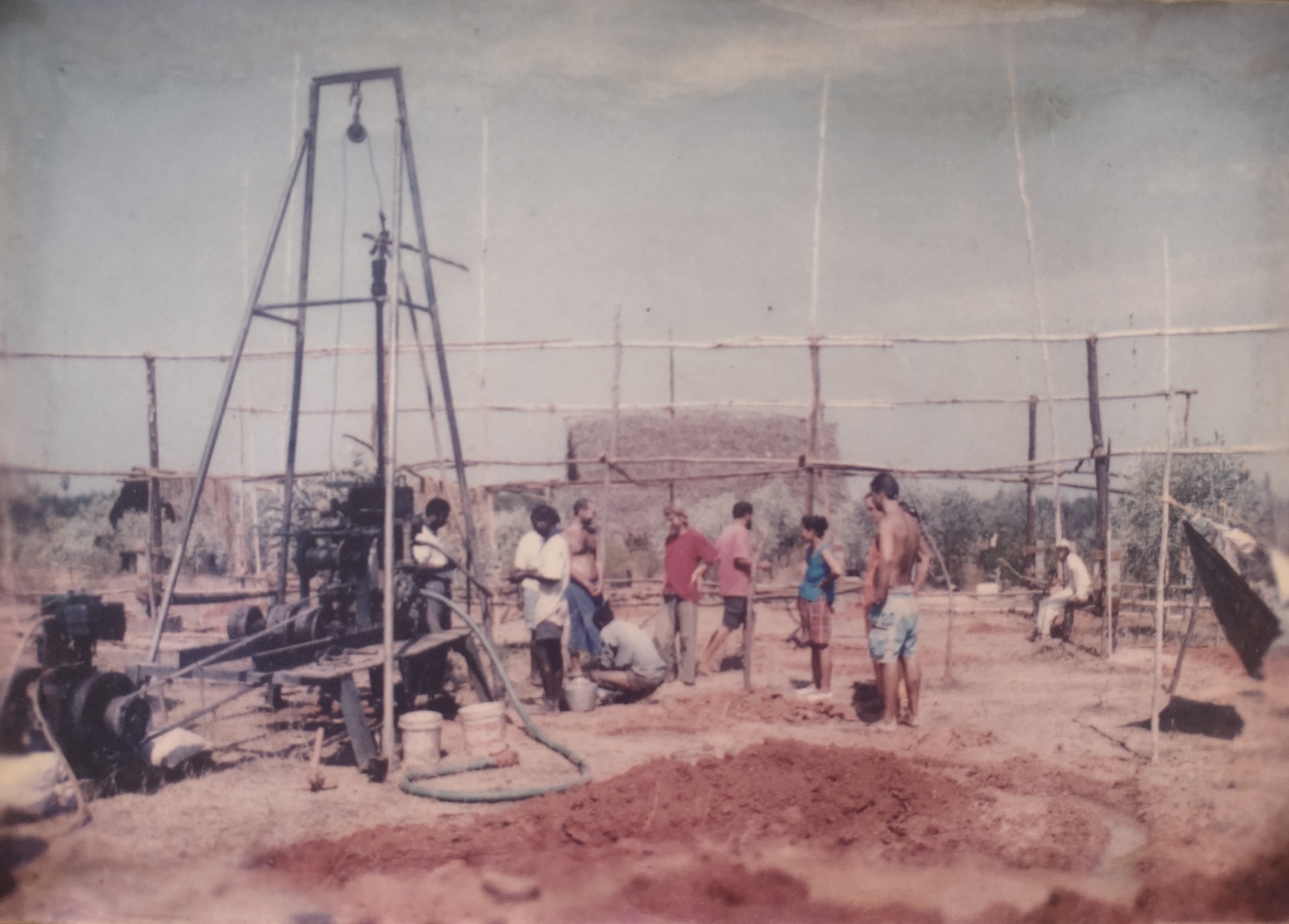 Digging the well
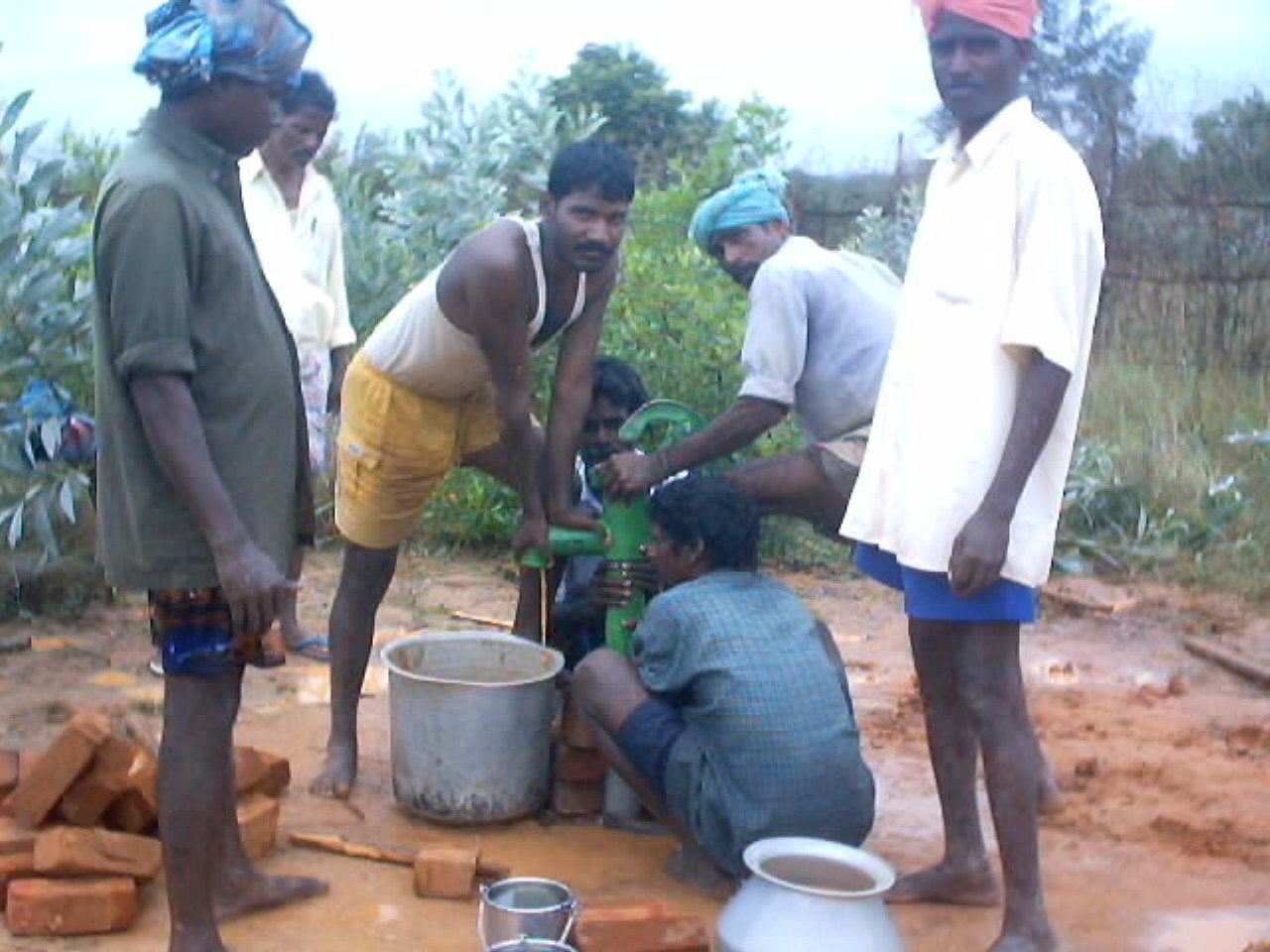 Installing the first pump
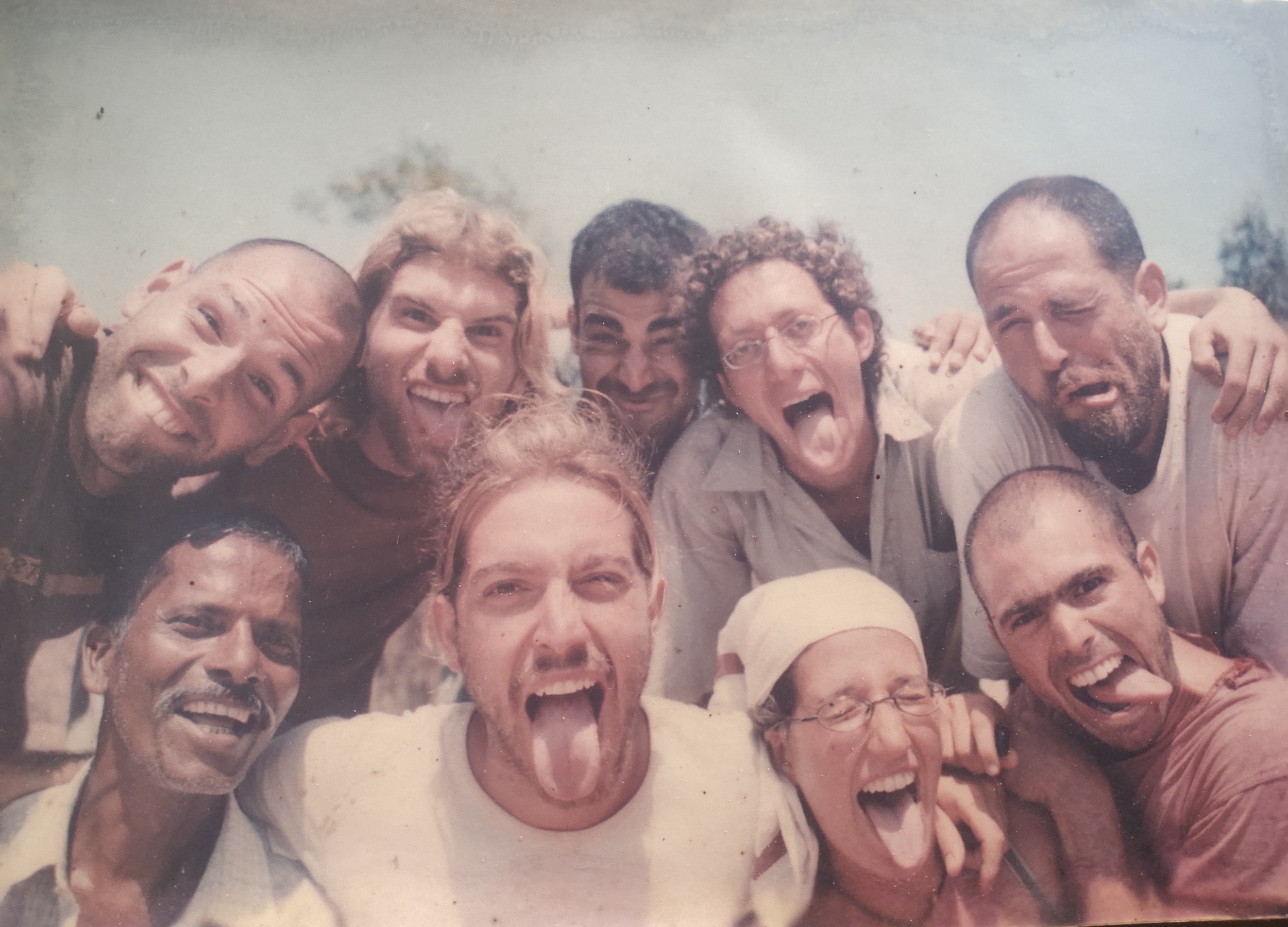 The first group of volunteers
Water Conservation
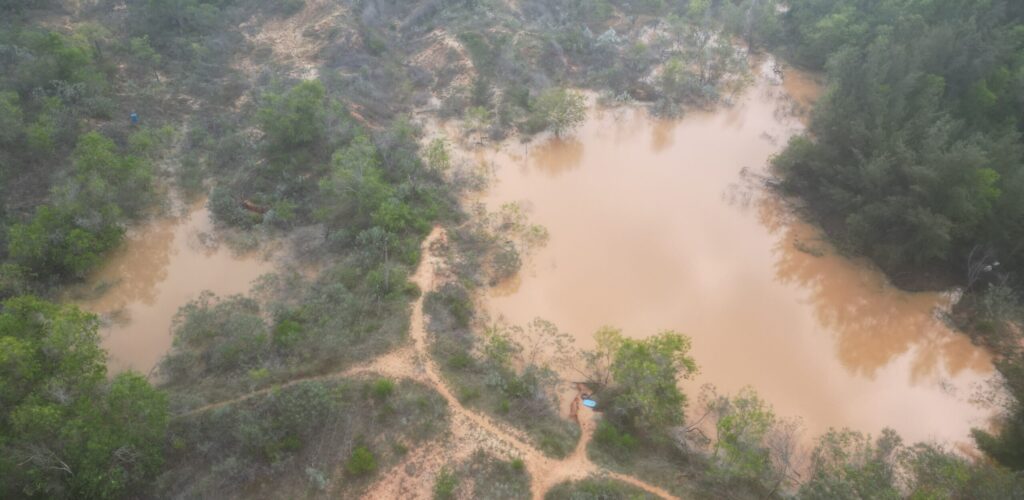
Sadhana Forest Auroville started out on barren, hard and dry soil. Heavy monsoon rains had washed away all fertile soil long ago. Water conservation has therefore been central from the beginning. We constructed countless check dams, earth dams, bunds, swales, and catchment ponds, which stop rainwater and allow it to percolate into the soil, increasing soil moisture and replenishing the aquifer. Through these earthworks we work towards zero rainwater run-off.
Thanks to these interventions, the groundwater table rose by 6 meters in just the first five years. Wells in four nearby villages that had been dry for 15–20 years now provided water year-round, directly benefiting local farmers and families. Today, this network of water conservation measures stores over 50,000 cubic meters of rainwater annually. Continued land regeneration efforts will bring us closer and closer to our goal of zero run-off.
Restoring the Tropical Dry Evergreen Forest (TDEF)
Sadhana Forest Auroville focuses on restoring this ecosystem through assisted natural regeneration. We plant all 166 TDEF tree species using simple and cost-effective planting and irrigation techniques which we developed through years of experience and adapted to our circumstances. Slowly and steadily, soil health improves and trees start naturally regenerating. For every tree we plant, we estimate that 4 trees naturally regenerate, each storing approximately 1 ton of carbon in its lifetime. We have planted over 27,000 trees and about 100,000 have naturally regenerated. Almost 75% of the land is now covered with native species. 20+ years is still relatively young for a forest, and more work needs to be done to remove invasive species and achieve a full canopy of indigenous trees. Our continued presence remains important to preserve and grow the forest.
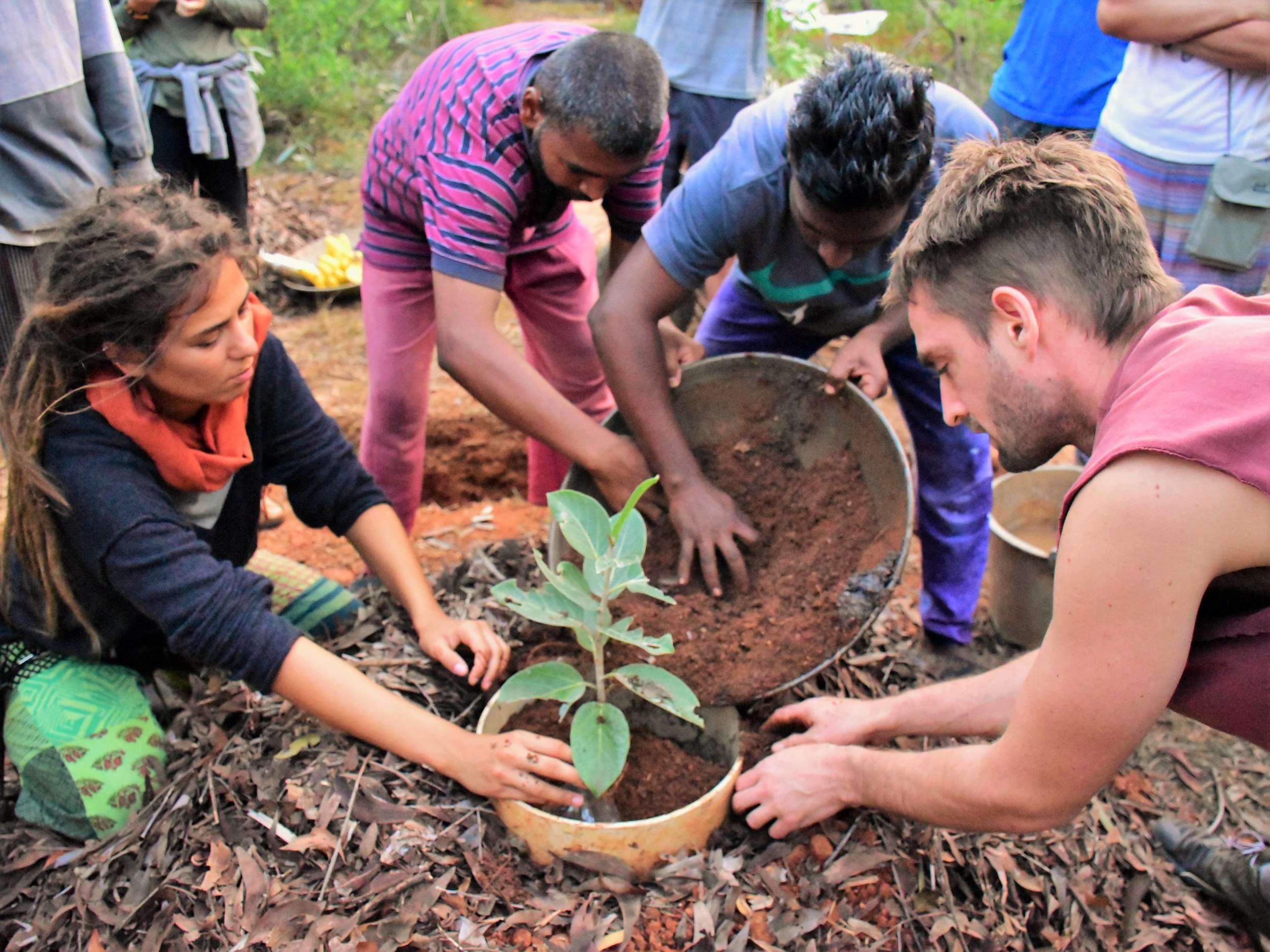 Planting with mound
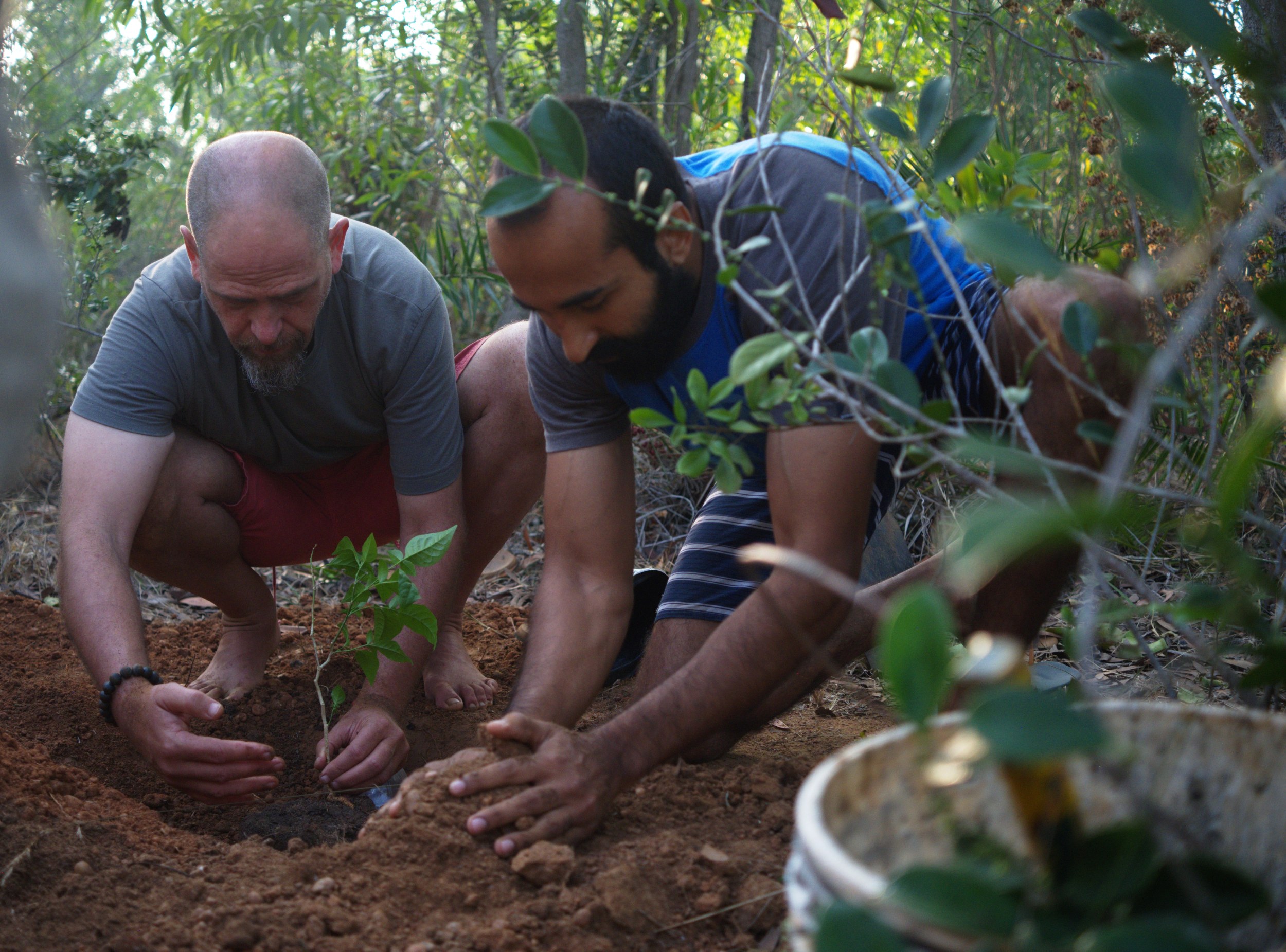 Tree planting
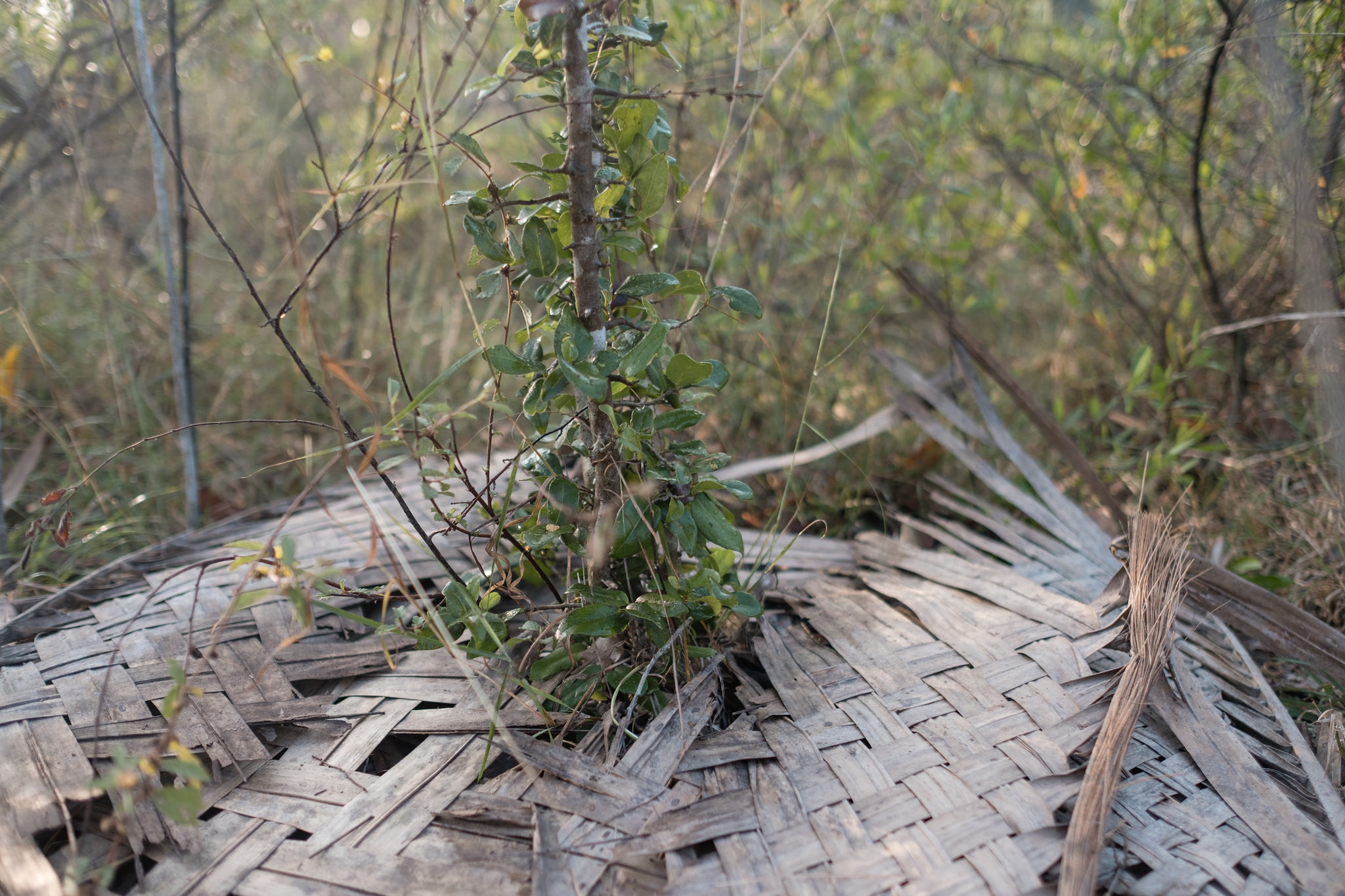 Mulching is crucial to preserve soil moisture and nourish saplings
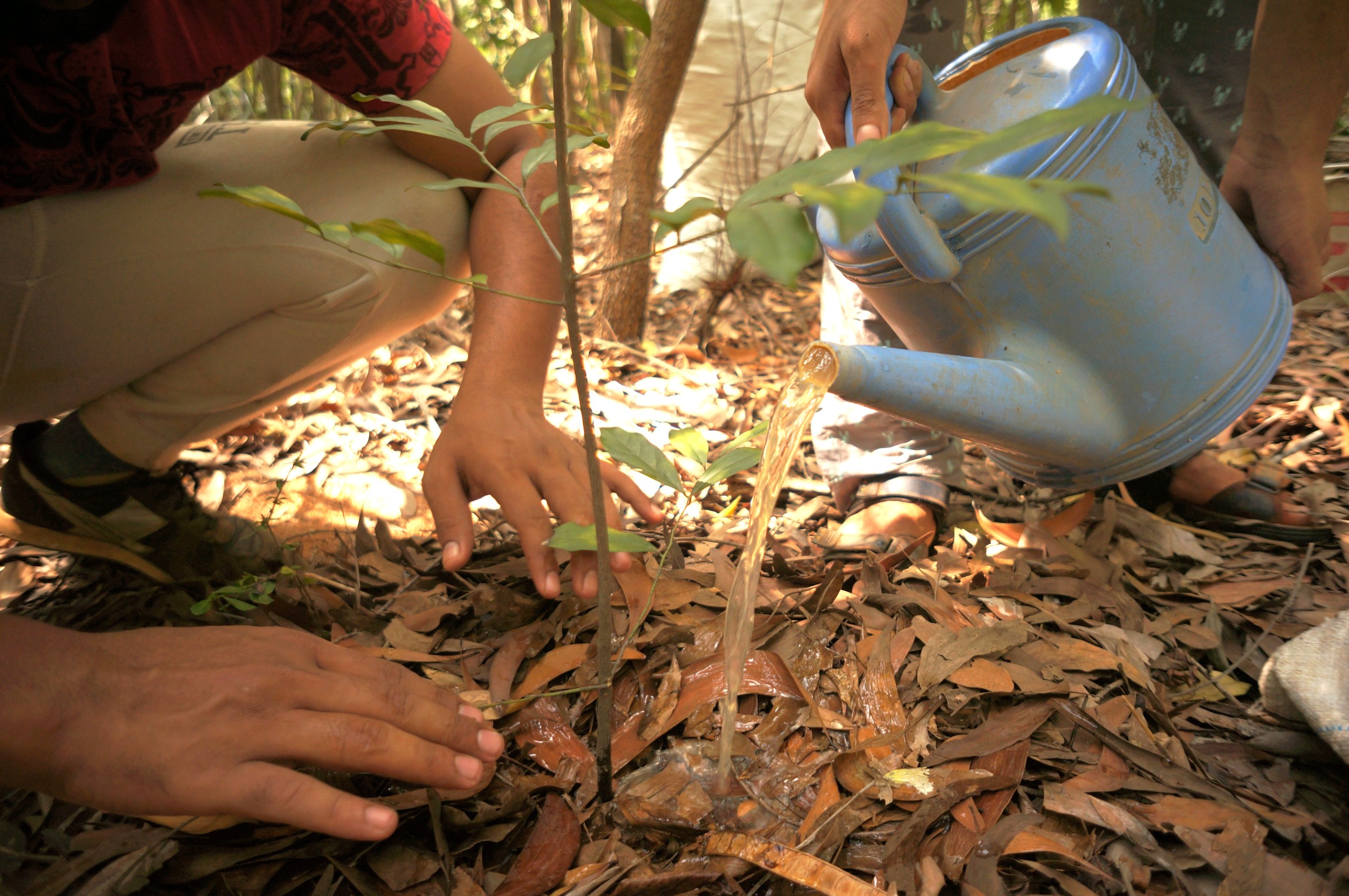 Regular watering of saplings is key to their survival
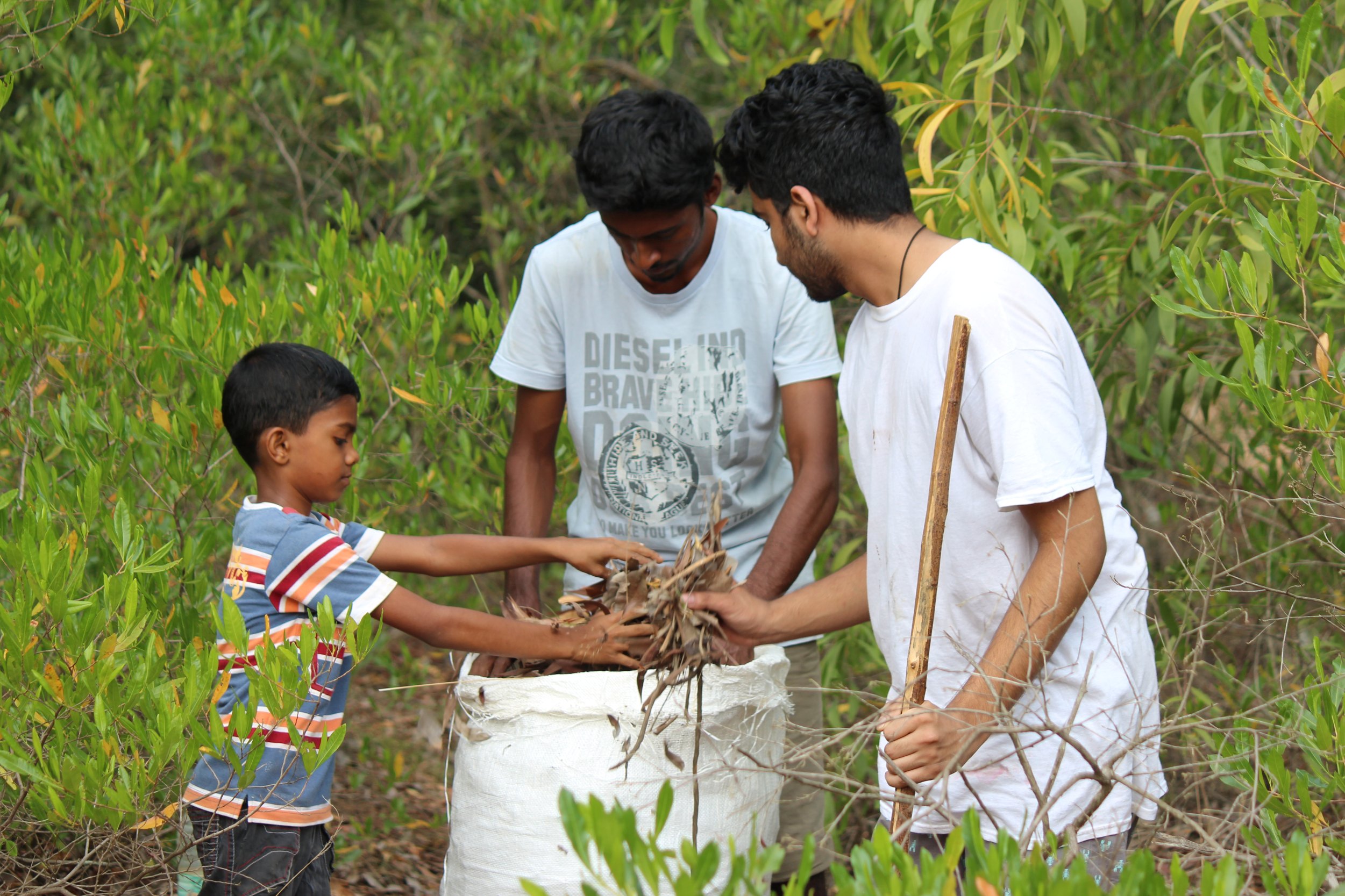 Collecting mulch
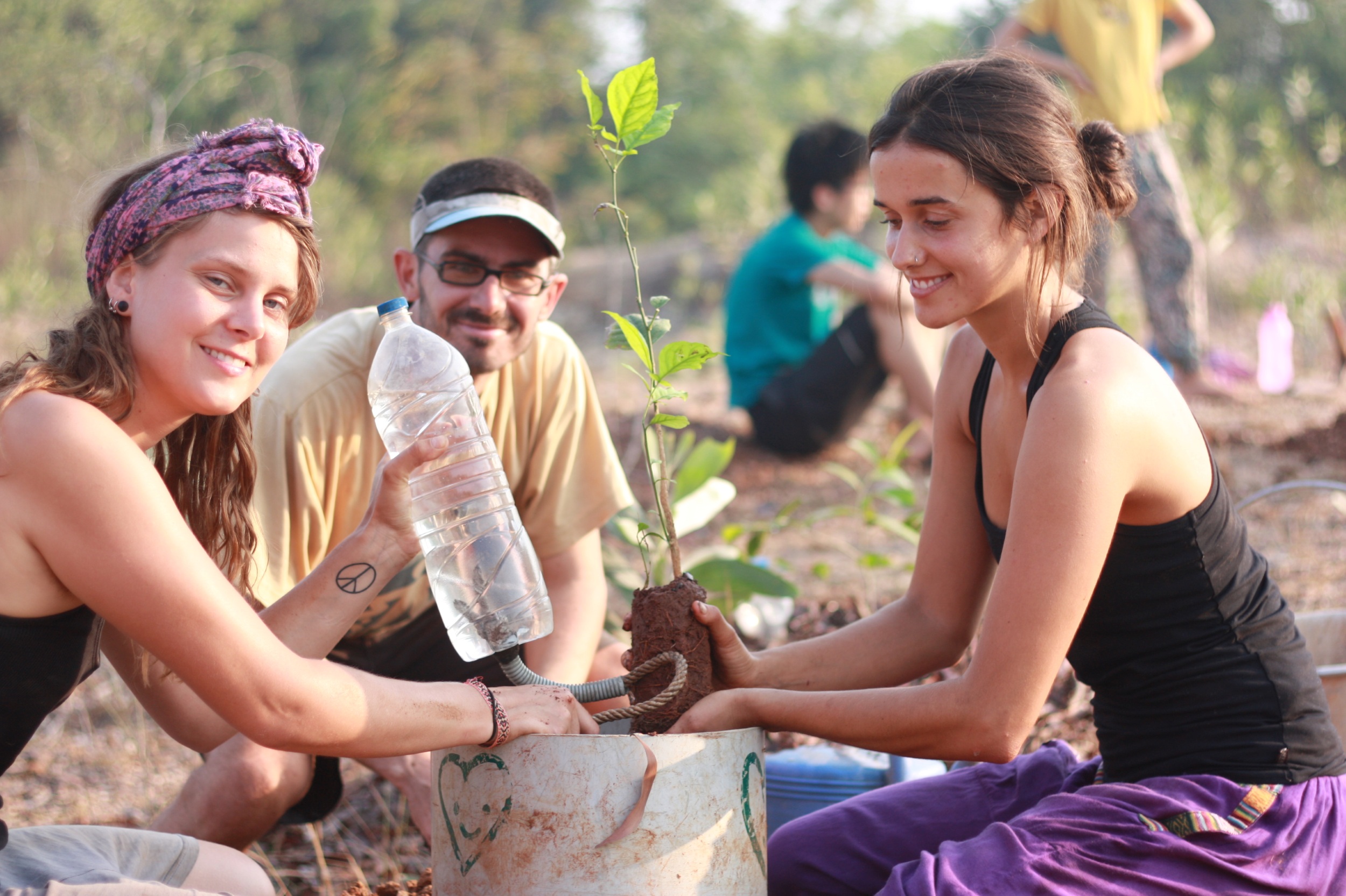 Sapling, wick irrigation bottle and tube used for mound planting
Biodiversity
When we restore the indigenous forest, the wildlife naturally returns. In the beginning, there were no birds or mammals on the land, now there are over 90 bird species, wild boars, jackals, civet cats, porcupines, dozens of mammal, reptile and amphibian species and countless insects and other invertebrates. The animals find their way back home, and in doing so help the process of land restoration by bringing seeds and stimulating the natural cycle of nutrients in the ecosystem.
A scientific study was done in Sadhana Forest Auroville, looking at the biodiversity in the regenerated native forest:
Greater biodiversity in regenerated native tropical dry evergreen forest compared to non-native Acacia regeneration in Southeastern India
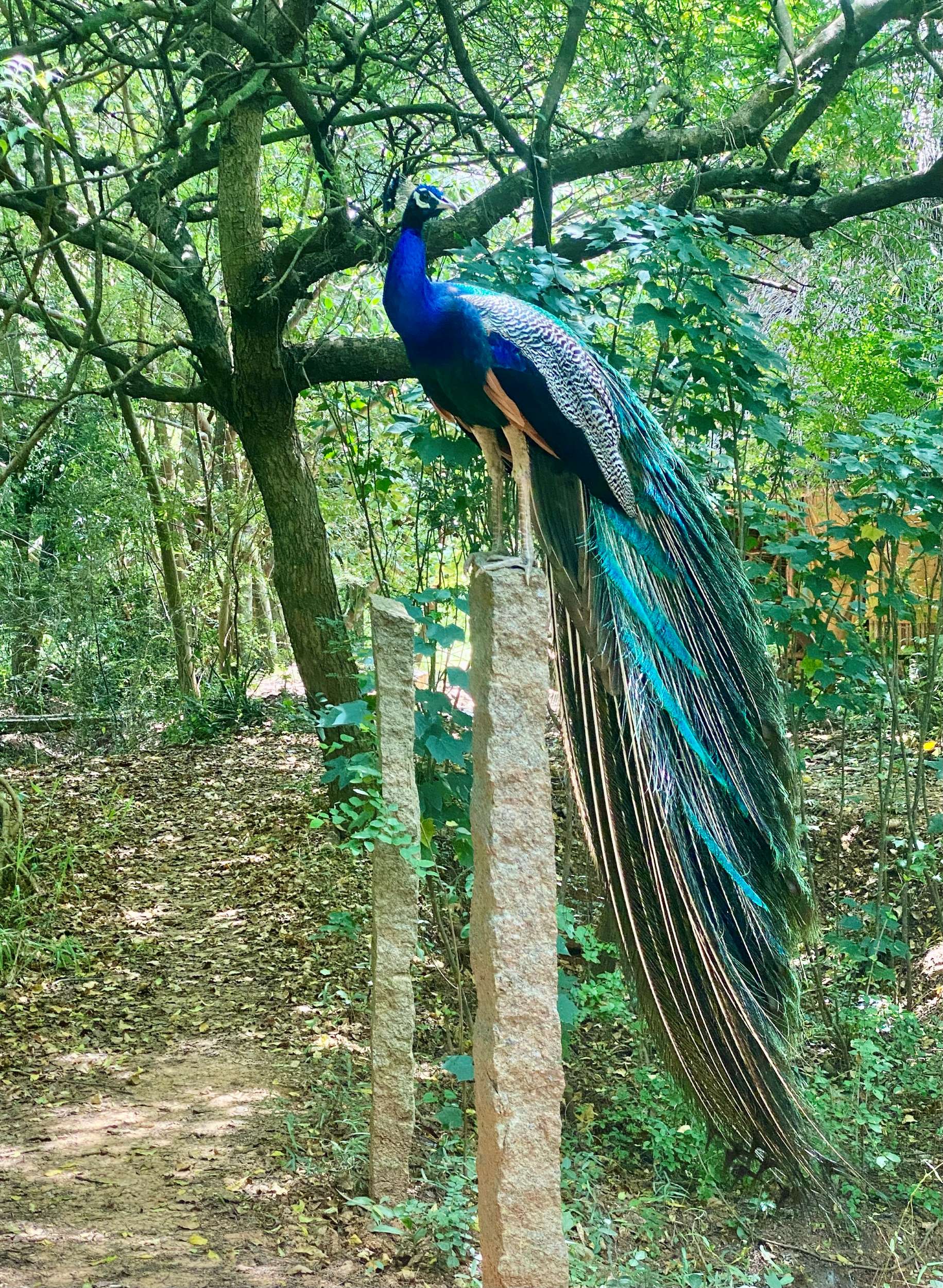 Indian peacock (Pavo cristatus)
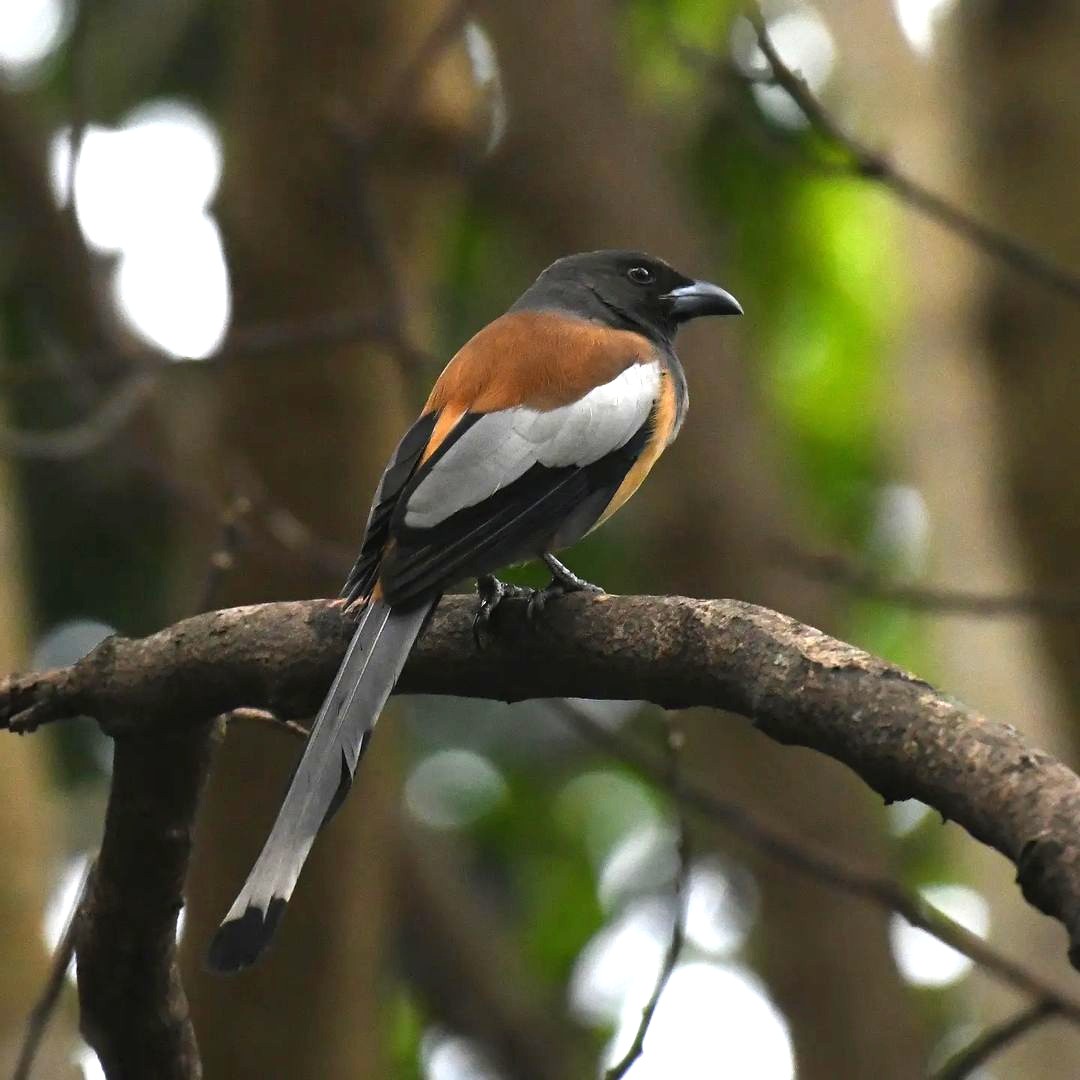 Rufous treepie (Dendrocitta vagabunda)
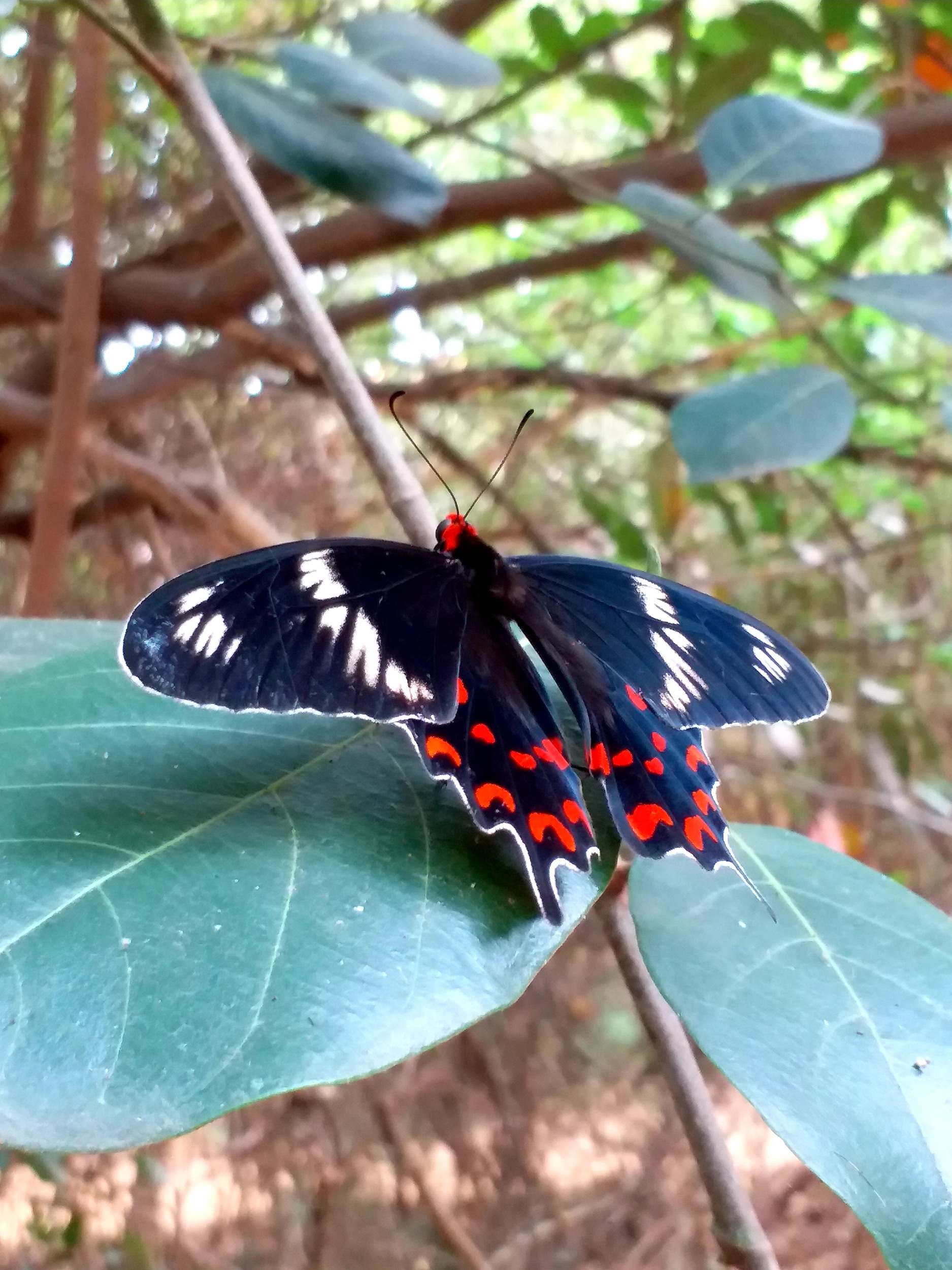 Crimson rose (Pachliopta hector)
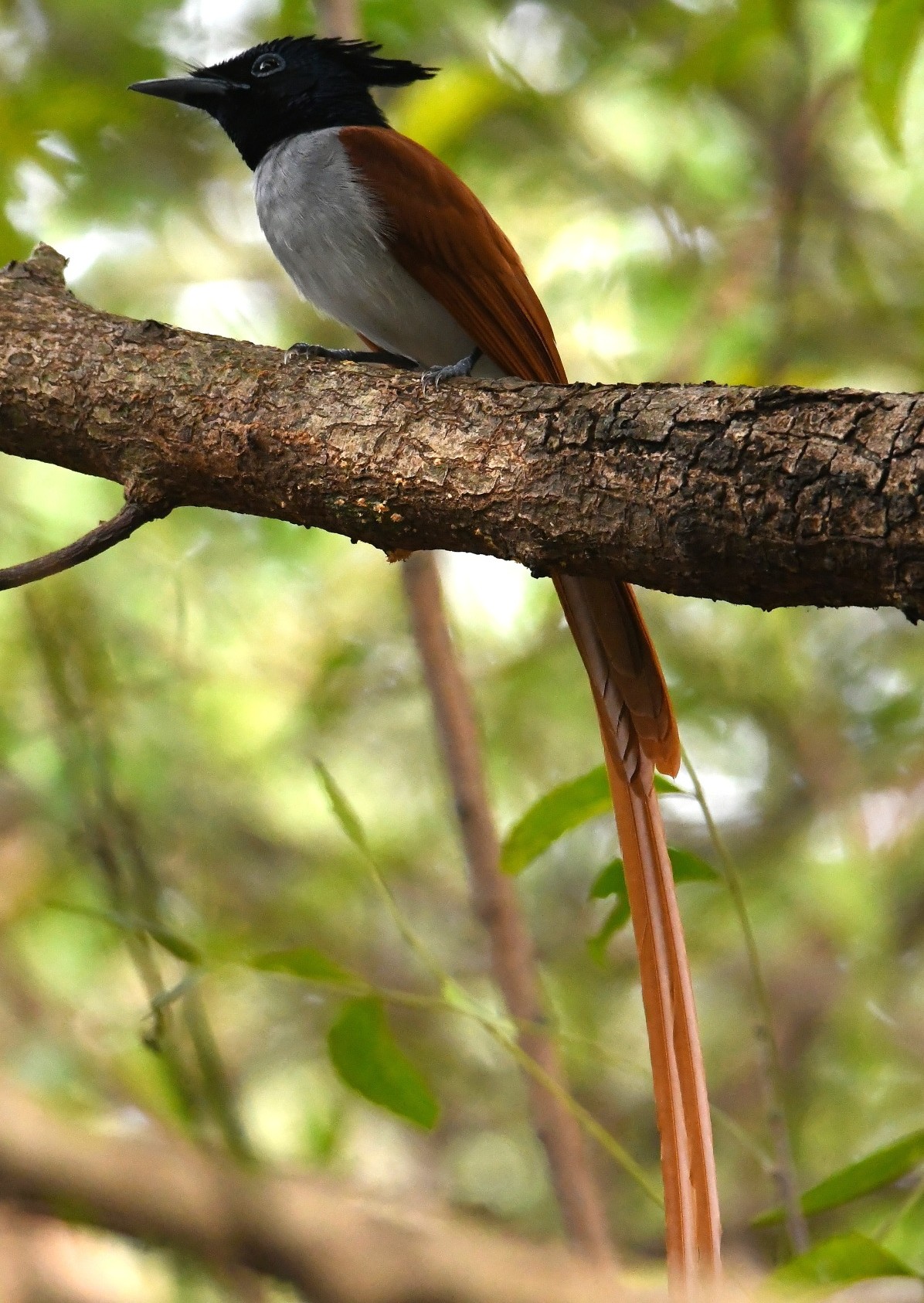 Indian paradise flycatcher (Terpsiphone paradisi)
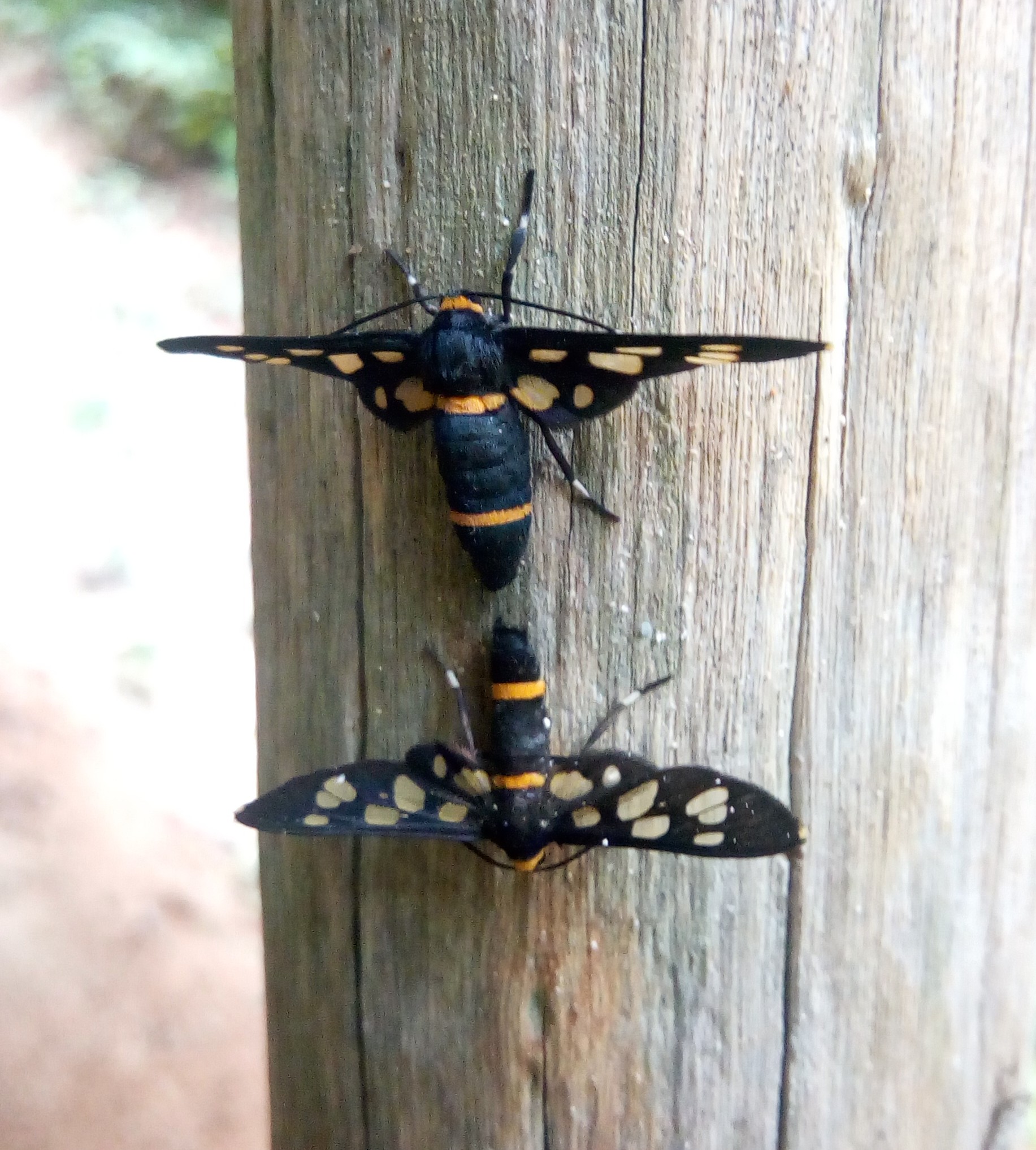 Handmaiden moth (Amata cyssea)
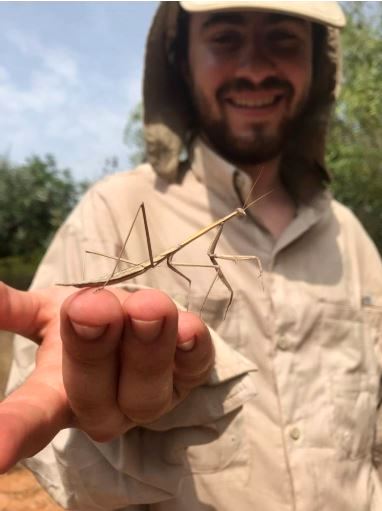 Indian stick bug (Carausius morosus)
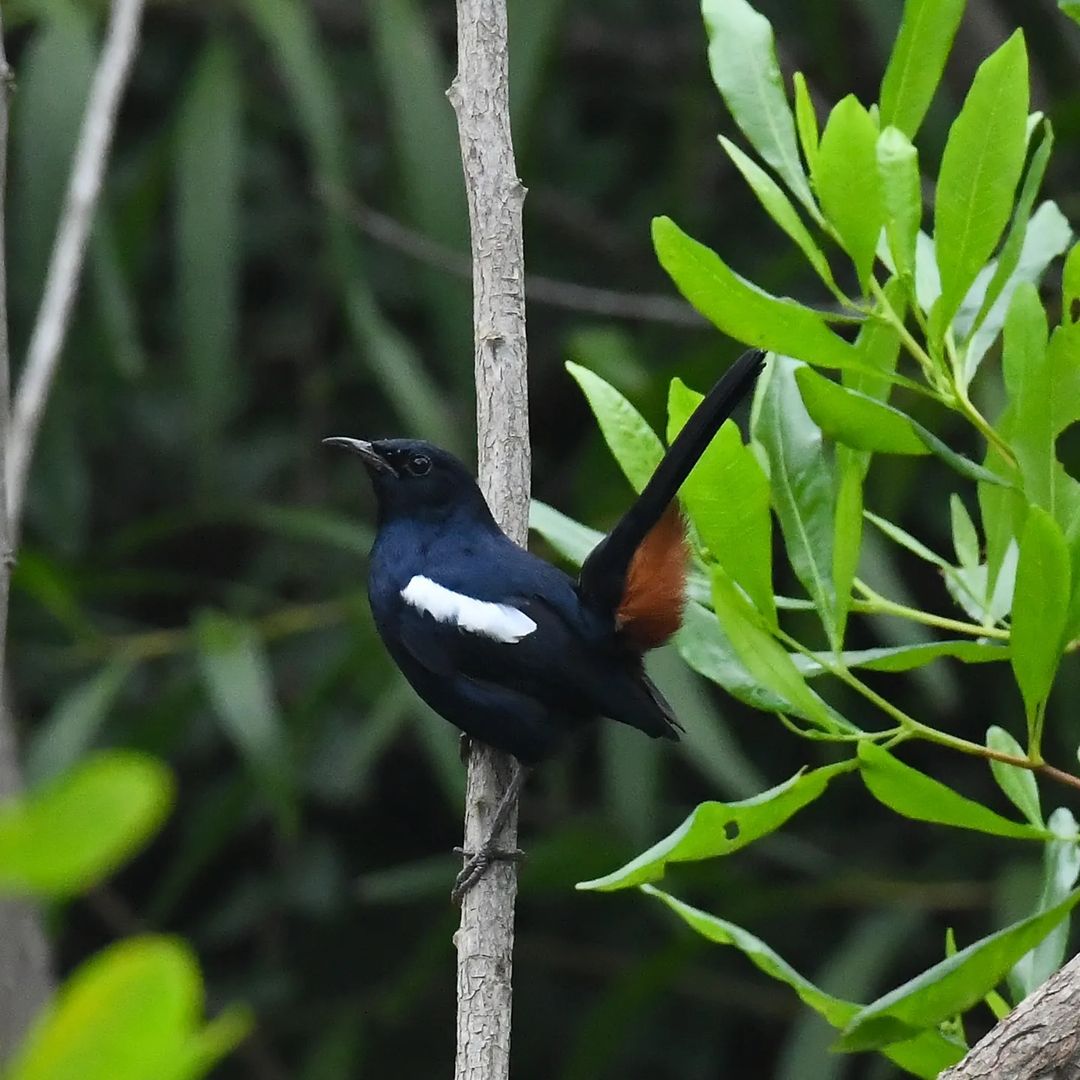 Indian robin (Copsychus fulicatus)
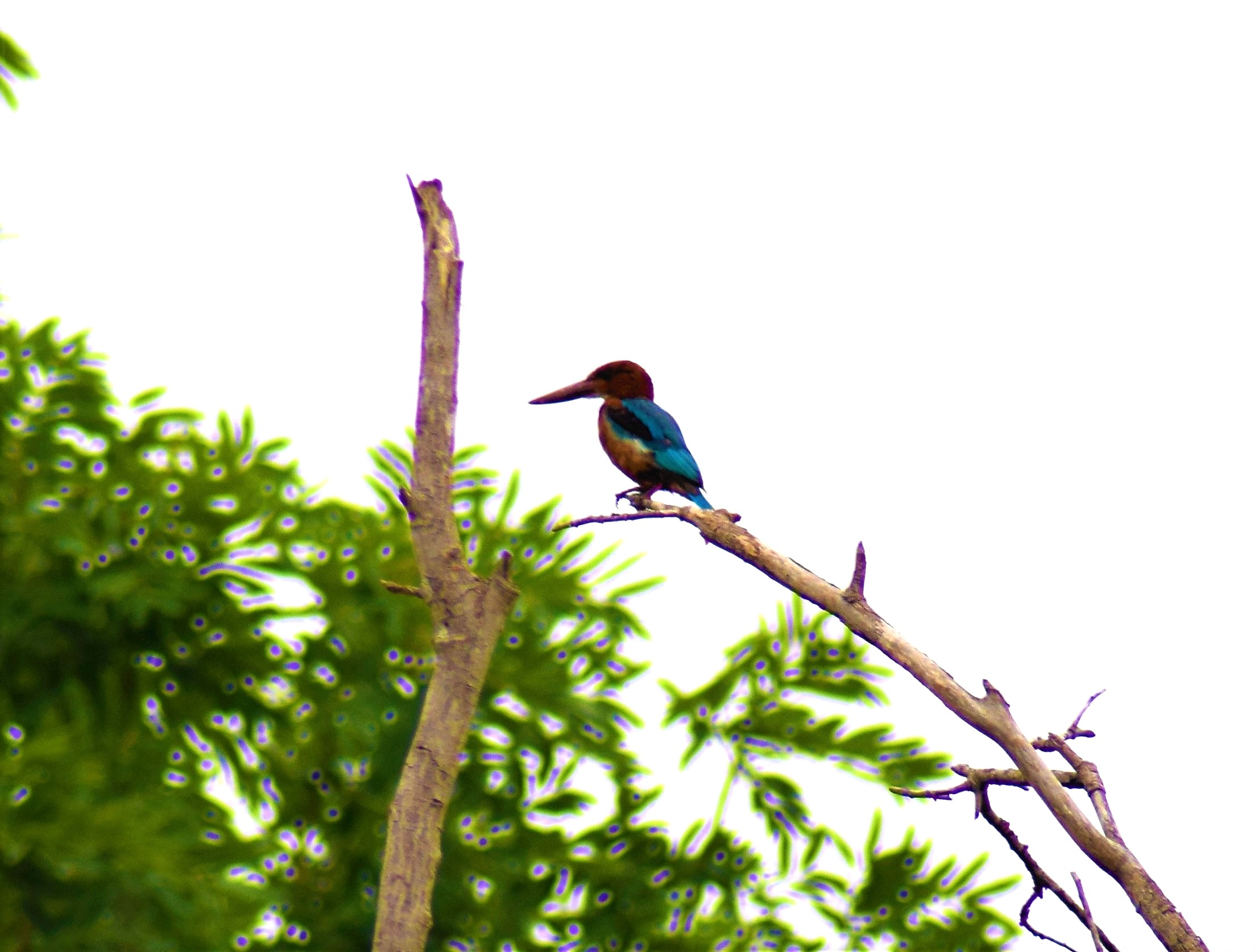 White-throated kingfisher (Halcyon smyrnensis)
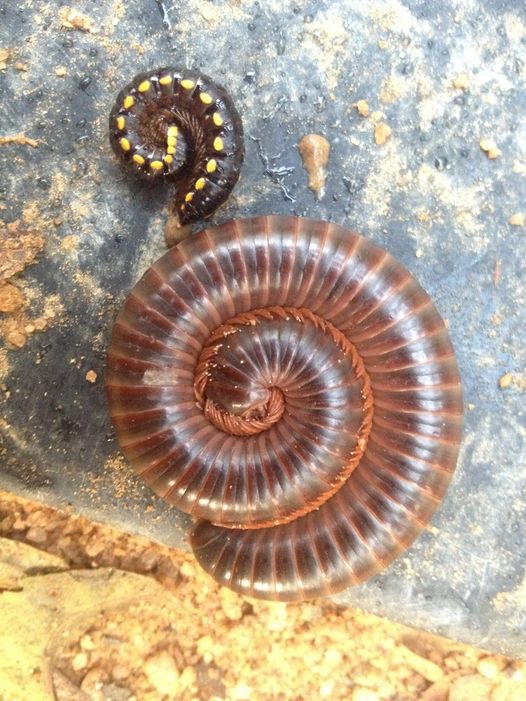 Millipedes (up: Anoplodesmus saussurii; down: unkown, possibly Spinotarsus colosseus)
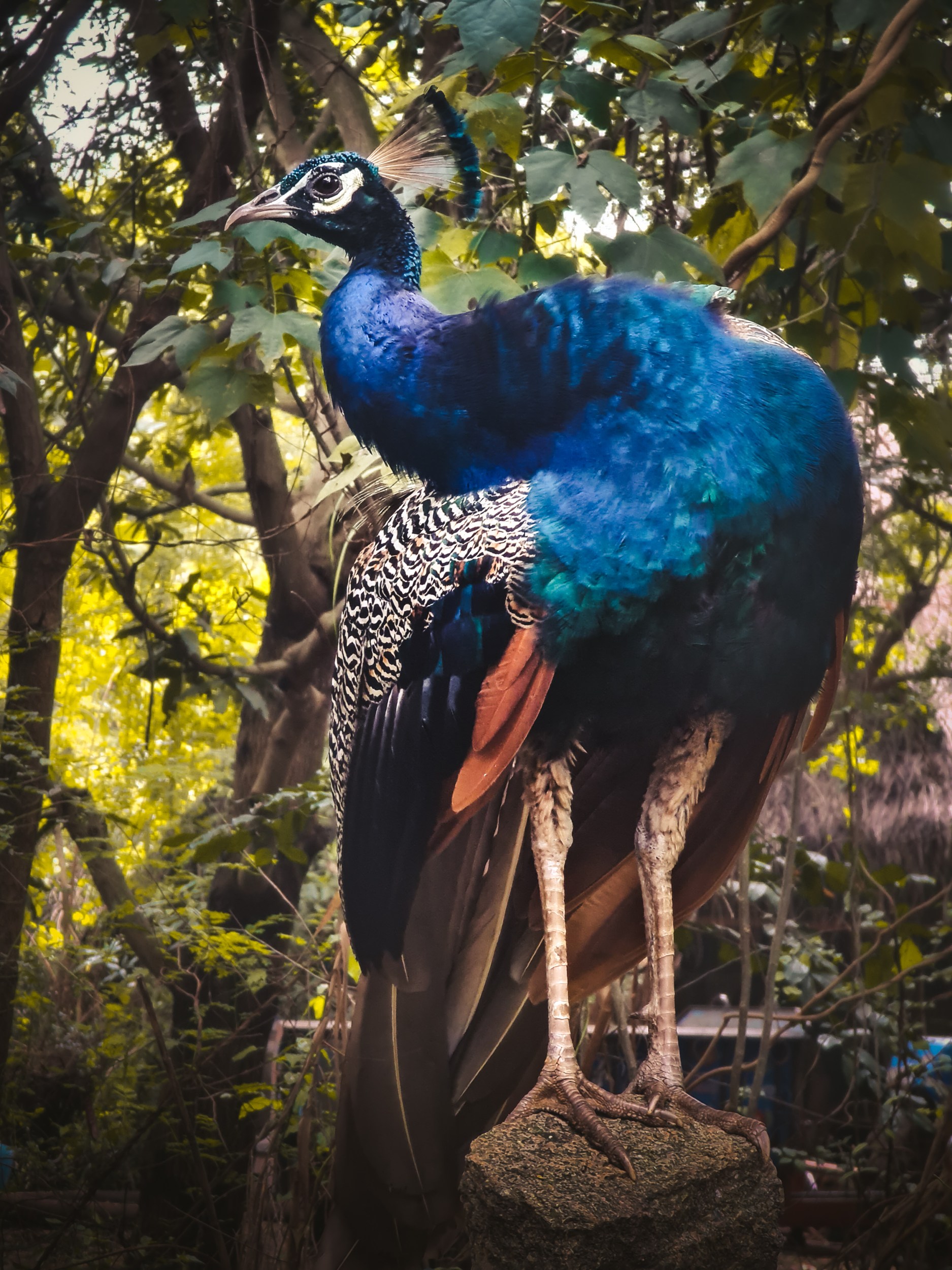 Indian peacock
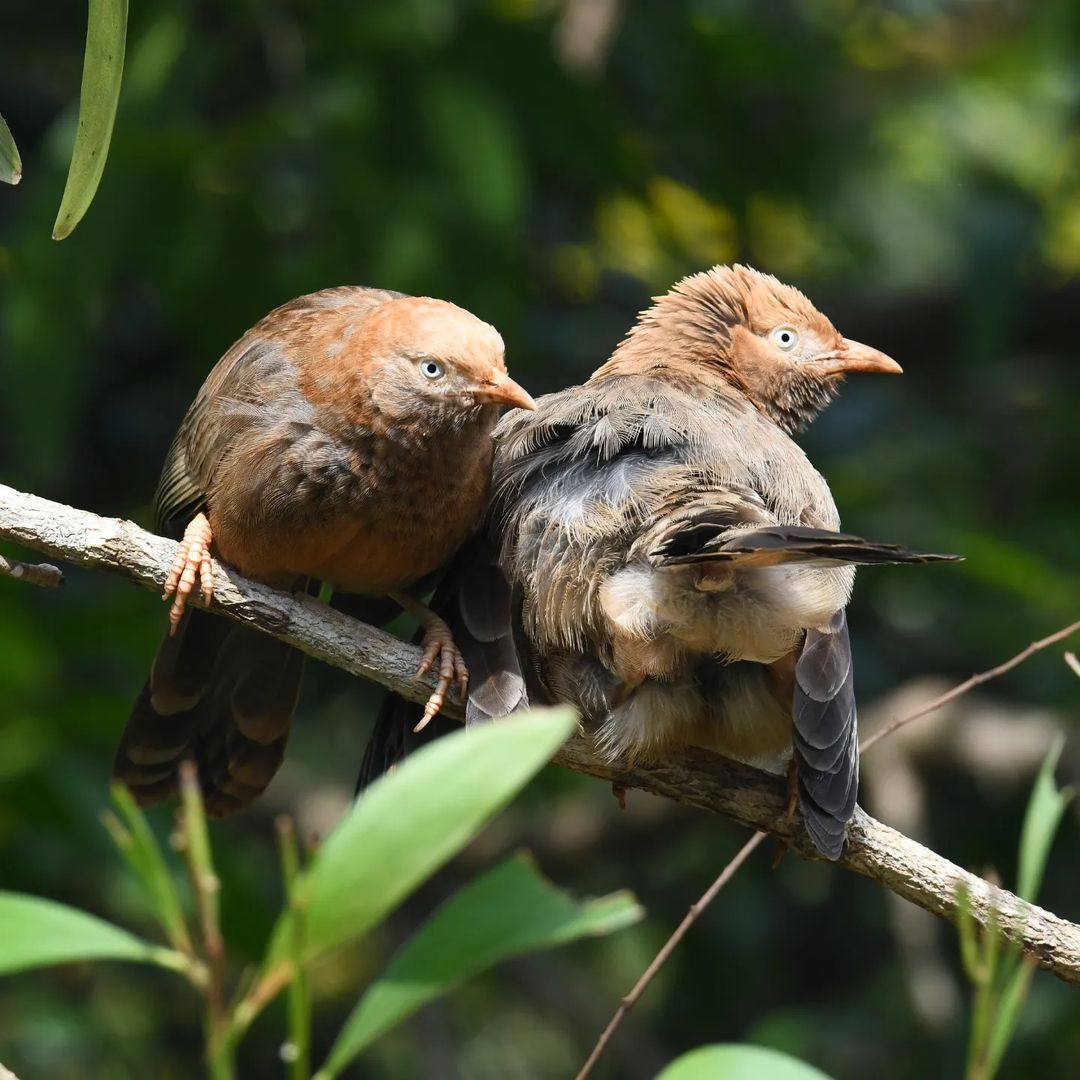 Yellow-billed babbler (Argya affinis)
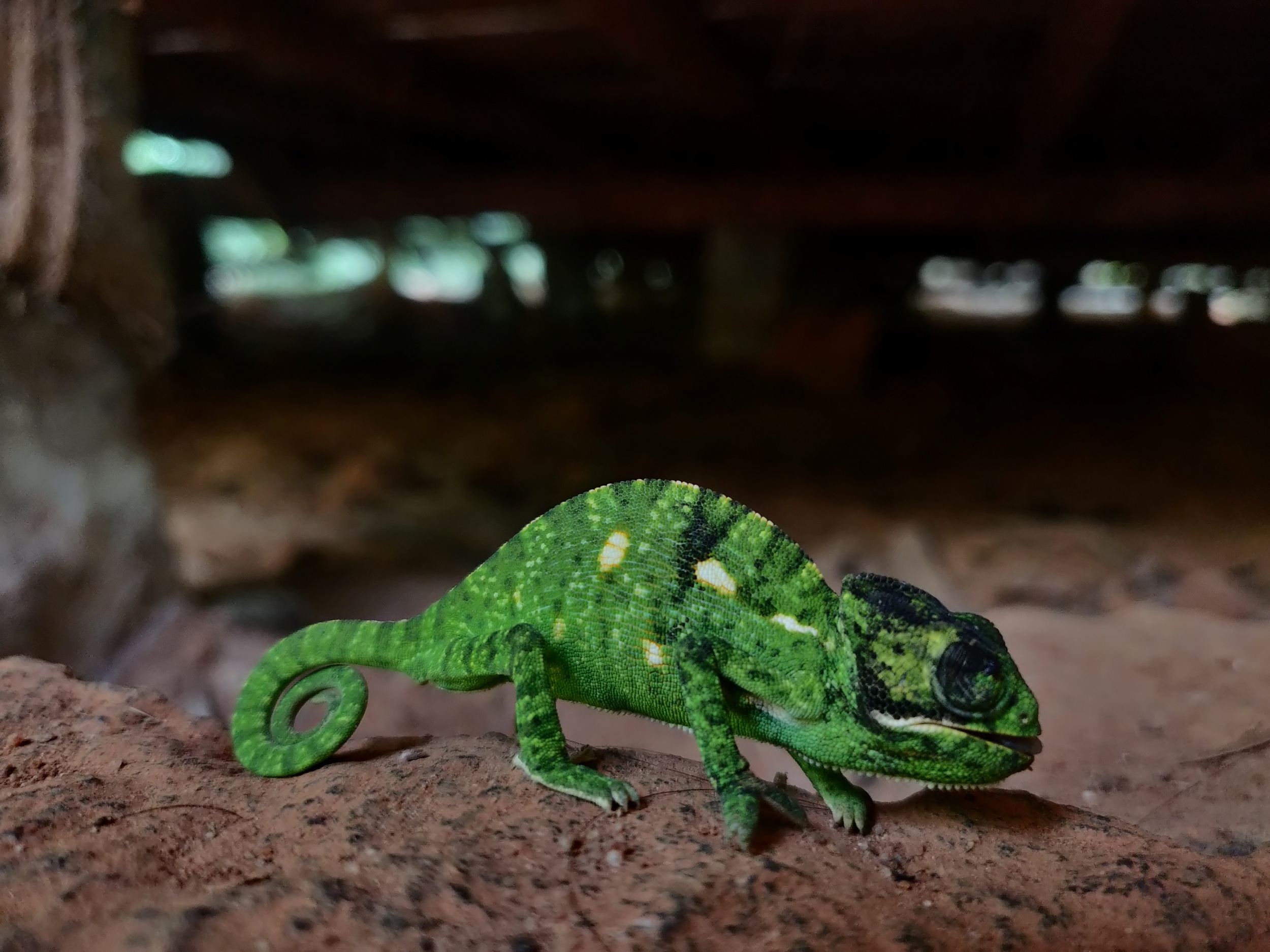 Indian chameleon (Chamaeleo zeylanicus)
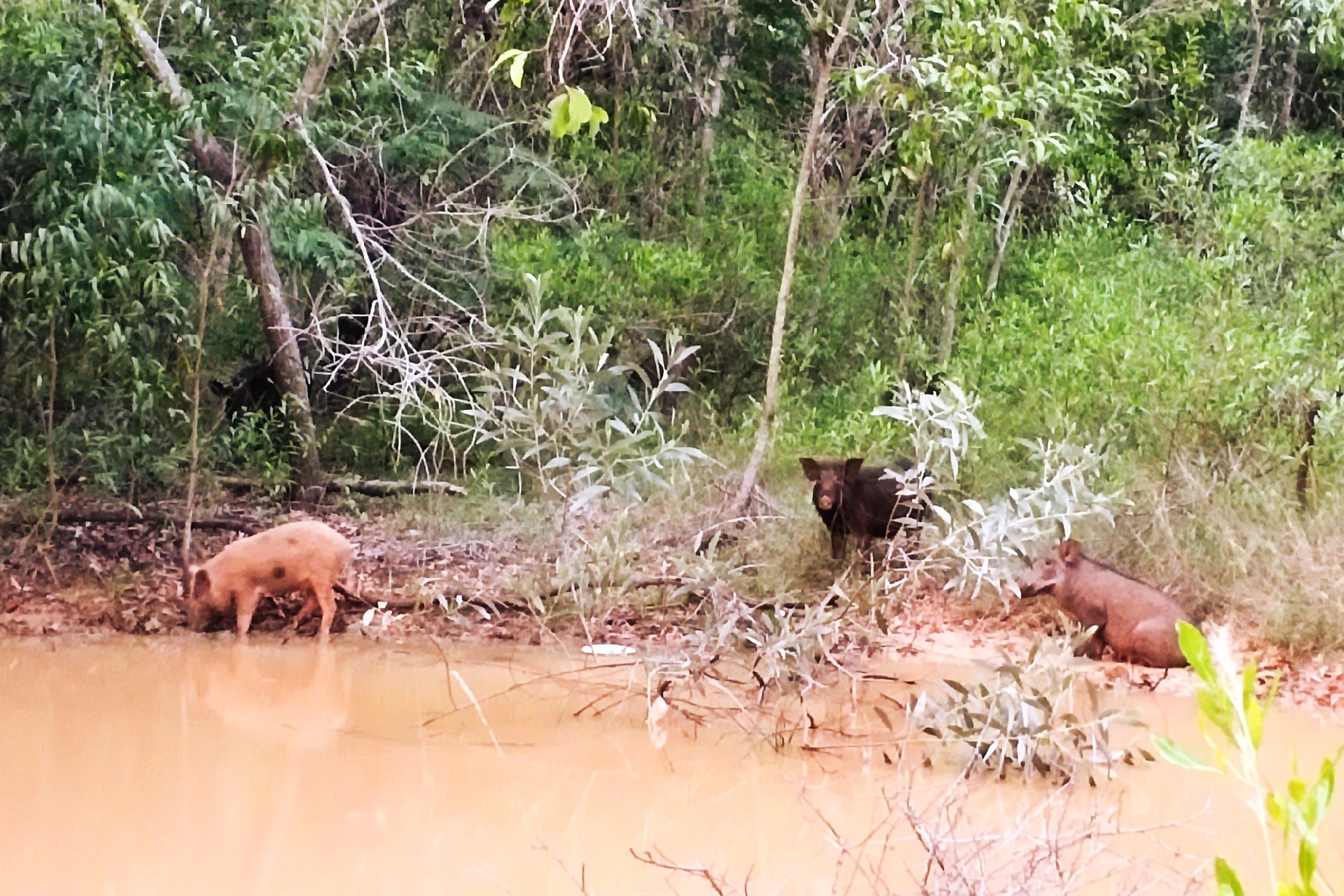 Wild boar (Sus scrofa)
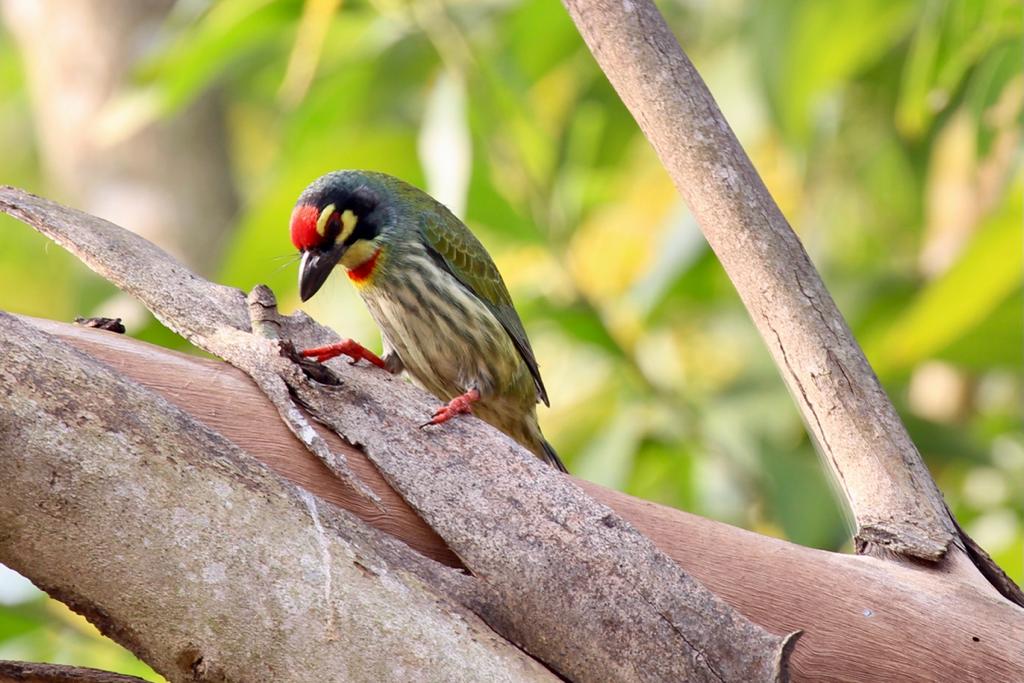 Coppersmith barbet (Psilopogon haemacephalus)
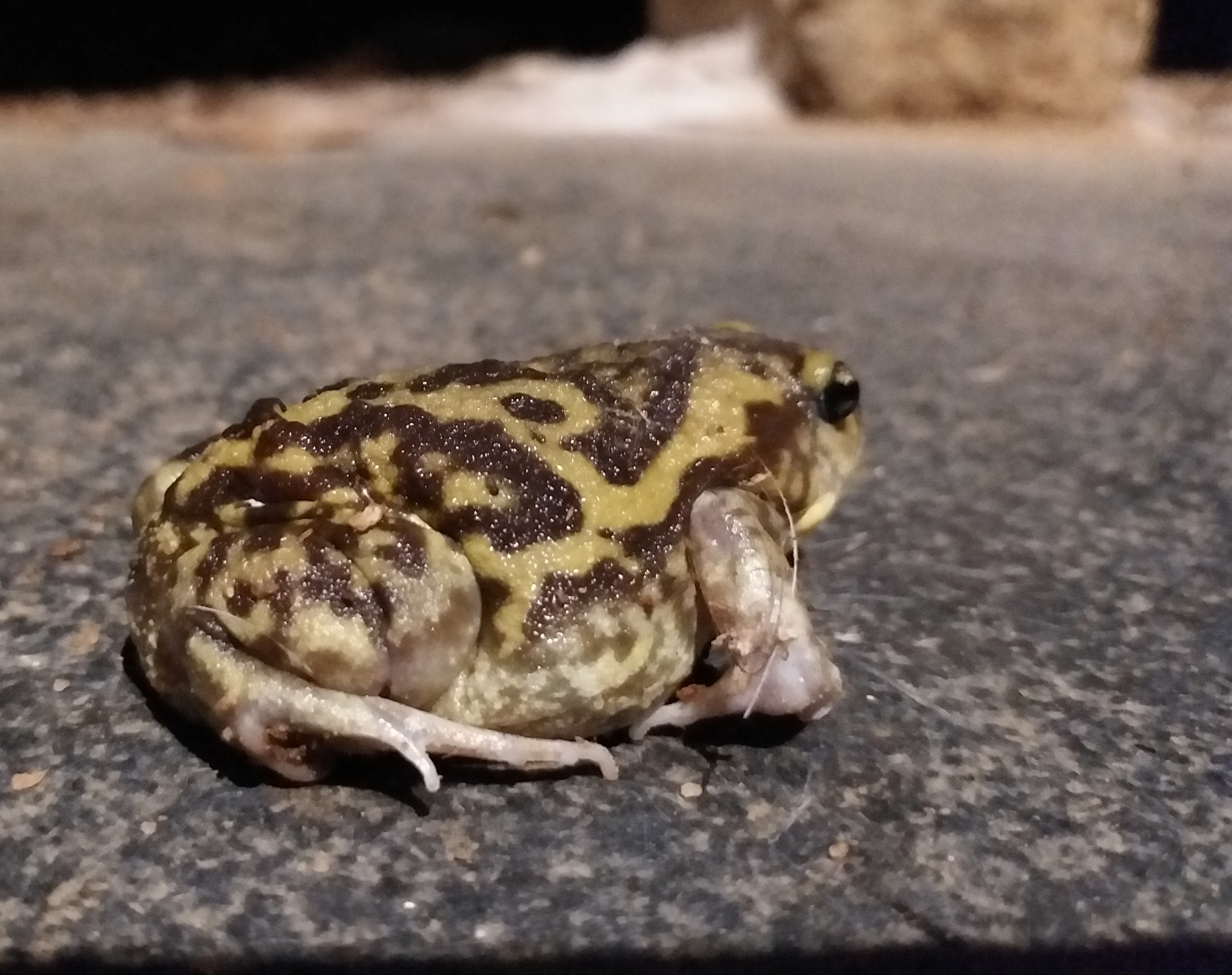 Marbled balloon frog (Uperodon systoma)
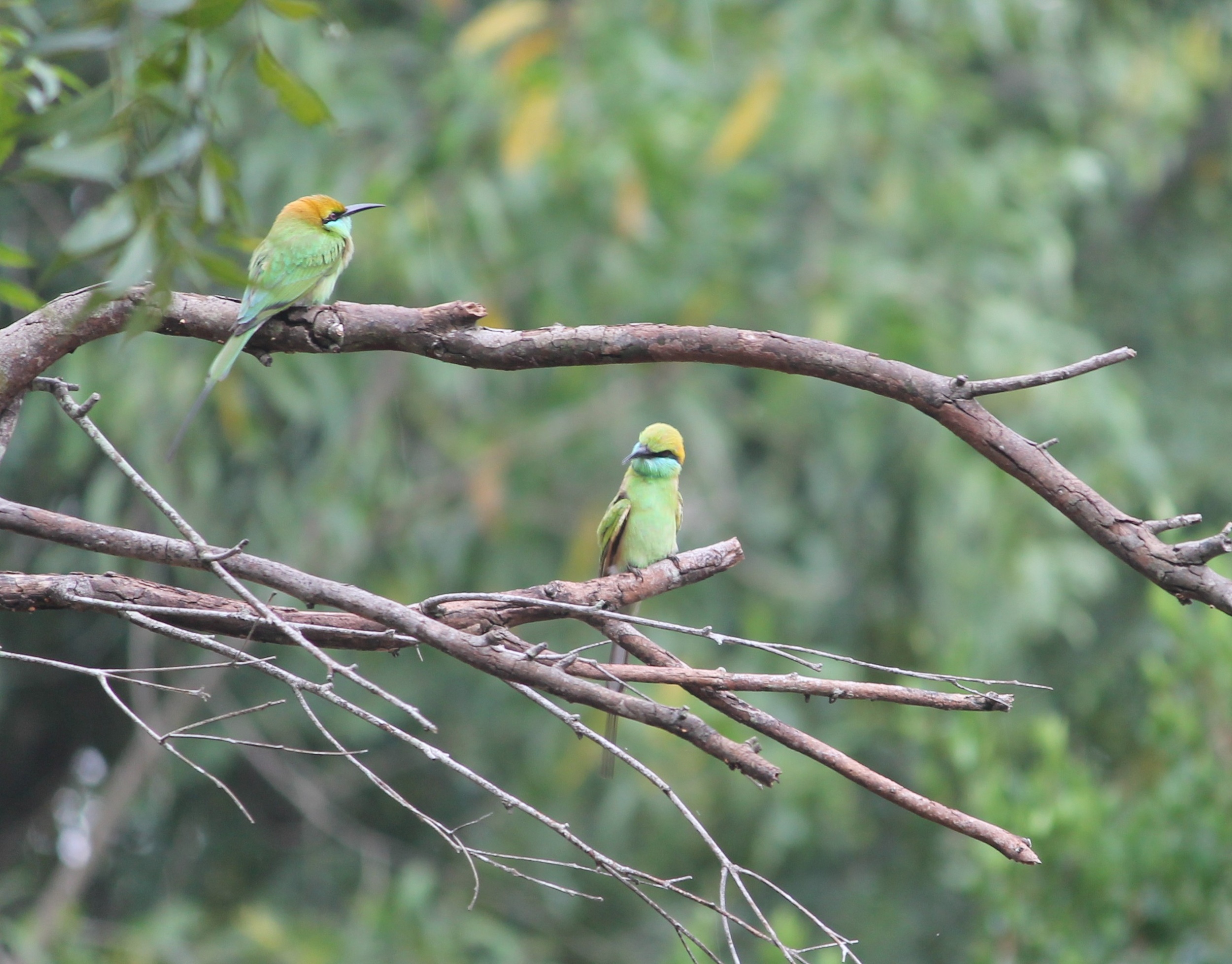 Asian green bee-eater (Merops orientalis)
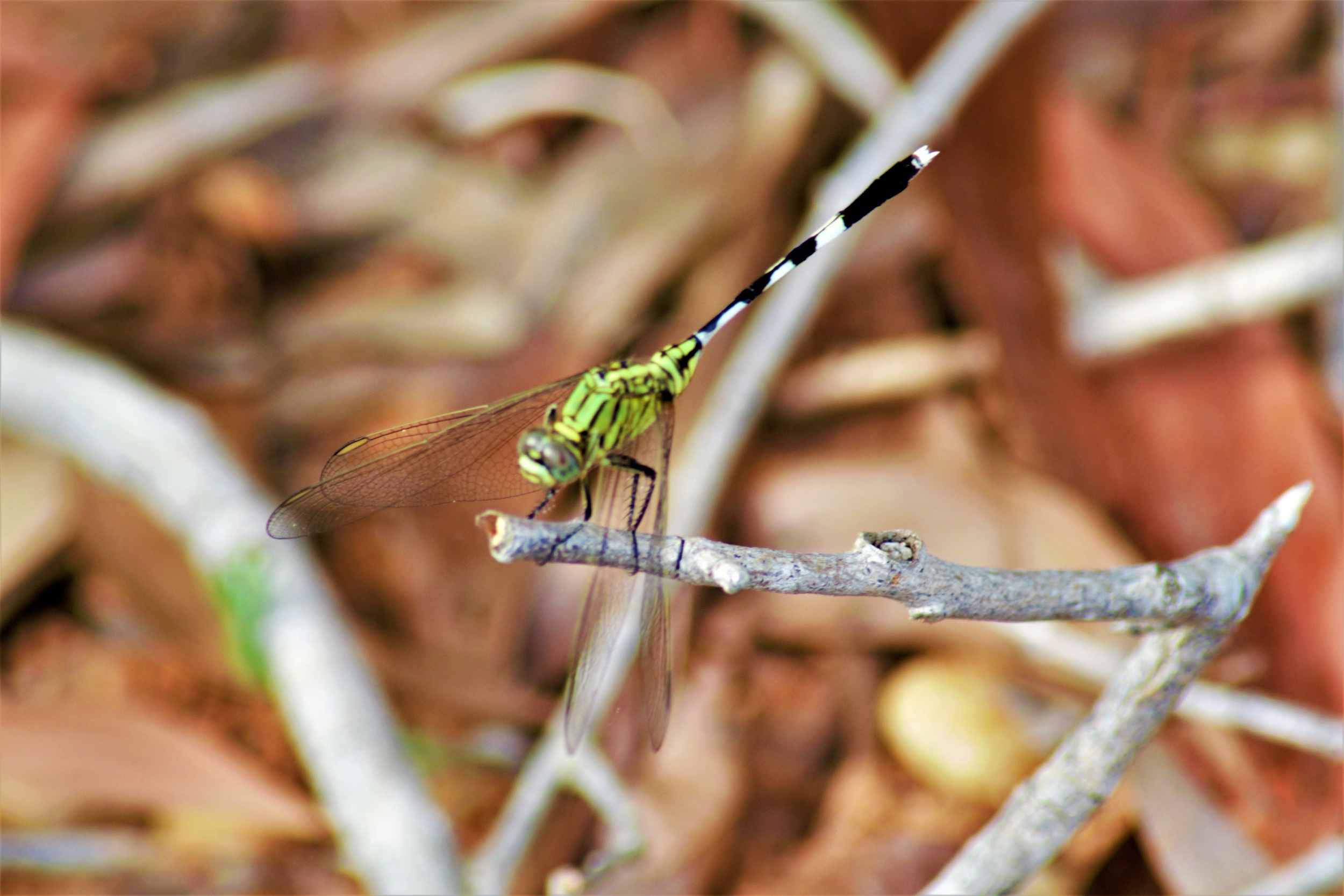 Globe skimmer (Pantala flavescens)
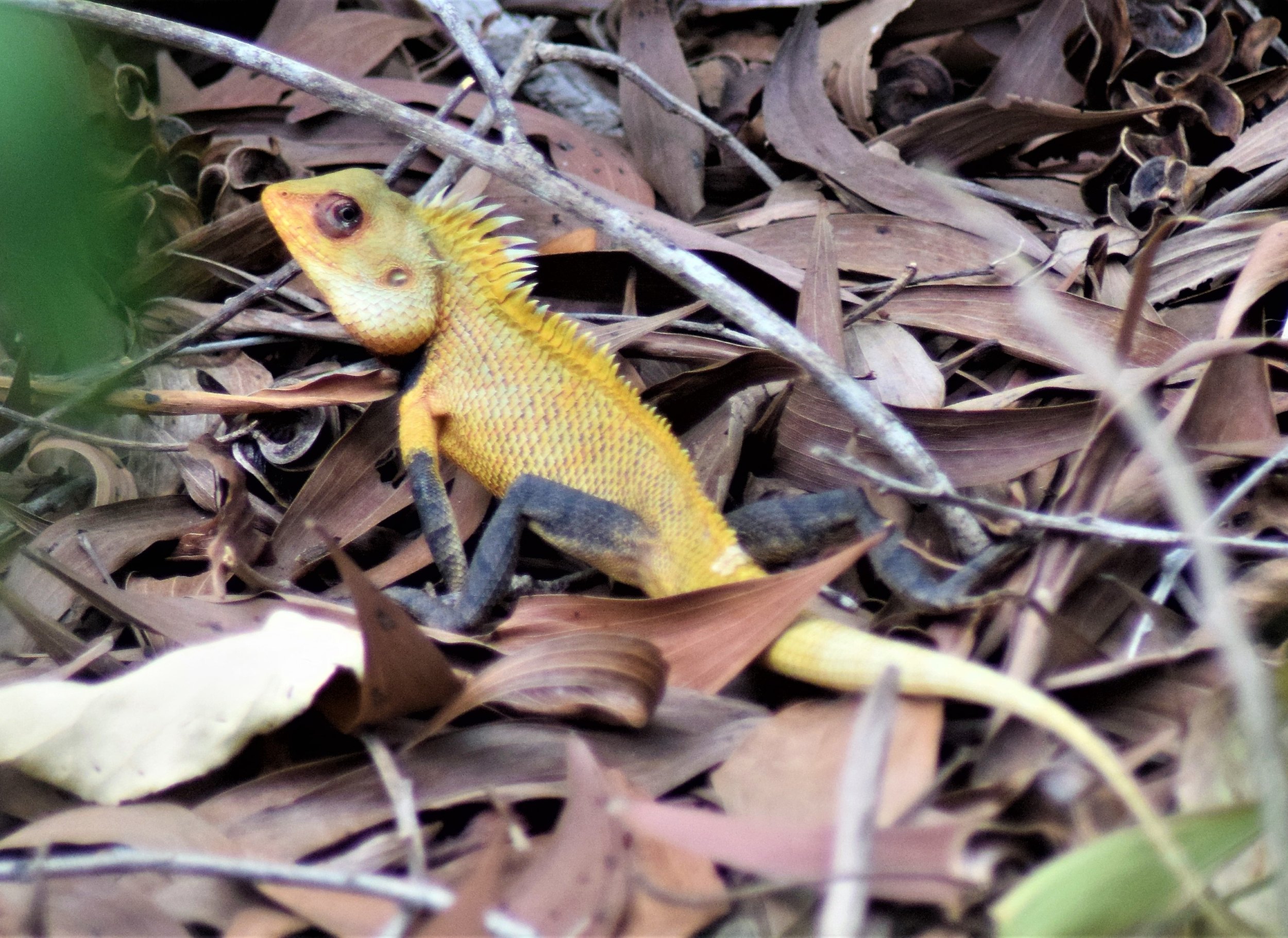 Oriental garden lizard (Calotes versicolor)
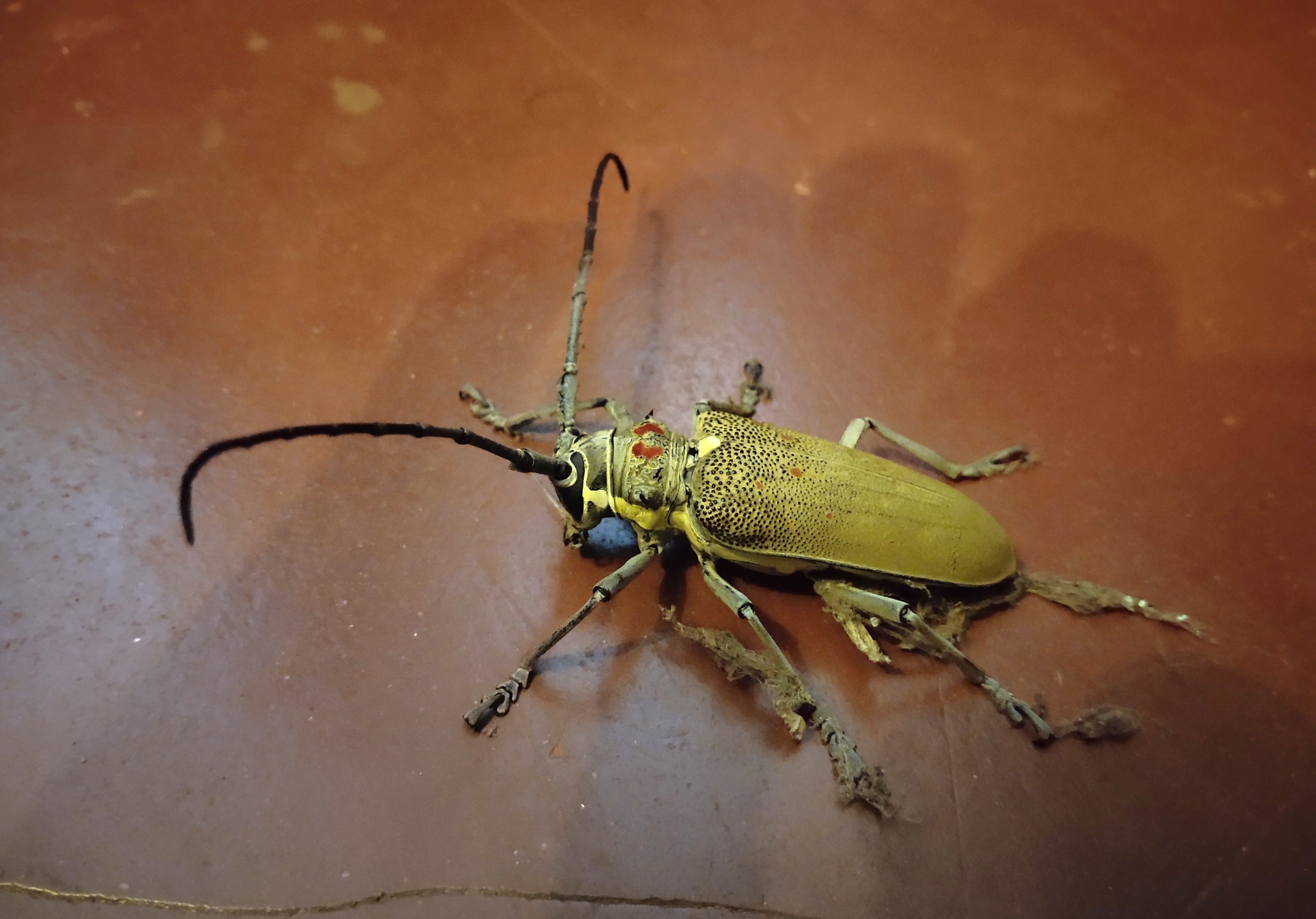 Mango stem borer (Batocera rufomaculata)
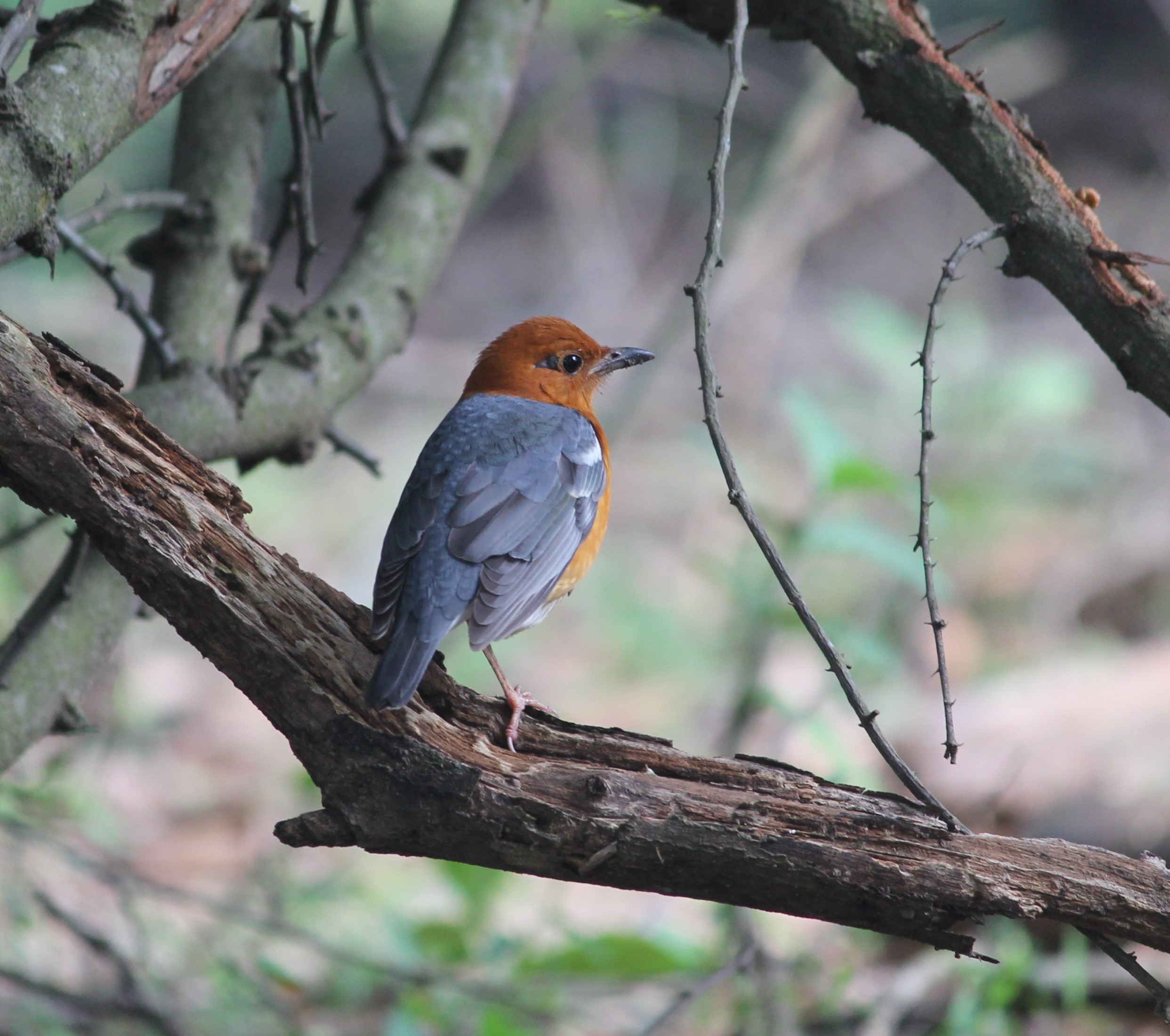 Orange-headed thrush (Geokichla citrina)
Sustainability
Sadhana Forest aims to create a model for sustainable living. Every aspect of our work is designed with the utmost mindfulness for the living environment that we are part of. We believe we are not separate from nature. Through careful and responsible stewardship, we can live with nature in a mutually beneficial way.
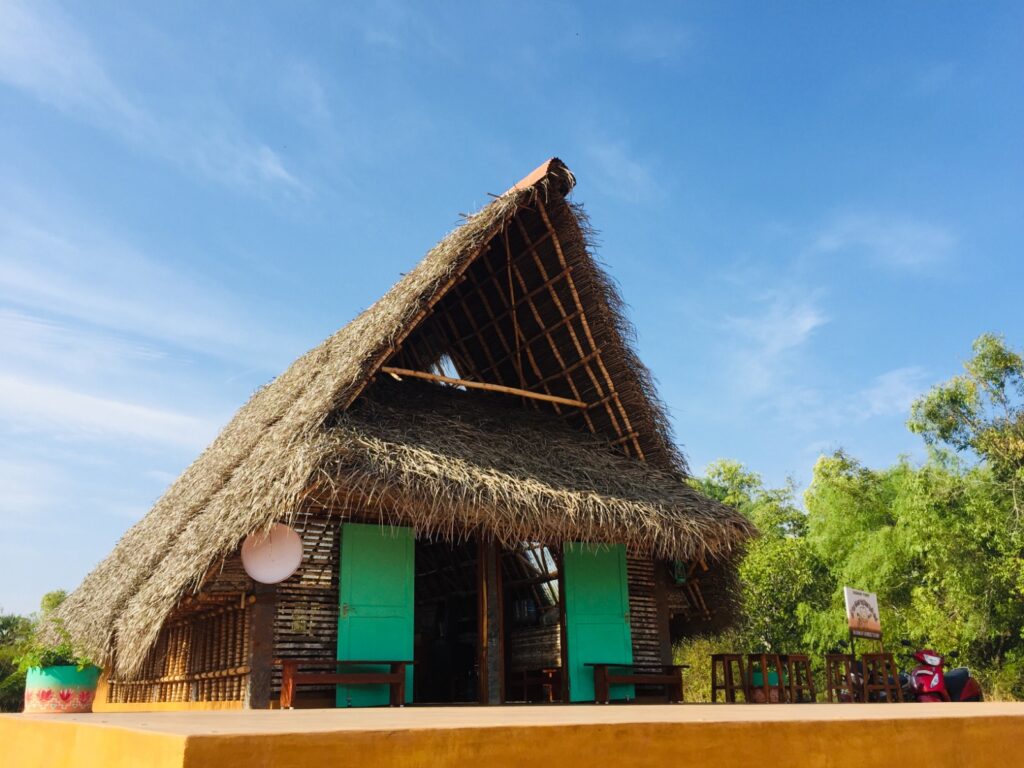
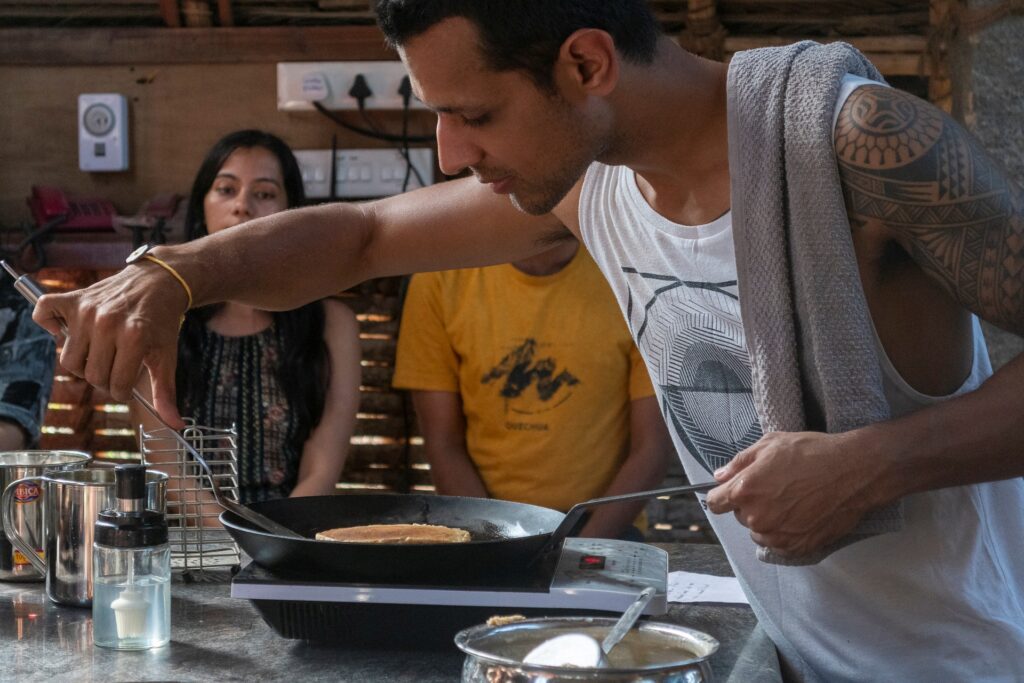
We try to live as sustainably as we possibly can. Our buildings are made almost entirely from natural materials, using traditional South Indian architecture. Occasionally we use recycled materials in construction as well. Our campus is off-grid and runs on energy from our own solar panels. We only drow water from our own borewell. We cook with dead wood from the forest on highly efficient rocket stoves. We consume a wholefood plant-based diet, and don’t use any processed foods.
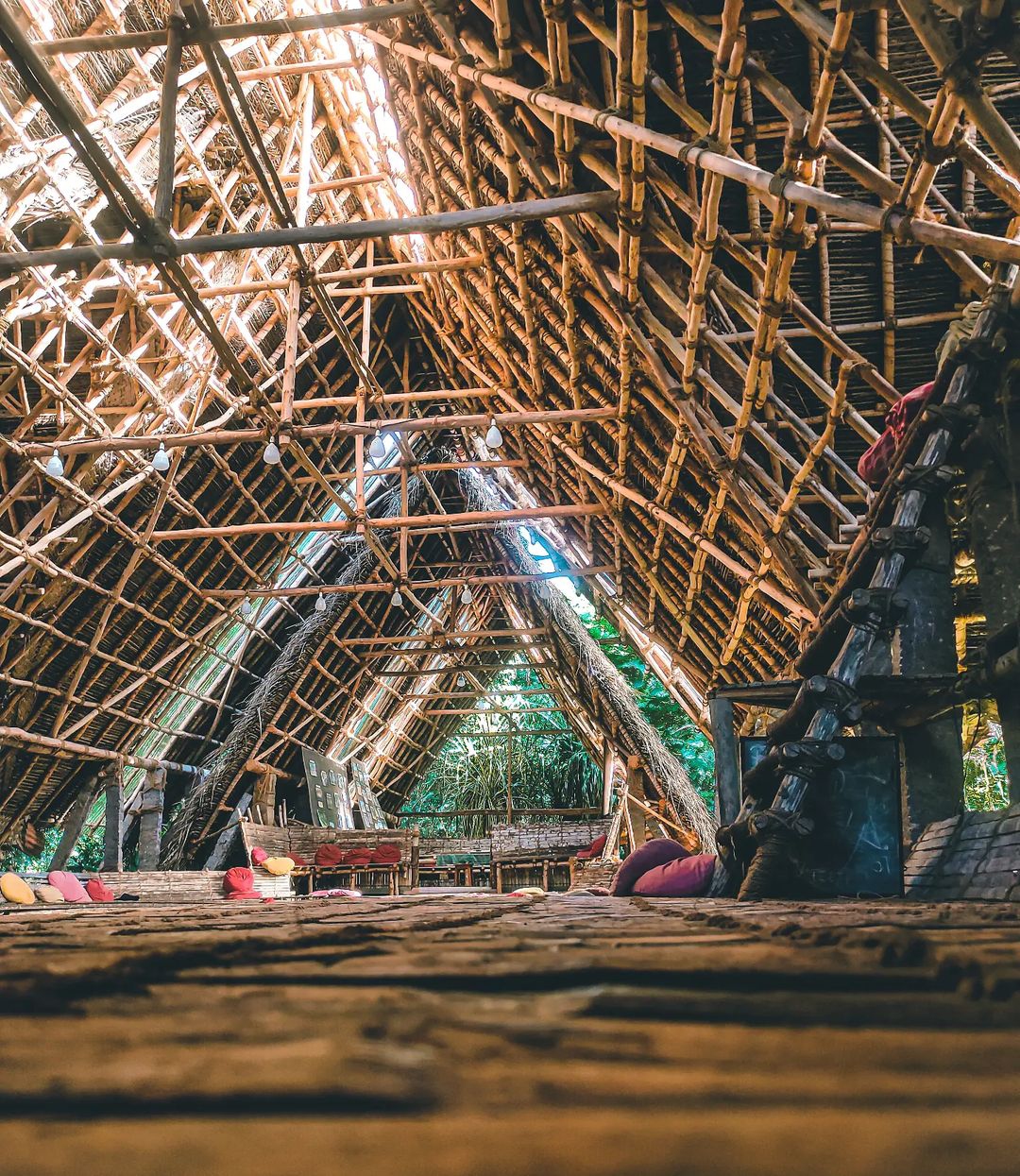 The main hut, made from local, natural materials
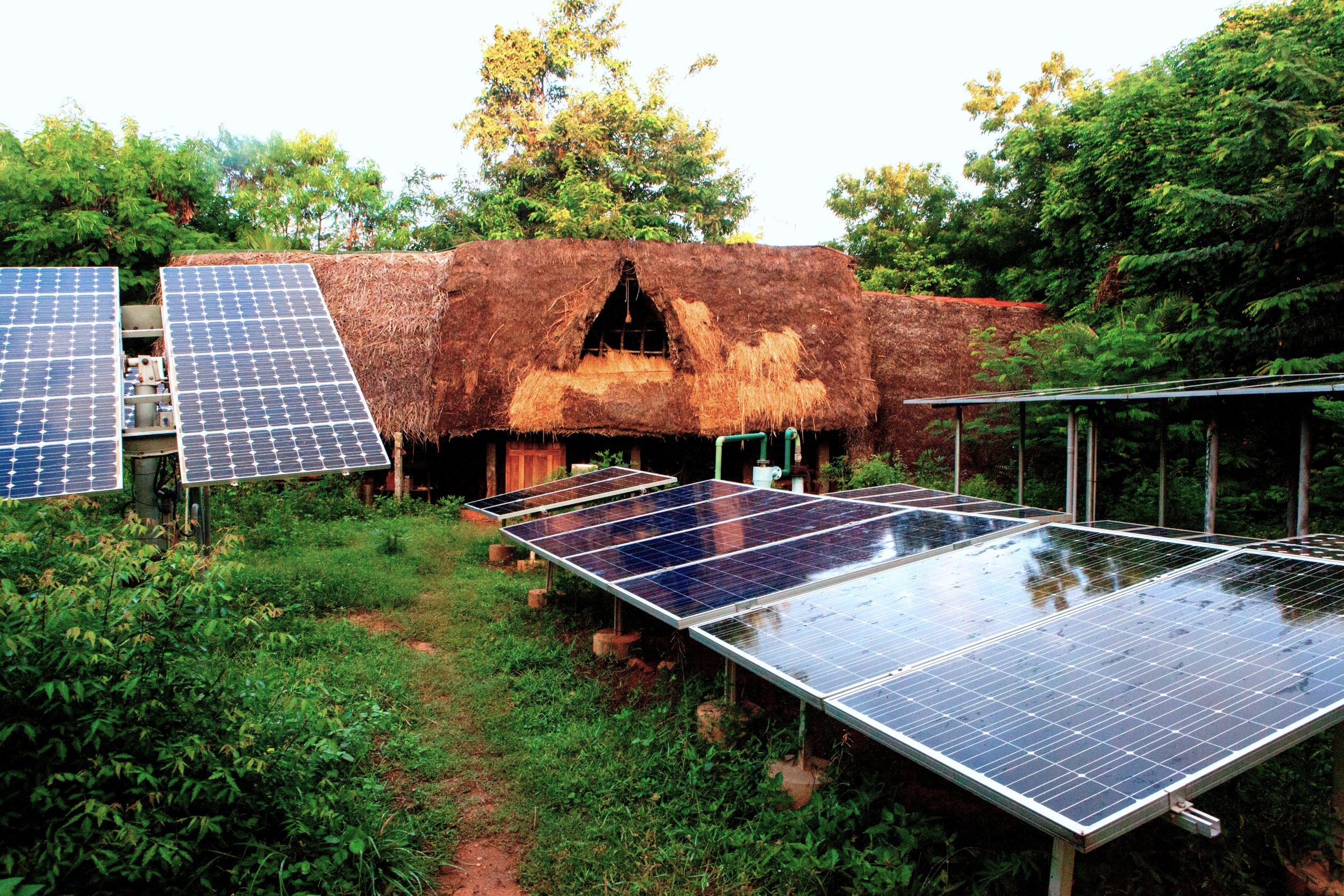 Solar panels
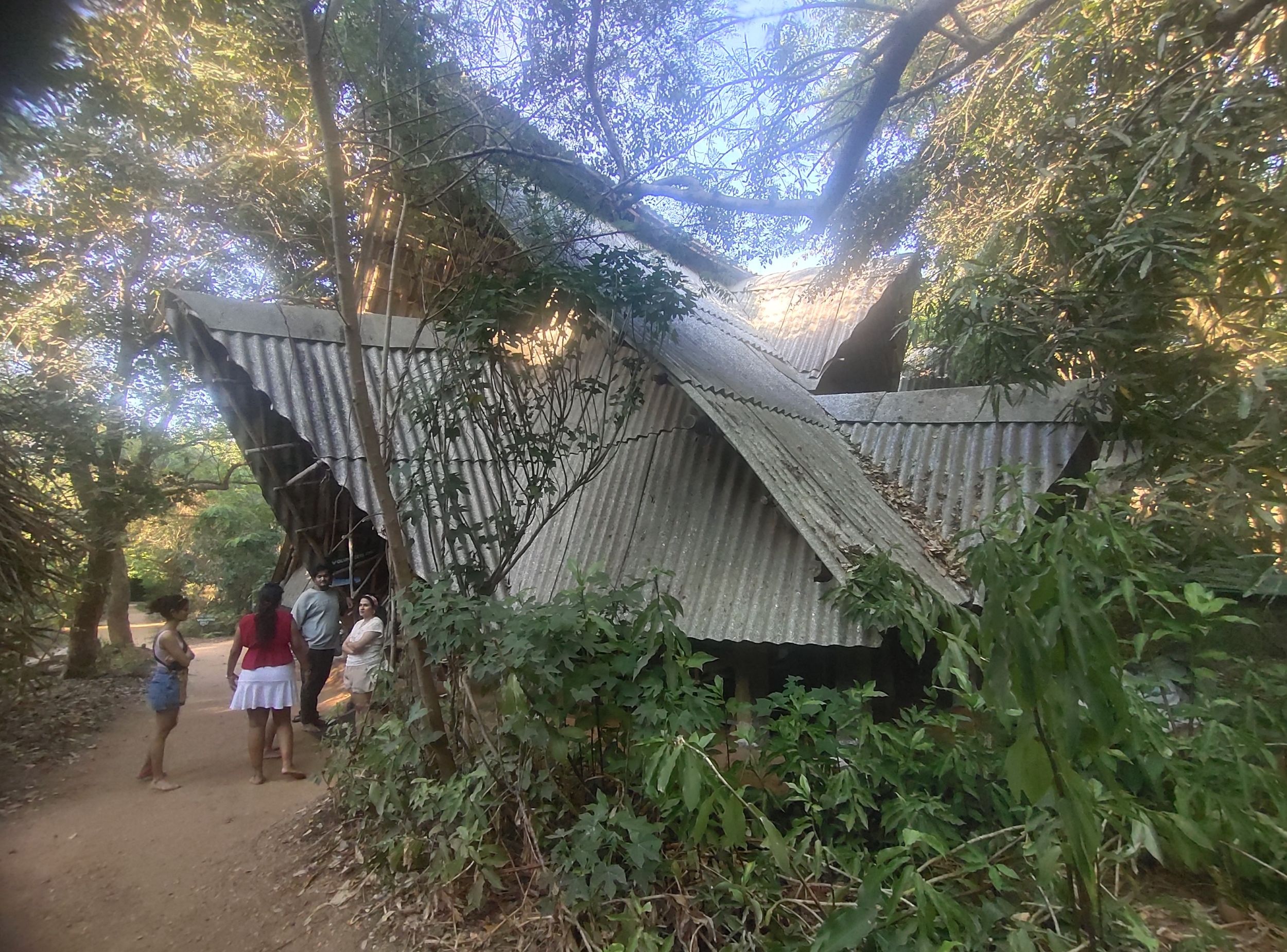 The roof of our dormitory is made of recycled Tetrapak
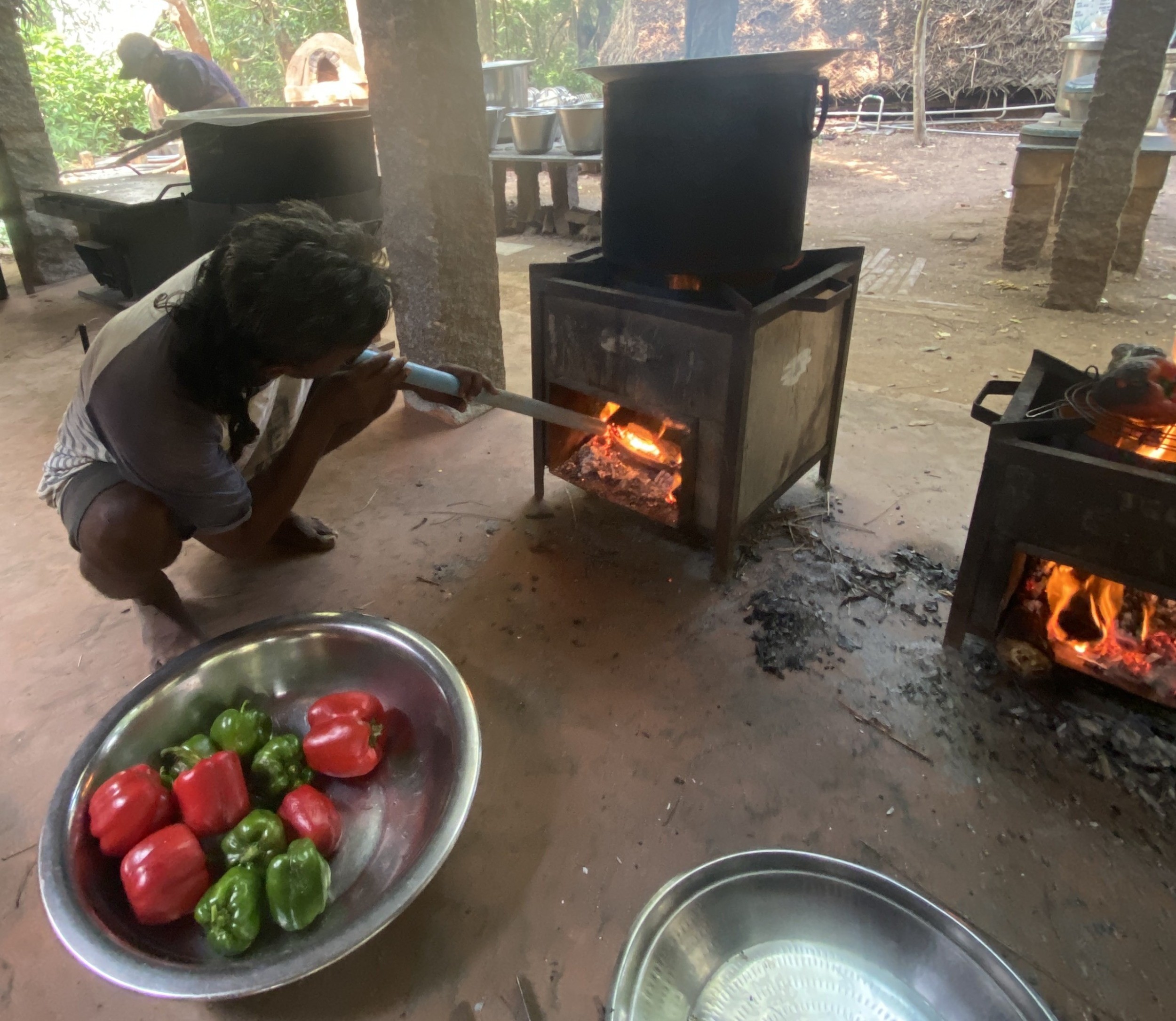 Rocket stoves
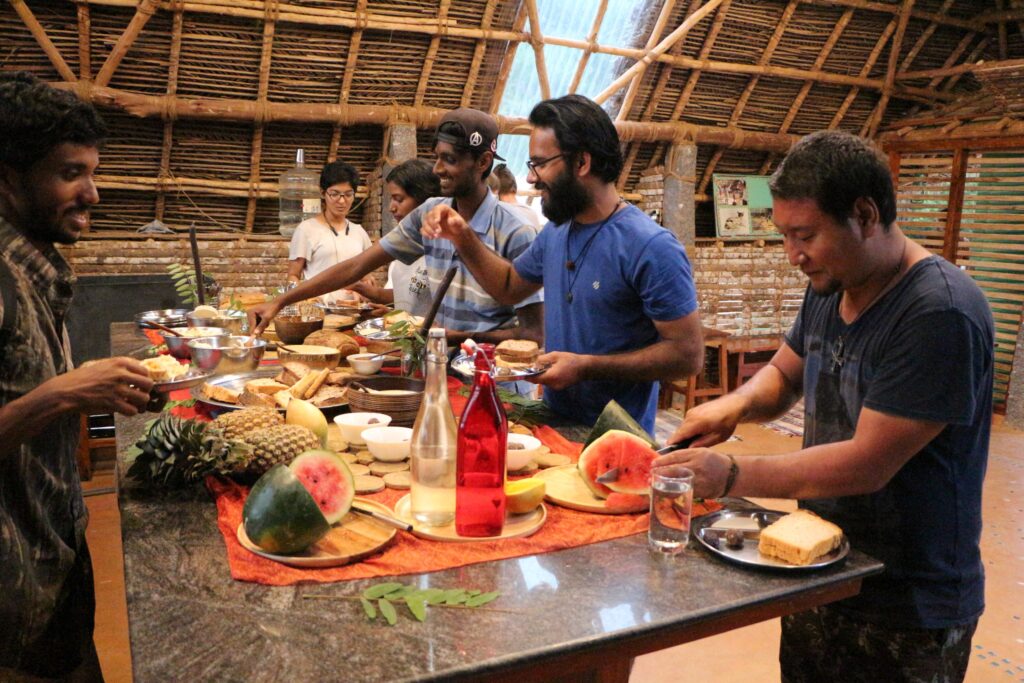
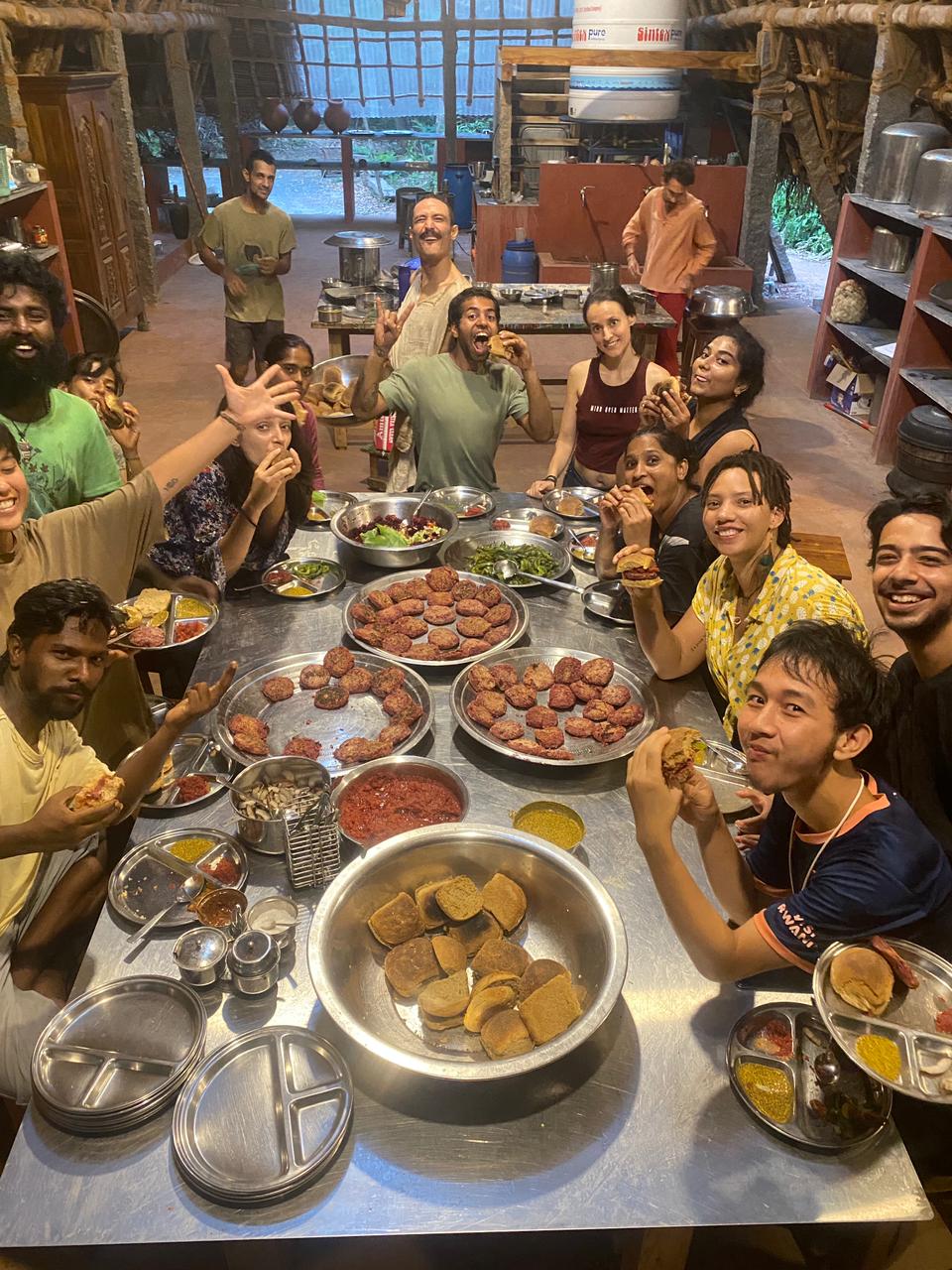
 Wholefood plant-based meals
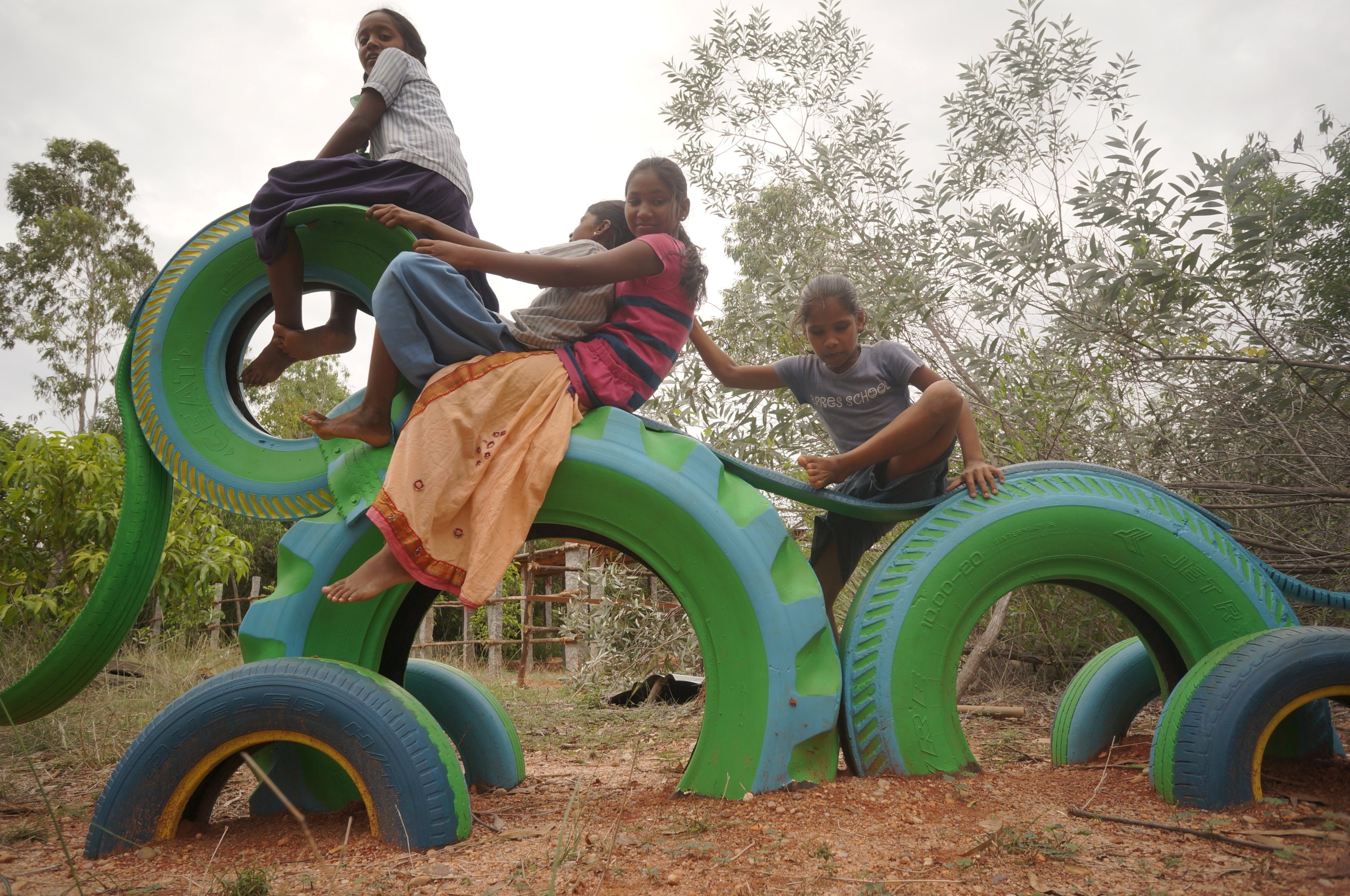 Playground from recycled tyres at Children’s Land
.We aim at zero waste. We try to create no waste and to take care of the waste we do create in a responsible way. We clean and wash dishes using fully biodegradable products such as wood ash, natural soaps and vinegar. We use as little water as needed, and all water we use flows back to the forest. We use dry composting toilets, which provides us with all the compost we need for planting trees. At our zero waste hut, we recycle the waste that does end up here, or we re-use and upcycle it in creative ways.
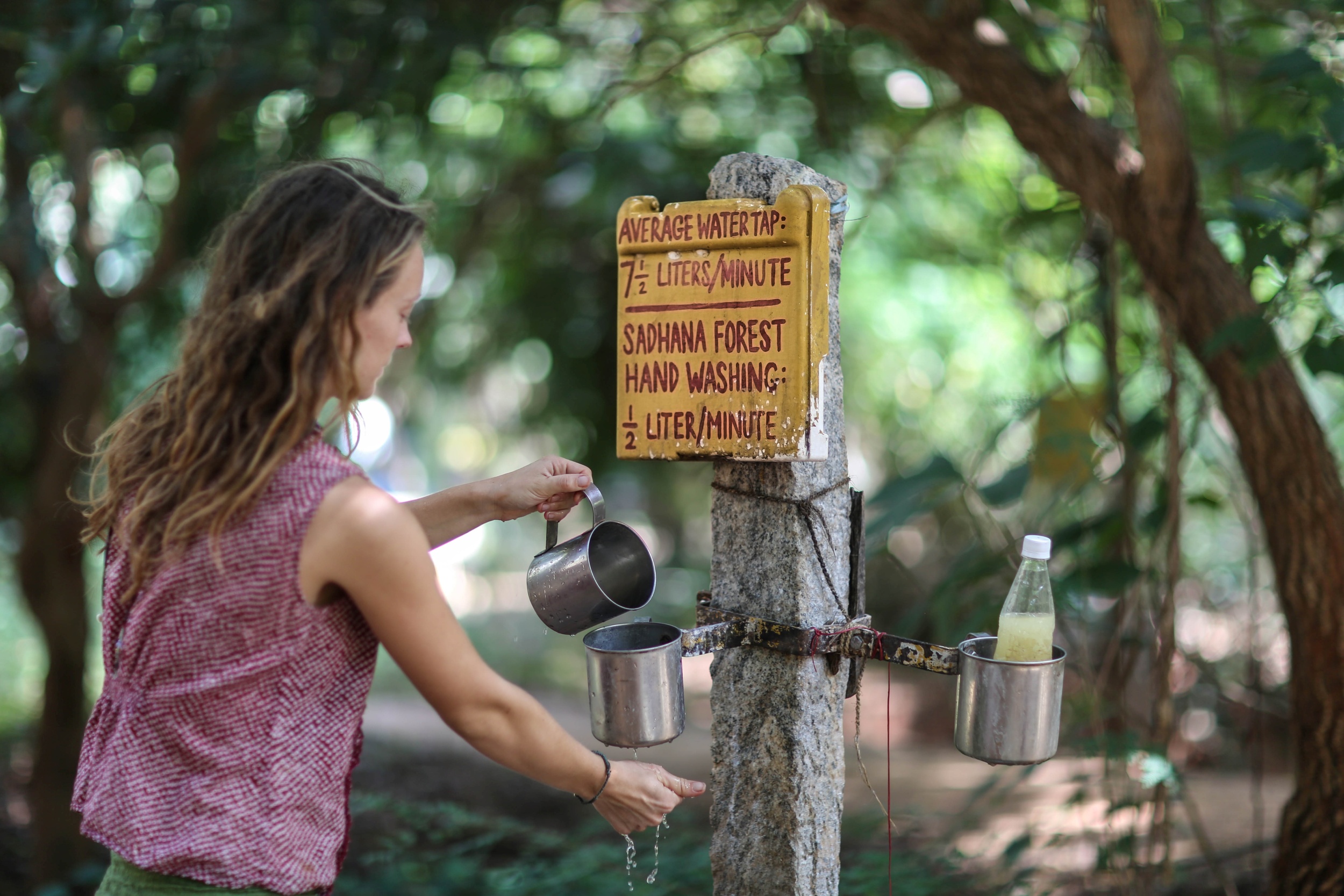 Water-efficient hand wash station
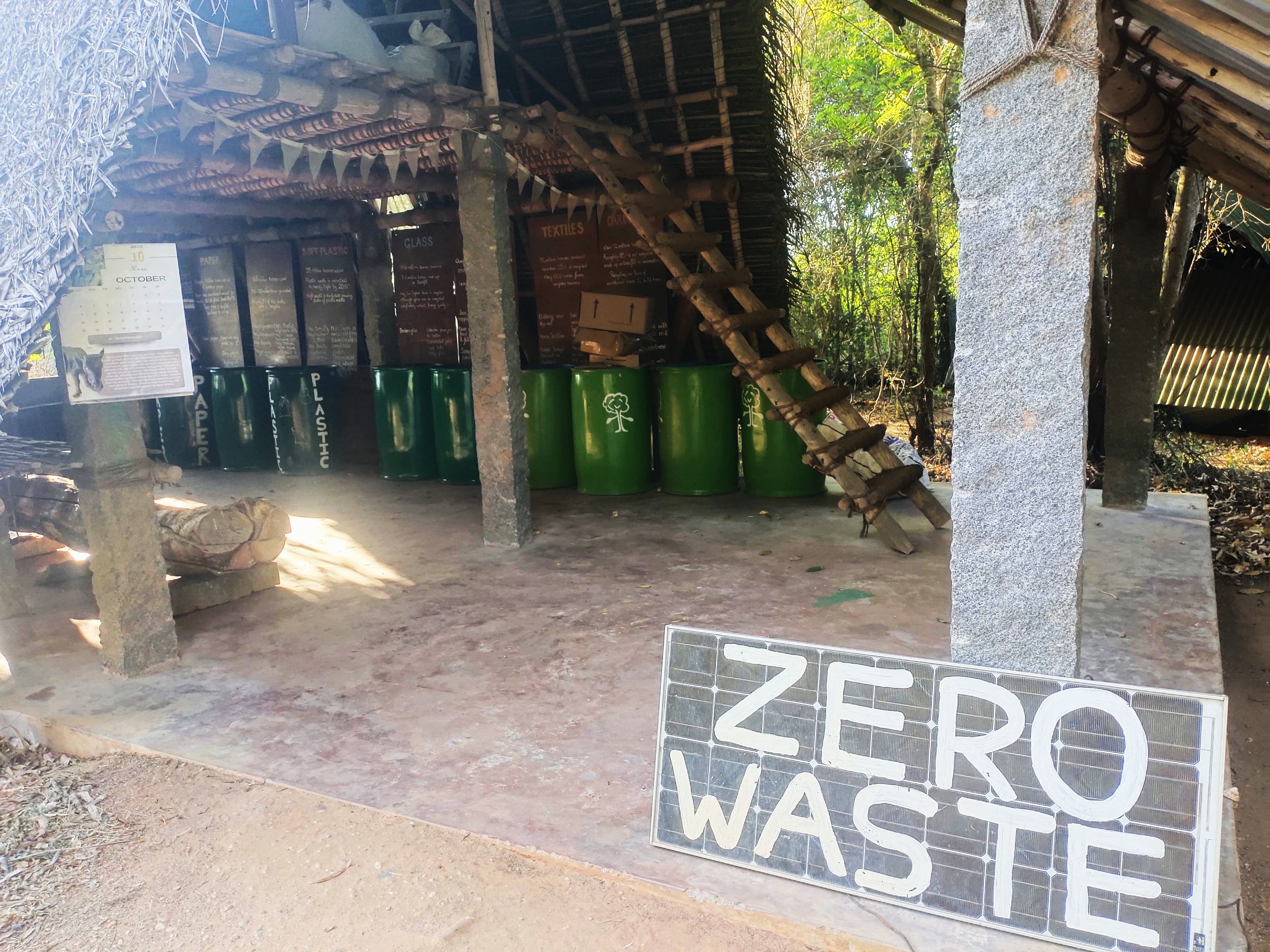 Zero Waste Hut
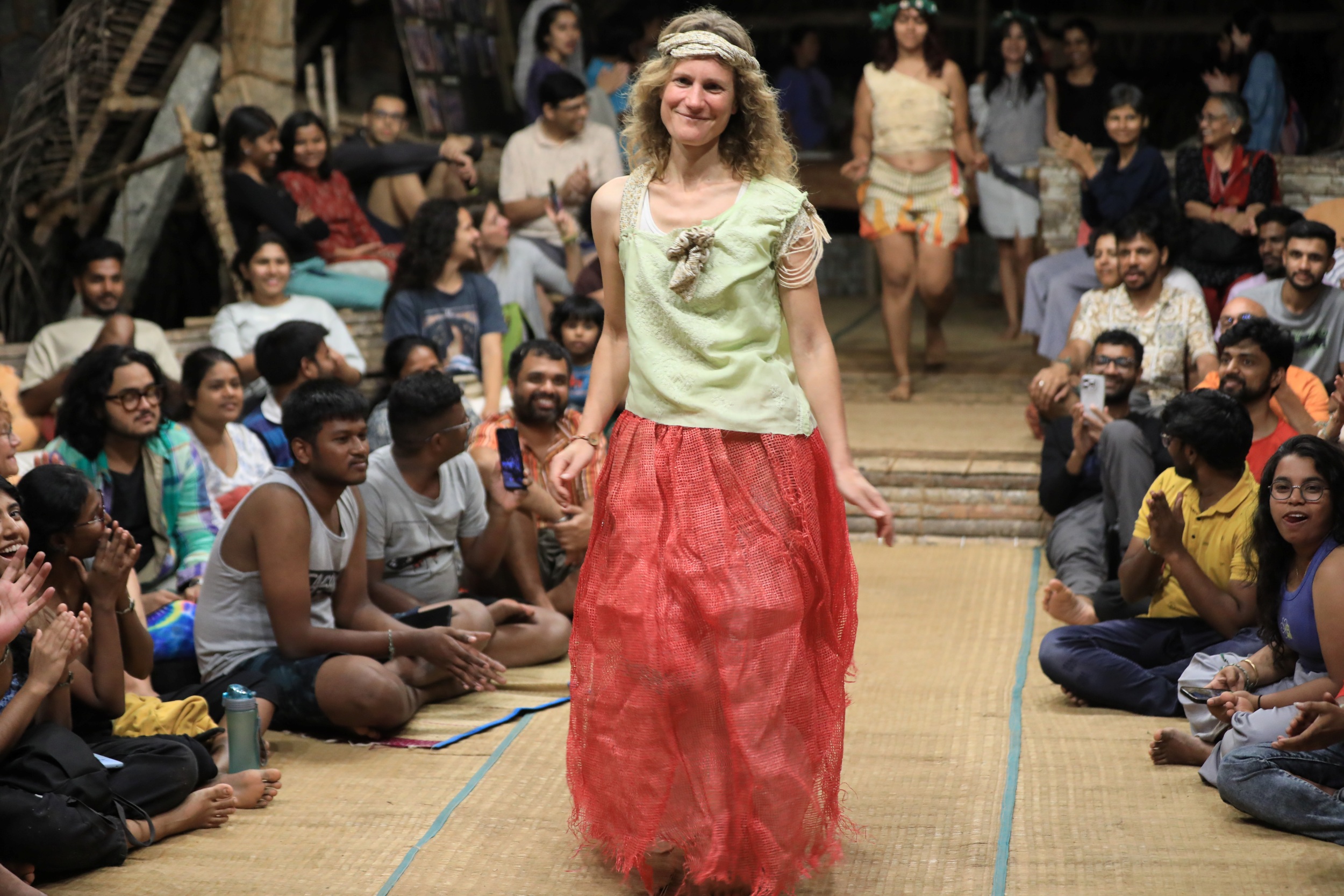 Yearly ‘trashion show’, upcycling discarded clothes and waste
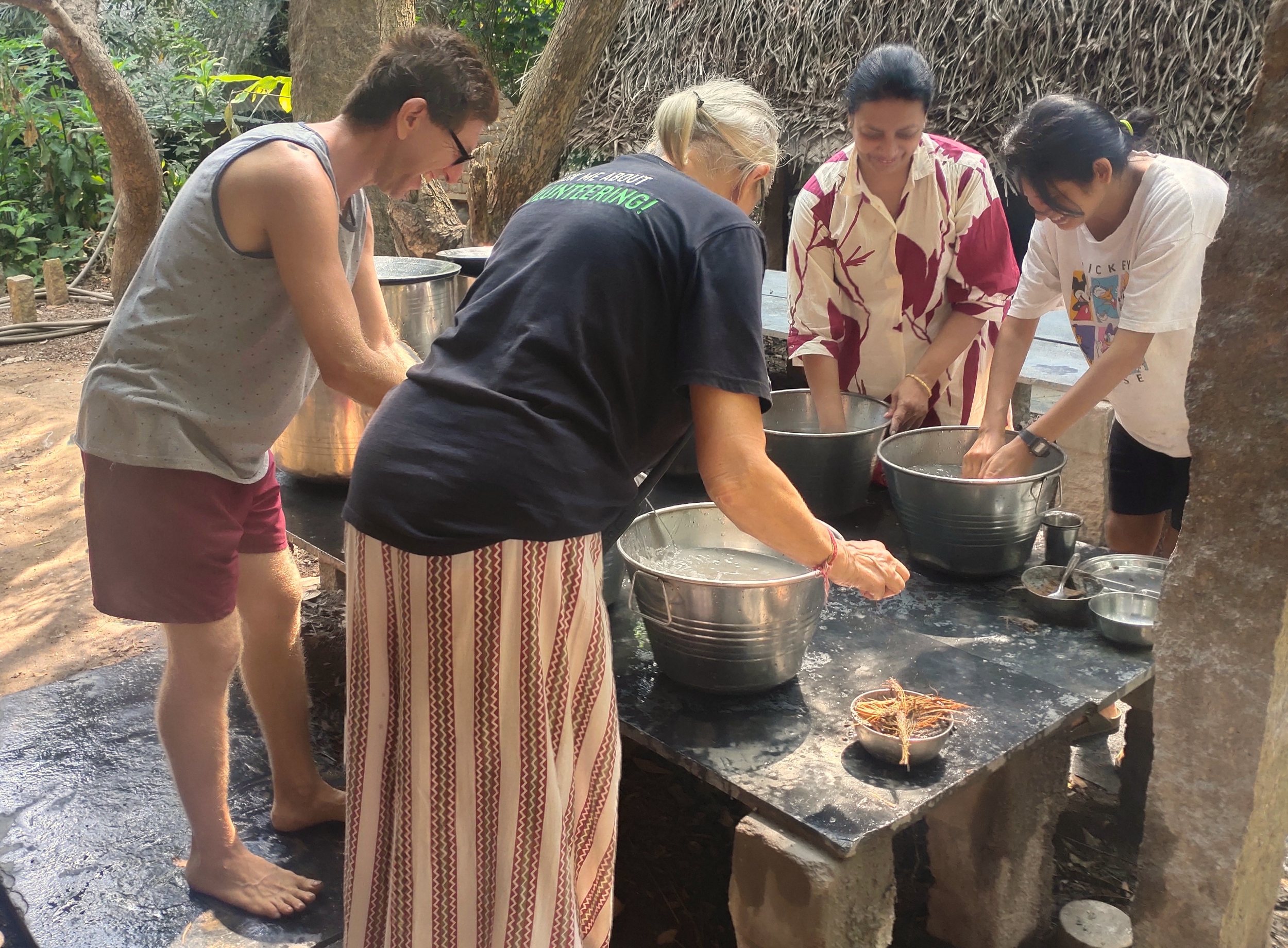 Washing dishes with ash, vinegar and three bucket rinsing system
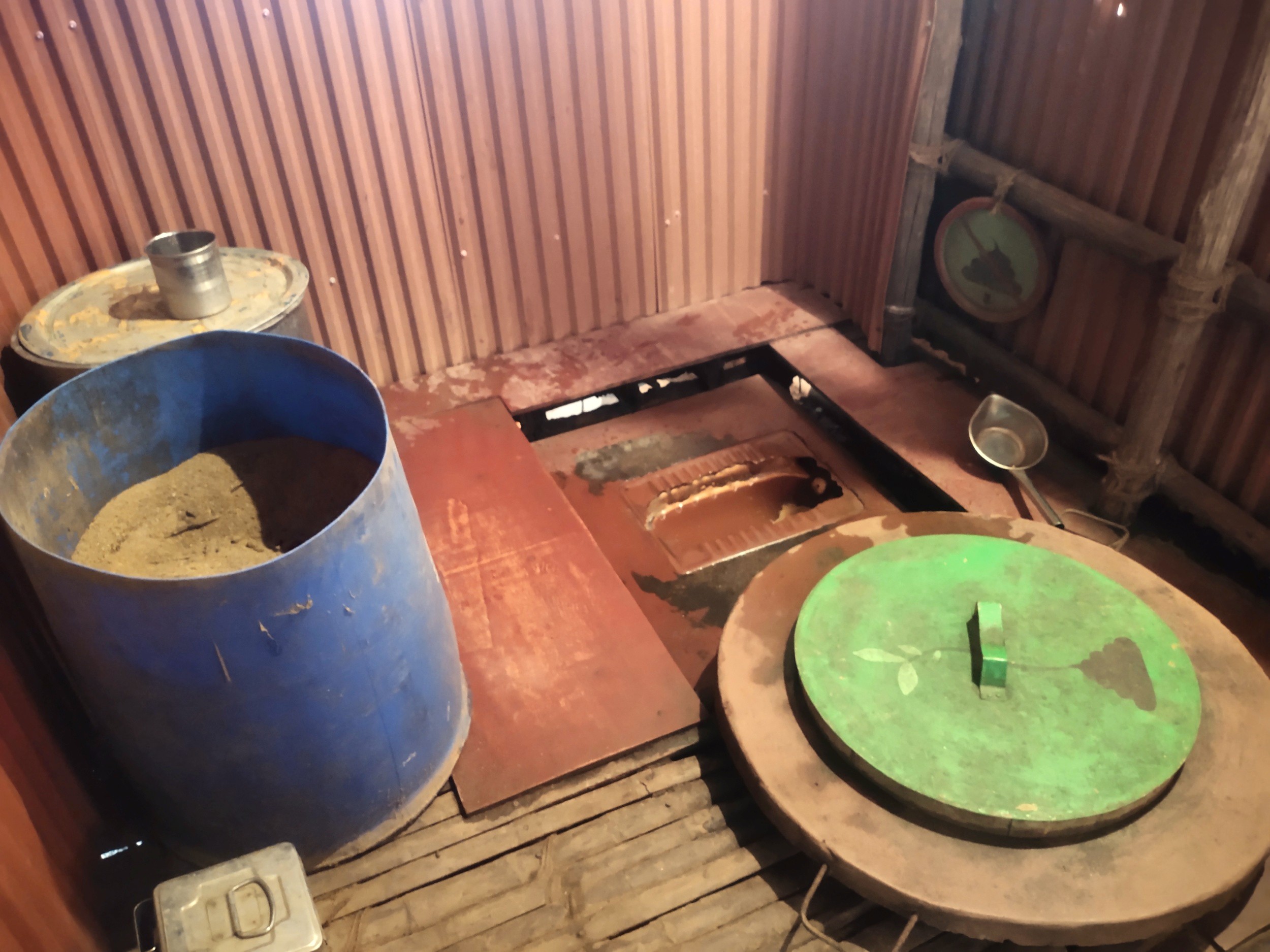 Dry Compost Toilet
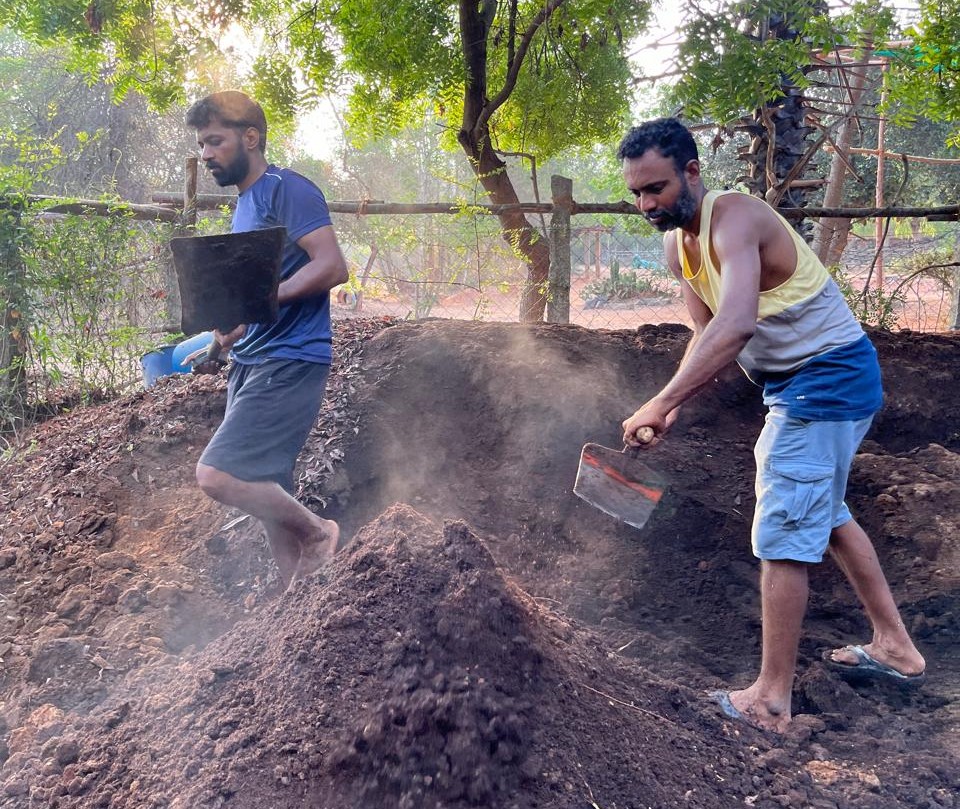 Compost produced by our toilets
Community living
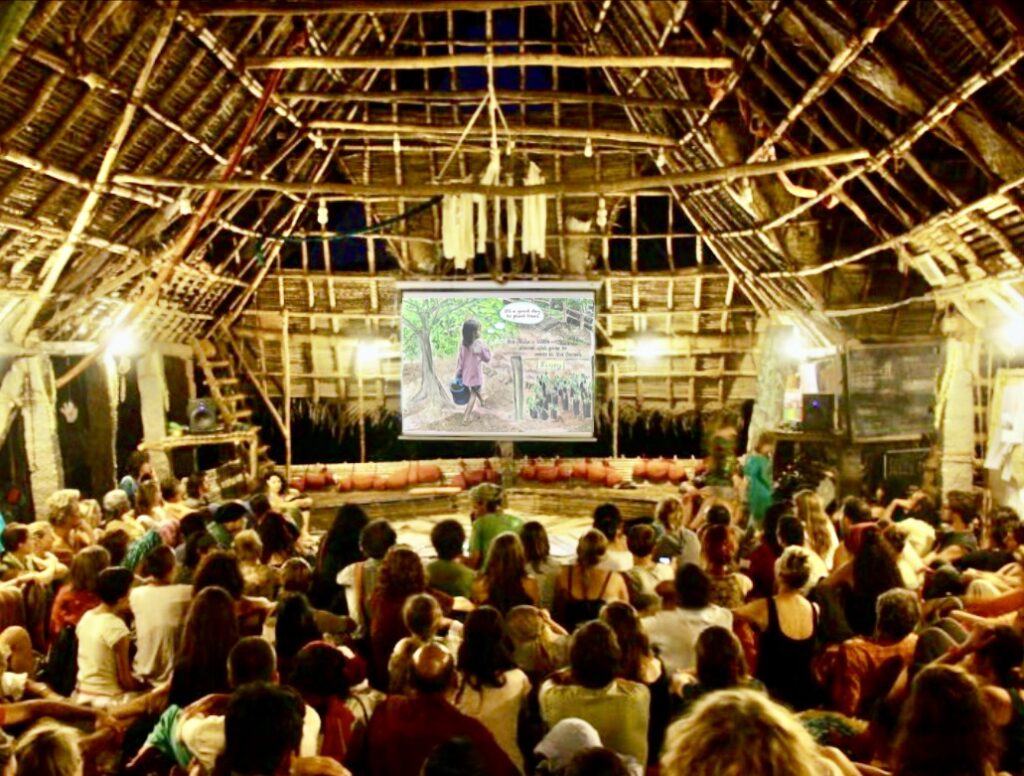
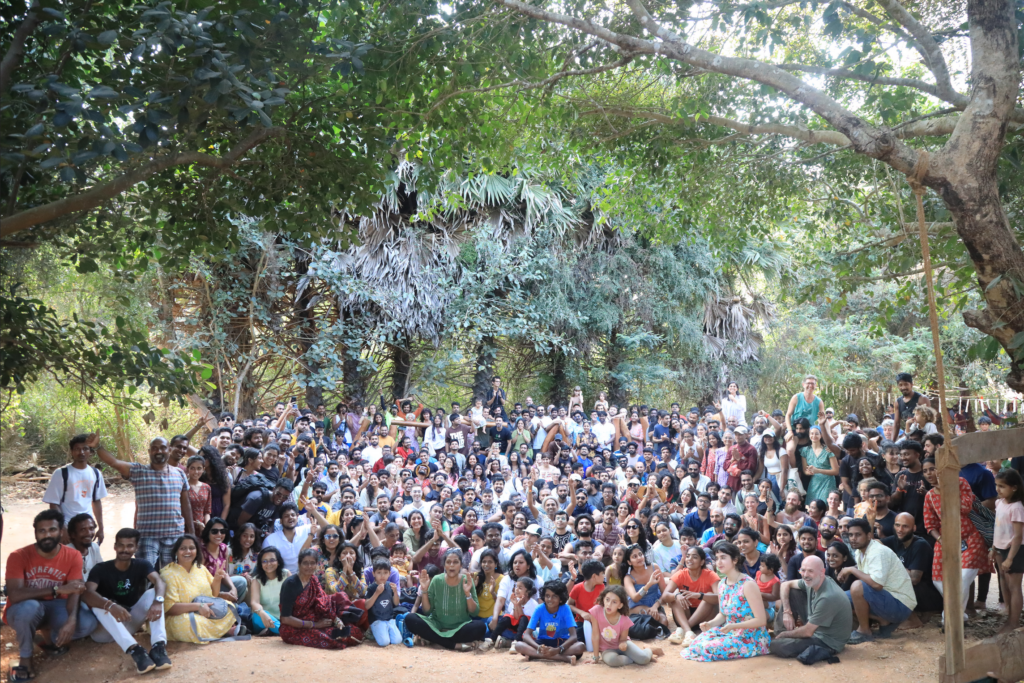
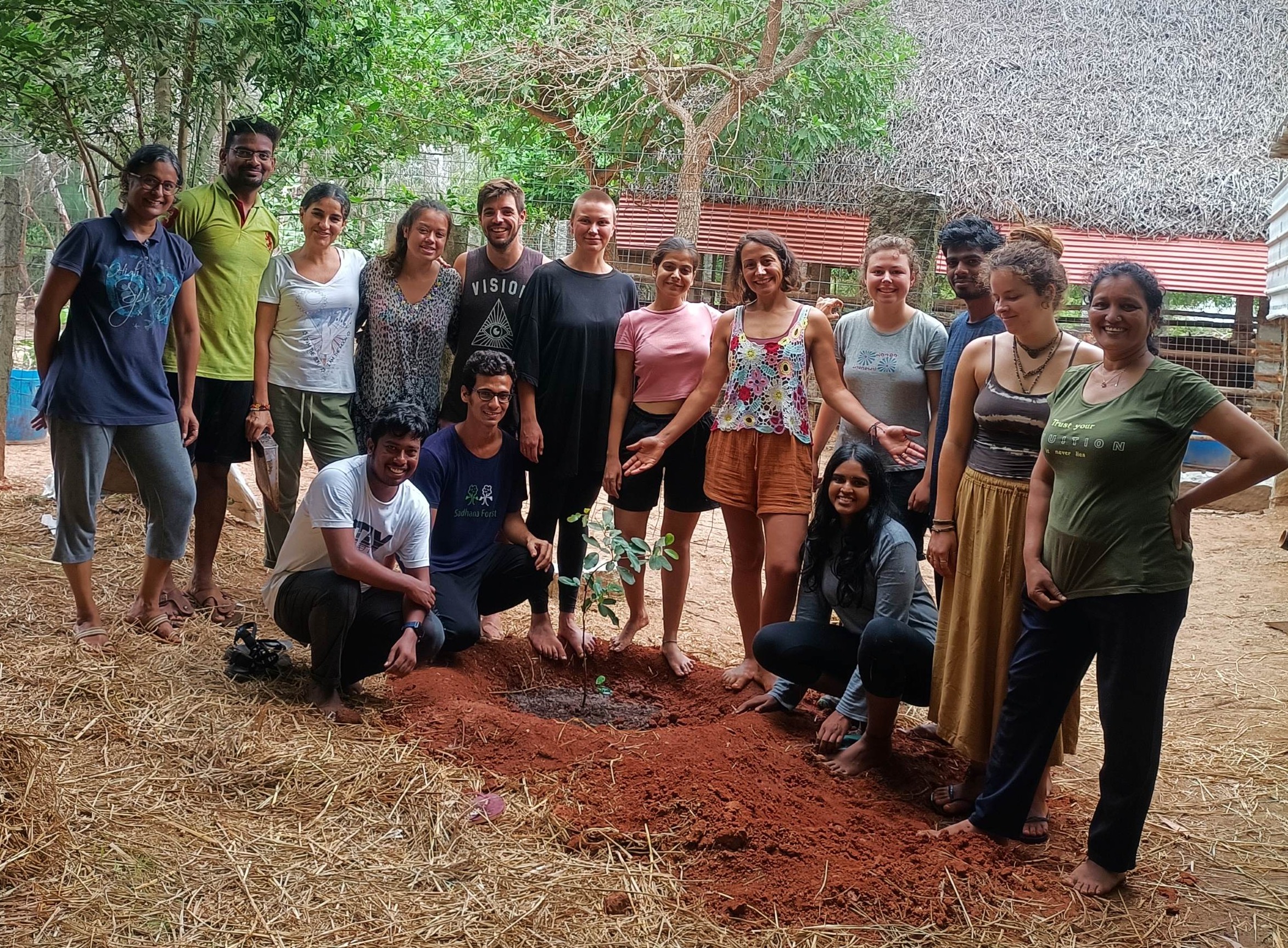
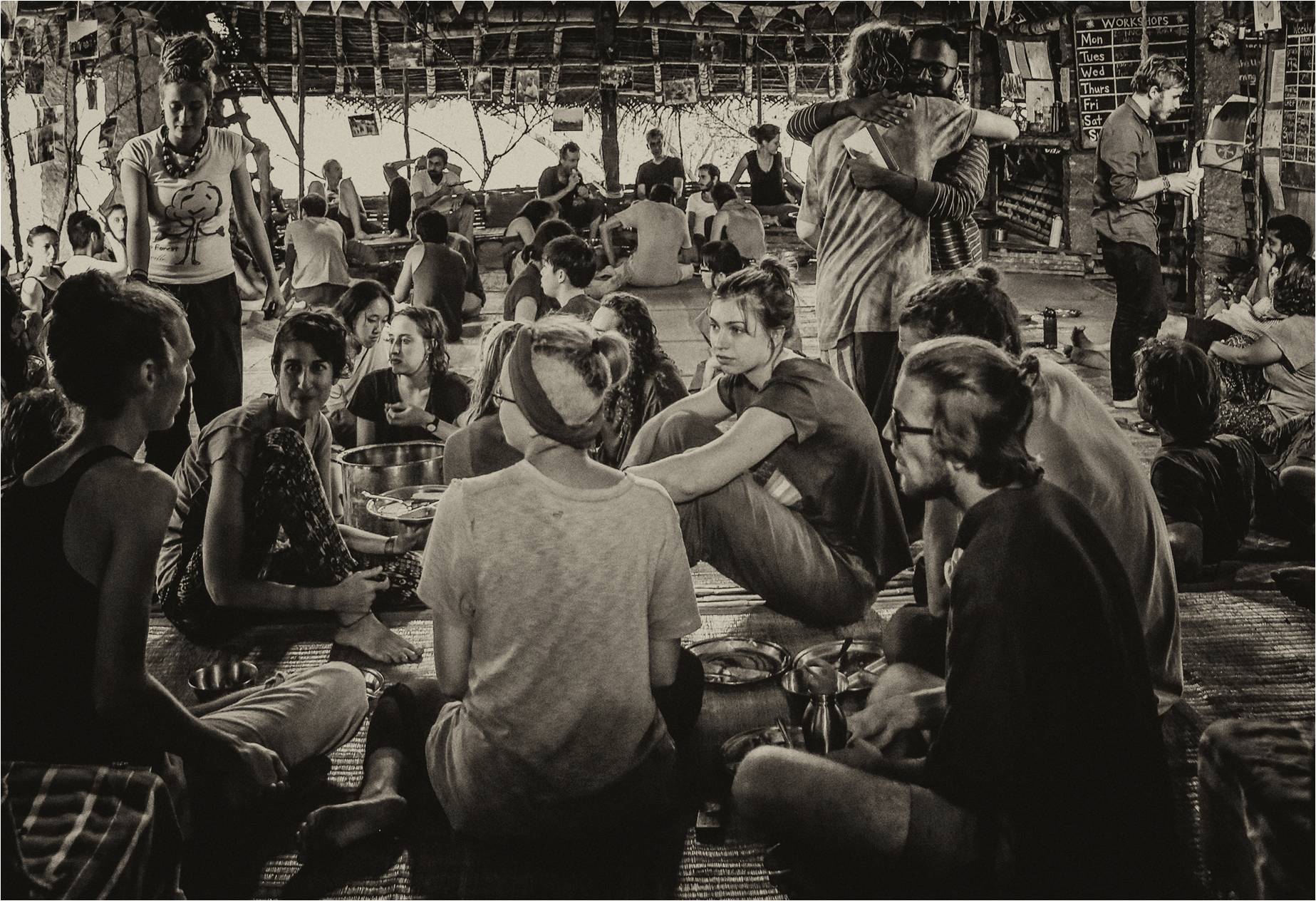
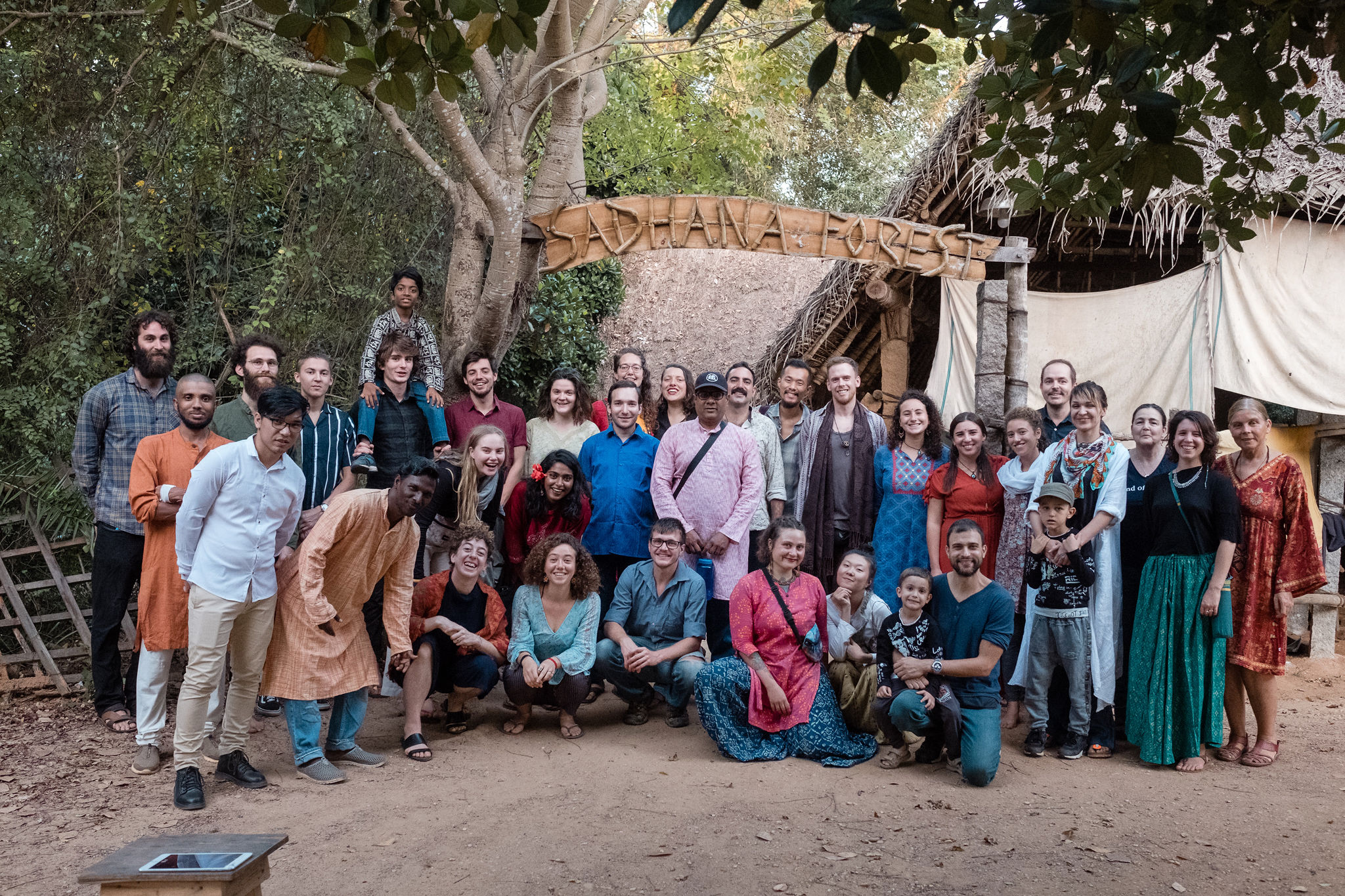
Sadhana Forest Auroville is home to a rich and vibrant community of volunteers from across India and the world. Every year, over 1,500 volunteers from 50 different nationalities come and stay with us, making Sadhana Forest one of the largest secular residential volunteer projects in the world. Volunteers do seva, eat, share, learn and play together. Being welcomed into our volunteer family is often a mind-opening and life-changing experience. As we transform the land together, together we are transformed. “May there be many more forests to grow people,” as one of our first volunteers once said.
Sadhana Forest aspires to be an embodiment of human unity. Diversity, equity and inclusion are part of how the community is organized. We host a wide diversity of people from all backgrounds and walks of life. In Sadhana Forest, we are all equal, regardless of our age, ability, nationality, ethnicity, skin color, religion, class, caste, gender or sexual orientation.
Initiatives and Events
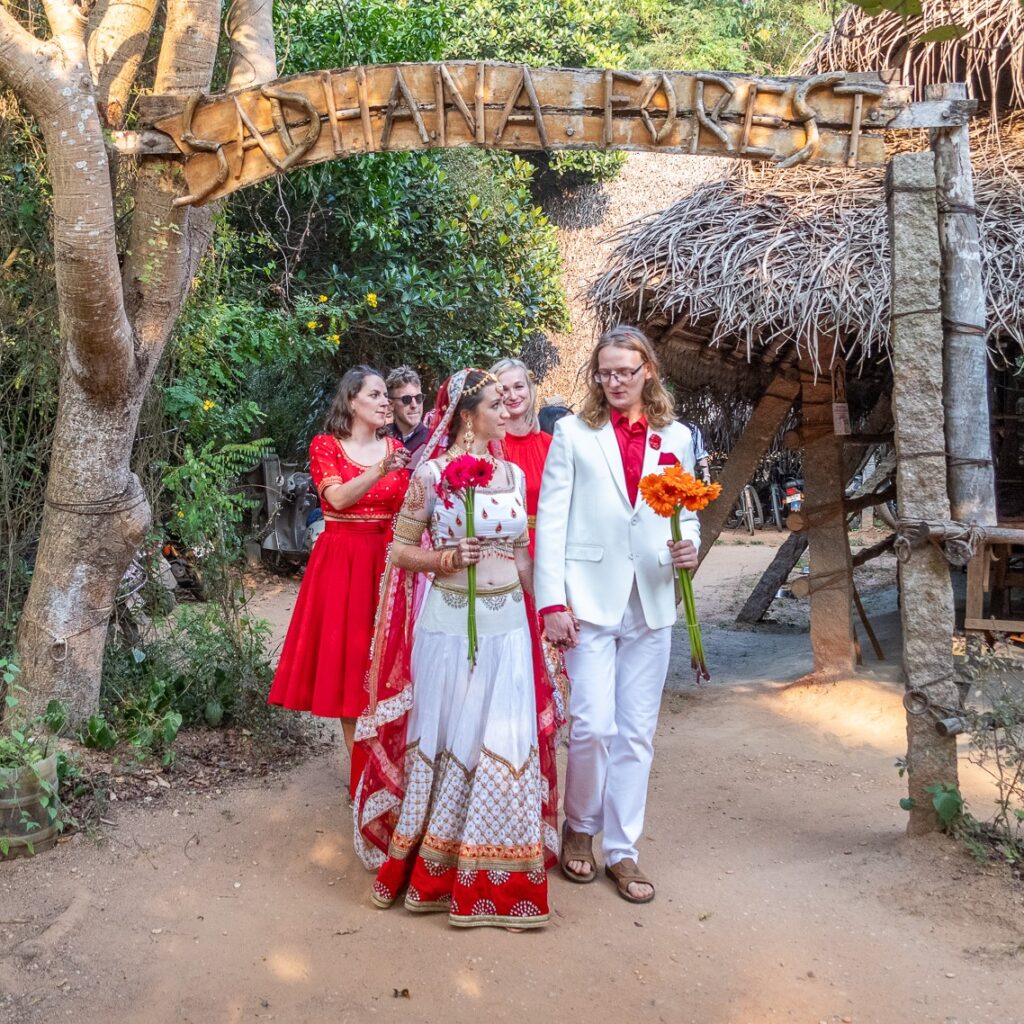
Sadhana Forest Auroville is home to several initiatives and events that take place in the spirit of our values.